
Our Partners
In our effort to restore the Bay and its rivers, we engage with dozens of organizations, including federal and state agencies, local governments, nonprofit organizations and academic institutions.
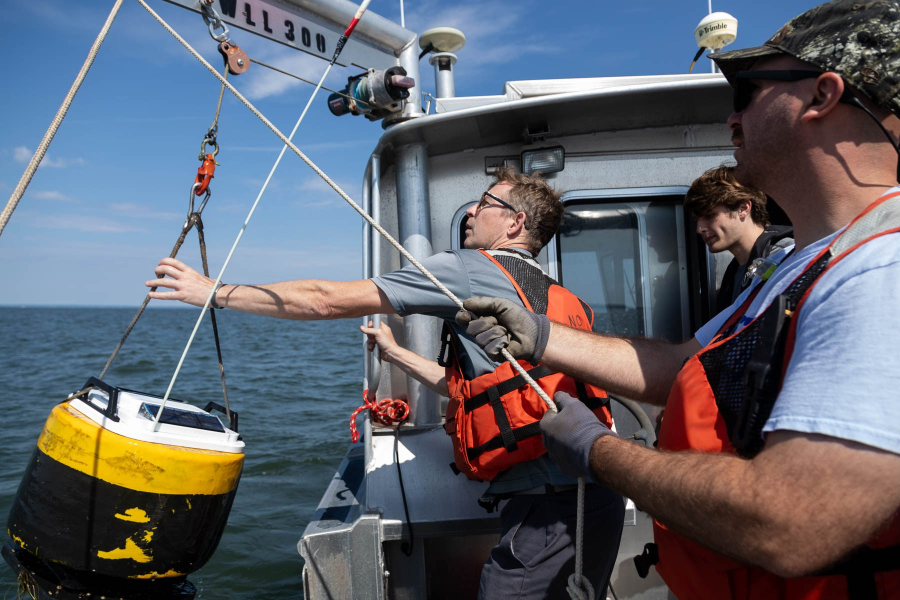
Partnerships form the foundation of the Bay Program. They achieve environmental results and save time and money because they:
- Bring together expertise, authority and resources from a broad range of organizations
- Encourage involvement among many stakeholders
- Promote a more complete understanding of Bay issues
- Consolidate and coordinate the efforts of many groups
- Allow organizations to complement and learn from each other while avoiding duplication
The Bay Program partnership includes:
- 19 federal agencies
- Nearly 40 state agencies and programs in Delaware, Maryland, New York, Pennsylvania, Virginia, West Virginia and the District of Columbia
- Approximately 1,800 local governments, represented through the Local Government Advisory Committee
- More than 20 academic institutions, represented through the Scientific and Technical Advisory Committee
- More than 60 non-governmental organizations, including businesses, nonprofits and advocacy groups
The following organizations are all part of the Chesapeake Bay Program partnership. To find individuals involved with the partnership's work, search our Partnership Directory.
Principal Partners
- Chesapeake Bay Commission
- Commonwealth of Pennsylvania
- Commonwealth of Virginia
- District of Columbia
- State of Delaware
- State of Maryland
- State of New York
- State of West Virginia
- U.S. Environmental Protection Agency (EPA)
Federal Agency Partners
- Bureau of Land Management (BLM)
- Cooperative Research and Extension Services
- Farm Service Agency (FSA)
- National Arboretum
- National Ocean Service
- National Oceanic and Atmospheric Administration (NOAA)
- National Park Service (NPS)
- National Weather Service
- U.S. Army Corps of Engineers (USACE)
- U.S. Coast Guard (USCG)
- U.S. Department of Agriculture (USDA)
- U.S. Department of Defense (DOD)
- U.S. Department of Education
- U.S. Department of Homeland Security (DHS)
- U.S. Department of the Interior
- U.S. Federal Highway Administration (FHA)
- U.S. Fish and Wildlife Service (USFWS)
- U.S. Forest Service (USFS)
- U.S. Geological Survey (USGS)
- USGS Chesapeake Bay
Headwater State Partners
Academic Partners
- Academy of Natural Sciences
- American University
- Chesapeake Research Consortium
- College of William and Mary
- Cornell Cooperative Extension (New York)
- Cornell University
- Delaware Sea Grant
- Dickinson College
- East Carolina University
- Georgetown University
- Hood College
- John Hopkins University
- Maryland Sea Grant
- Old Dominion University
- Pennsylvania Sea Grant
- Pennsylvania State University (Penn State)
- Smithsonian Environmental Research Center
- Smithsonian Institution
- University of Delaware
- University of Maryland Center for Environmental Science
- University of Maryland School of Public Health
- University of Pennsylvania
- University of Virginia
- Virginia Cooperative Extension Office
- Virginia Institute of Marine Science
- Virginia Polytechnic Institute and State University (Virginia Tech)
- Virginia Sea Grant
- West Virginia University
Non-governmental Organizations
- Alice Ferguson Foundation
- Alliance for the Chesapeake Bay
- American Forests
- American Planning Association (APA) of Delaware
- American Rivers
- Anacostia Watershed Society
- Anne Arundel County Watershed Stewards Academy
- Arlington Echo Outdoor Education Center
- Baltimore Orchard Project
- Bigelow Laboratory for Ocean Sciences
- Blue Water Baltimore
- Cacapon Institute
- Center for Chesapeake Communities (CCC)
- Center for Watershed Protection
- Chesapeake Bay Foundation
- Chesapeake Bay Trust
- Chesapeake Conservancy
- Chesapeake Conservation Partnership
- Choose Clean Water Coalition
- Conservation Finance Network
- DC Environmental Education Consortium
- Defensores De La Cuenca
- Ducks Unlimited
- Earth Conservation Corps
- Eastern Brook Trout Joint Venture
- ecoLatinos
- Elizabeth River Project
- Finger Lakes Land Trust
- Friends of the Rappahannock
- Greater Baltimore Wilderness Coalition
- Indigenous Conservation Council of the Chesapeake Bay
- Interfaith Partners for the Chesapeake
- International City/County Management Association
- Izaak Walton League
- Land Trust Alliance
- Lynnhaven River NOW
- Maryland Association for Environmental and Outdoor Education
- Maryland Environmental Health Network
- Maryland Humanities
- Maryland League of Conservation Voters
- National Fish and Wildlife Foundation
- National Geographic Society
- National Wildlife Federation
- Nature Forward
- NatureBridge
- NatureServe
- North American Association for Environmental Education
- Northeastern Educational Intermediate Unit
- Parks & People Foundation
- Pennsylvania Farm Bureau
- Pennsylvania Institute for Conservation Education
- People Acting Together in Howard County
- Potomac Conservancy
- Potomac Riverkeeper Network
- Rivanna Conservation Society
- Rivanna River Basin Commission
- Student Conservation Association
- The Nature Conservancy
- Tidewater Oysters Gardener Association
- Trout Unlimited
- U.S. Endowment for Forestry and Communities
- Up Top Acres
- Virginia Poverty Law Center
- Waterkeeper Alliance
- West Rhode Riverkeeper Inc
- Yellow Breeches Watershed Association
Local Government
- Anne Arundel County Department of Public Works (MD)
- Borough of Columbia (PA)
- City of Alexandria (VA)
- City of Annapolis (MD)
- City of Gaithersburg (MD)
- City of Hopewell (VA)
- City of Norfolk (VA)
- City of Rockville (MD)
- City of Salisbury (MD)
- City of Seat Pleasant (MD)
- City of York (PA)
- County Commissioners Association of Pennsylvania
- County Commissioners Association of West Virginia
- DC Advisory Neighborhood Commissions
- Delaware Association of Conservation Districts
- Delaware League of Local Governments
- Fairfax County (VA)
- Hampden Township (PA)
- Interstate Commission on the Potomac River Basin
- Londonderry Township (PA)
- Luzerne Conservation District (PA)
- Maryland Association of Counties
- Maryland Association of Soil Conservation Districts
- Maryland Municipal League (MML)
- Metropolitan Washington Council of Governments
- Montgomery County Department of Environmental Protection (MD)
- New York Association of Conservation Districts
- New York State Conference of Mayors
- Office of Senator Van Hollen
- Pennsylvania Association of Conservation Districts
- Pennsylvania Municipal League
- Pennsylvania State Association of Boroughs (PSAB)
- Pennsylvania State Association of Township Supervisors (PA)
- Southern Tier 8 Regional Planning and Development Board (NY)
- Southern Tier Central Regional Planning and Development Board (NY)
- Upper Susquehanna Coalition
- Virginia Association of Counties (VA)
- Virginia Association of Planning District Commissions
- Virginia Association of Soil and Water Conservation Districts
- Virginia Department of Transportation
- Virginia Municipal League
- West Virginia Conservation Agency
- West Virginia Municipal League
- Wyoming Valley Sanitary Authority (PA)
Local and Regional Partners
- Anne Arundel County Public Schools (MD)
- Capital Region Water
- Delaware Farm Bureau
- Hampton Roads Sanitation District (VA)
- Mid-Atlantic Marine Educators Association
- Northern Virginia Regional Commission
- Pennsylvania Bureau of State Parks
- Pleasure House Oysters