
Scientists to develop management plan for invasive catfish
Blue and flathead catfish are two invasive species that threaten the Chesapeake Bay's rivers.
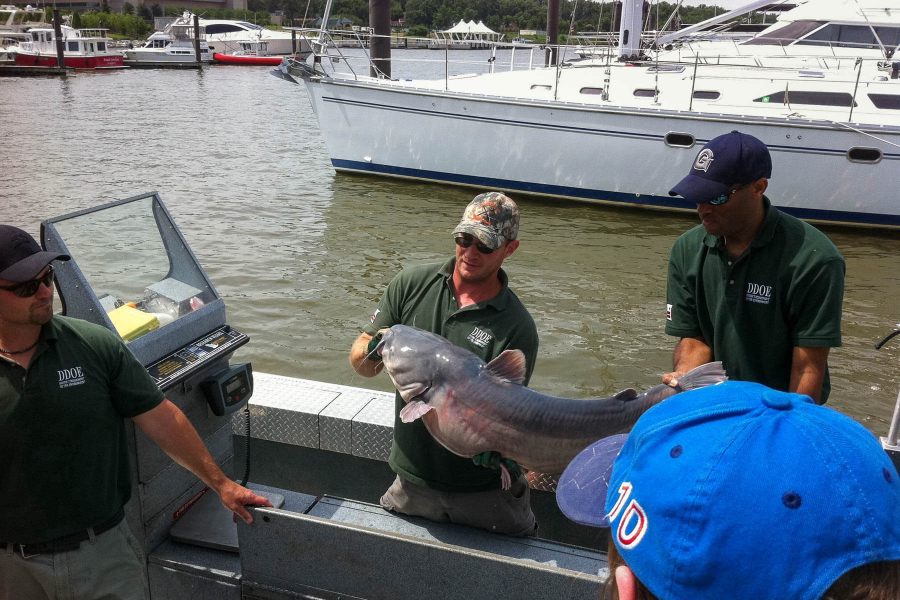
Fisheries scientists with the Chesapeake Bay Program will develop a Chesapeake Bay-wide management plan for blue and flathead catfish, two invasive fish species that pose a significant threat to the health of rivers in Virginia, Maryland and Pennsylvania.
Invasive species are animals and plants that are not native to their current habitat and harm the ecosystem they invade. Invasive species are able to thrive in new areas because they lack predators, diseases and other natural controls that keep them in check in their native environment.
Although they are valuable recreational species, blue and flathead catfish are harmful to the Bay ecosystem for several reasons. They grow to enormous sizes, have massive appetites, reproduce rapidly and live for many years. As top-level predators in the Bay food web, blue and flathead catfish prey upon important native species such as American shad and blueback herring.
Both catfish species have been present in Virginia rivers since the 1960s. In recent years, anglers have caught these fish in the Potomac and Susquehanna rivers, as well as the upper Chesapeake Bay. The spread may be due to people moving fish from one river to another, even though this is illegal in Maryland and Virginia.
Scientists will consider a variety of actions to control and lessen the harmful effects of these invasive catfish. For more information, read the Bay Program fisheries team’s Invasive Catfish Policy Adoption Statement.
The Bay Program fisheries team includes experts from the Virginia Department of Game and Inland Fisheries, Virginia Marine Resources Commission, Potomac River Fisheries Commission, D.C. Department of the Environment, Maryland Department of Natural Resources, Atlantic States Marine Fisheries Commission and the National Oceanic and Atmospheric Administration.
Comments
Well its about time I have been fishing the upper bay and Susquehanna river for 22 years and I have never seen so many catfish in these waters. I mostly fly these waters and have caught a number of flatcats on the fly... thank your for addressing the eco imbalance.
Thank you!
Your comment has been received. Before it can be published, the comment will be reviewed by our team to ensure it adheres with our rules of engagement.
Back to recent stories