
Atlantic White Cedar
(Chamaecyparis thyoides)
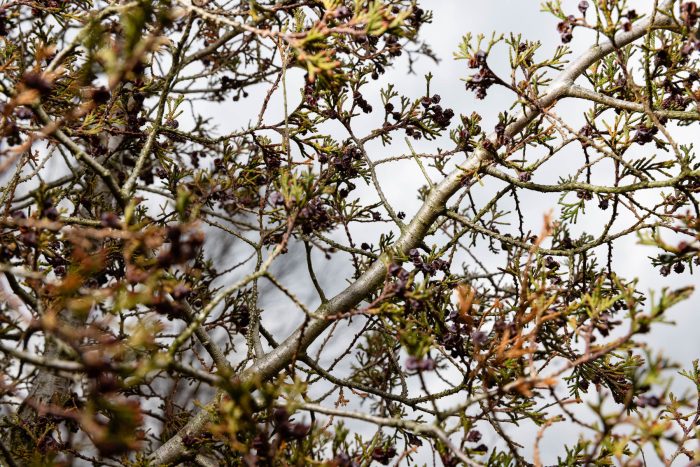
The Atlantic white cedar is a tall evergreen tree with scaly, fan-shaped foliage and a cone-like shape. It grows in swamps, marshes and other wet areas near the coast in Delaware, Maryland and Virginia.
This section shows one large critter image at a time. Use the thumbnails that follow to select a specific image to display here.
This gallery contains a grid of small thumbnails. Selecting a thumbnail will change the main image in the preceding section.
Appearance
The Atlantic white cedar has fan-like sprays of scaly, flattened, green or bluish-green leaves. Young trees have needle-like leaves. The tree tapers to a point and has a cone-like shape. It has small, rounded, light blue cones and tiny, green or reddish-yellow flowers that appear in March-April. Its bark is reddish-brown. The Atlantic white cedar can grow to 75 feet tall.
Reproduction and life cycle
Cones mature at the end of the first growing season, in September to October. During a good year, as many as 8 to 9 million seeds may be scattered per acre in dense cedar stands. Each cone contains 5 to 15 winged seeds, which are spread by wind.
Seeds can remain viable on the forest floor for many years. Seedlings grow into saplings at about one foot per year. Individual trees may live up to 1,000 years, but it is rare for stands to live longer than 200 years.
Did you know?
- Although it is called a cedar, the Atlantic white cedar is actually a cypress.
- Its leaves are very aromatic, with a distinct, cedar-like scent.
- Songbirds and white-tailed deer use Atlantic white cedars as food.
- White cedar charcoal was used to make gunpowder during the Revolutionary War.
Sources and additional information
- Native Plants for Wildlife Habitat and Conservation Landscaping: Chesapeake Bay Watershed – U.S. Fish and Wildlife Service
- Chesapeake Bay: Nature of the Estuary, A Field Guide by Christopher P. White
- PLANTS Profile for Chamaecyparis thyoides – USDA Natural Resources Conservation Service
- Atlantic White Cedar – U.S. Forest Service