
Groundwater
Drops of rain or snow that fall onto the land can seep through the soil and into groundwater, which can become contaminated when pollutants on land seep underground.
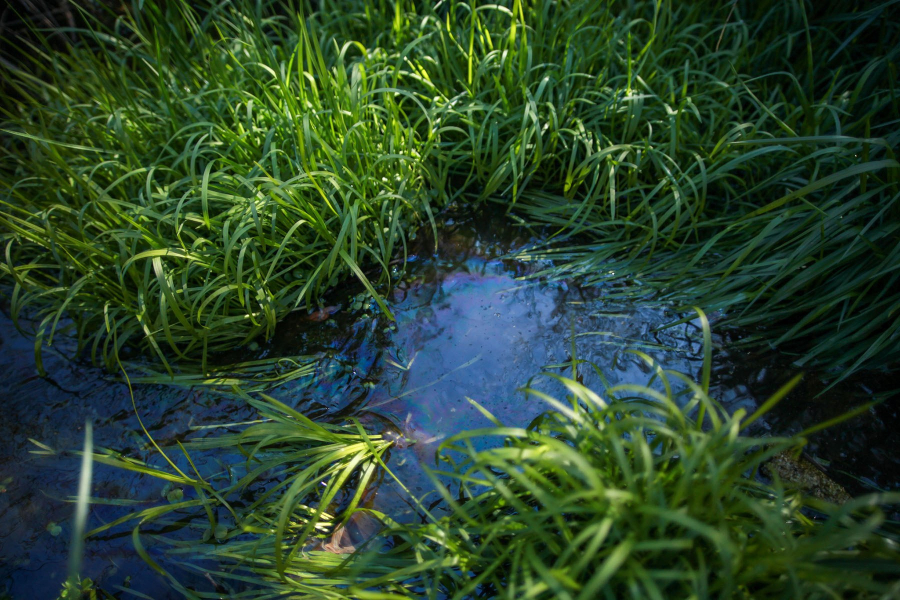
Overview
Drops of rain or snow that fall onto the land do not always wash straight into rivers or streams: instead, precipitation can seep through the soil and into groundwater. Groundwater can become contaminated when pollutants on the land seep underground, pushing nutrients and chemical contaminants into nearby waterways. In the Chesapeake Bay region, the slow pace of polluted groundwater flowing into the Bay results in a “lag-time” between the adoption of pollution-reducing practices and the positive effects those practices have on a particular river or stream.
What is groundwater?
Water isn't just found on above ground: groundwater is water that can be found under the earth’s surface, stored in the cracks and spaces between particles of soil, sand and rock. Precipitation can recharge groundwater supplies: rain and melting snow soak into the ground and travel downward to reach solid, impermeable bedrock. Here, groundwater stops moving downward and starts saturating the surrounding soil, forming an area known as an aquifer.
Groundwater comes to the earth’s surface when it flows through a spring or into rivers, streams and lakes. Scientists with the U.S. Geological Survey (USGS) have found that in an average year, almost 27 of the 50 billion gallons of streamflow that enter the Chesapeake Bay come from groundwater.
By drilling wells into underground aquifers, groundwater can also be extracted from the earth for human uses. Much of our groundwater is used to irrigate crops, and more than half of the United States relies on groundwater for drinking water. But communities can face water shortages when groundwater is used faster than it is replenished.
USGS scientists found that the withdrawal of groundwater in the lower Bay region has caused the land to sink, worsening the effects of sea-level rise and increasing the severity of floods along the Delmarva Peninsula and Virginia Coastal Plain.
How do pollutants reach groundwater?
Groundwater can become contaminated when pollutants on the land seep into underground aquifers. A number of human activities can pose a threat to groundwater, including:
- leaking or damaged storage tanks of gasoline or oil,
- abandoned containers or uncontrolled spills of hazardous waste,
- fertilizers, pesticides or road salts applied to lawns, fields and roads, and
- leaking landfills and septic systems.
How is polluted groundwater harming the Chesapeake Bay?
When contaminated groundwater comes to the surface, it can pollute rivers and streams. In our watershed, polluted groundwater often pushes nutrients and chemical contaminants into the Chesapeake Bay. Several studies have found that the slow movement of polluted groundwater into the Bay is lengthening the “lag-time” between the adoption of pollution-reducing practices and the positive effects of those practices on a particular river or stream.
A USGS model showed that groundwater on the Delmarva Peninsula—and the excess nitrogen it can contain—takes an average of 20 to 40 years to flow through the area’s aquifers and into rivers and streams. This means that slow-moving groundwater could push nutrient pollution into the Bay even after we have lowered the amount of nitrogen and phosphorous we put on the land. In some parts of Delmarva, the groundwater that is now flowing into local waterways contains nitrogen linked to fertilizer used three decades ago.
What you can do
To lower the amount of pollutants seeping into groundwater, lower the amount of fertilizers, pesticides and road salt applied to your lawn and driveway, and ensure that storage tanks and septic systems are properly managed to avoid allowing gasoline, oil or wastewater to soak into the ground.