What Guides Us
The Chesapeake Bay Program has developed a series of commitments over its history to its Bay restoration and protection efforts. These science-based goals help Bay Program partners track critical health measures and implementation of restoration activities. Goals are updated each year to reflect the previous year’s health status and restoration efforts.
Tracking Tools
Chesapeake Bay Program partners use several tools to track progress toward Bay restoration goals. These tools help Bay Program partners and other stakeholders visualize data to help identify priorities and reveal funding gaps. Learn more about these tools and how they help Bay Program partners lead the restoration of the Chesapeake Bay.
Indicators A-Z
American Shad Abundance
American shad form an important link in the Bay food web. Shad feed on zooplankton and are preyed upon by larger fish, including bluefish, weakfish and striped bass.
Historically, local economies flourished from the annual shad run in the spring, when the fishes’ upriver migration begins. But shad populations were decimated in the 1970s by overfishing, pollution, and dams and other blockages that prevent the fish from reaching their upstream spawning grounds.
(Read More)
Bay Watershed Forest Cover
Forests protect and filter drinking water for 75 percent of the Bay watershed’s residents. They also provide valuable ecological services and economic benefits, including carbon sequestration, flood control, wildlife habitat and forest products. Forests are the most beneficial land use for the Bay. They capture, filter and retain water, thereby reducing pollution and improving water quality. Forests also absorb air pollution and retain up to 85 percent of the airborne nitrogen from sources such as automobiles and power plants. Forested areas reduce erosion, control flooding and provide habitat for wildlife. (Read More)
Blue Crab Abundance (Spawning-Age Females)
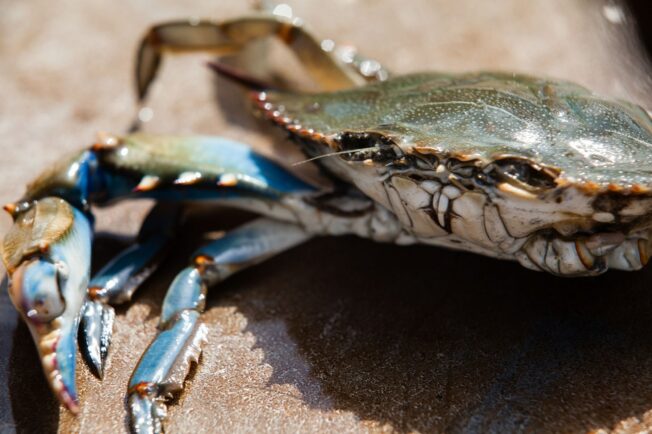
Perhaps no species is more closely associated with the Chesapeake Bay than the blue crab. It is estimated that one-third of the nation’s blue crab catch comes from the Bay. Because they reproduce by the millions and eat virtually anything, crabs are one of the Bay’s most hardy species. Good water quality and adequate habitat are important for the crab’s continued health. (Read More)
Blue Crab Fishery Management
The Chesapeake Bay fishing industry holds tremendous commercial, cultural, and historic value. Managing the blue crab, oyster, striped bass, shad, and menhaden fisheries is also critical to restoring and protecting these species and their important place in the ecosystem. (Read More)
Bottom Habitat
The Bay’s bottom is home to many small creatures such as worms, clams and tiny crustaceans. These creatures, called benthic macroinvertebrates, live on or in the bottom sediments.
Benthic macroinvertebrates are especially sensitive to increases in chemical contaminants and decreases in oxygen. Since they cannot move to avoid poor environmental conditions, the health of benthic macroinvertebrates is an excellent indicator of the Bay’s health.
The Benthic Index of Biotic Integrity makes a good integrator of long-term environmental conditions because benthic organisms have limited mobility and their responses to stress are well documented.
(Read More)
Chemical Contaminants
Chemical contaminants such as metals and polychlorinated biphenyls (PCBs) can be found in the Chesapeake Bay’s fish and bottom sediments. Toxic chemicals can harm the Bay ecosystem and human health. Toxins tend to accumulate in predatory species at the top of the food web. These contaminants have the potential to affect humans who eat contaminated fish. By analyzing the tissues of specific types of fish, scientists can estimate the overall presence of contaminants in the Bay ecosystem. (Read More)
Chesapeake Bay Gateways Designated
For people to deeply value the Bay and the thousands of streams, creeks and rivers that flow into it, they need access to wildlife and the outdoors. Public access areas allow people to enjoy activities such as fishing, swimming, kayaking, hiking and picnicking. Access to natural areas helps people create a personal connection with the Bay watershed and builds support for restoration efforts. Bay Program partners continue to increase and improve access in an environmentally sensitive manner through the Chesapeake Bay Gateways Network, water trails and the Captain John Smith Chesapeake National Historic Trail. Learn more about enhancing public access and find public access points around the watershed. (Read More)
Chesapeake Bay Watershed Population
The way people use the land has a major effect on the Bay and its local waterways. Natural areas like forests and wetlands have a positive effect on the Bay’s health, whereas developed lands generally contribute more pollution.
The Chesapeake Bay’s decline is directly linked to the rise in the number of people that live in the watershed. Since 1950, the Bay watershed’s population has more than doubled.
(Read More)
Chlorophyll a
Scientists study chlorophyll a to determine the amount of algae present in the Bay.
Algae are the foundation of the food web and are a necessary part of a balanced ecosystem. However, too much algae can block sunlight from reaching underwater grasses, reducing the habitat and oxygen that underwater life need to survive. The range of acceptable chlorophyll a concentrations varies by season and salinity.
(Read More)
Developing Watershed Management Plans
Protecting local watersheds is a complicated and challenging task. Watershed management plans are strategic guides that help local communities protect and restore streams, forest buffers, wetlands, parks and other natural areas. Watershed plans preserve not only ecological health, but also the quality of life in communities. (Read More)
Dissolved Oxygen
When oxygen is in water, it is in a dissolved form. Just like animals on land, the Bay’s fish and shellfish need oxygen to survive. Dissolved oxygen concentrations are an important indicator of nutrient pollution and the Bay’s capacity to support life.
The necessary amount of dissolved oxygen varies by species, season and location in the Bay.
Generally, aquatic animals need higher oxygen levels in shallow waters during spring spawning season.
Slightly lower oxygen levels are acceptable during other times of the year, particularly in deeper waters.
The Bay’s low dissolved oxygen levels are primarily the result of excess nutrient pollution, which fuels the growth of algae blooms. Algae eventually die and sink to the Bay’s bottom, where they are decomposed by bacteria in a process that depletes oxygen.
(Read More)
Education and Interpretation
Perhaps the best way to foster Bay stewardship is through education, especially for the millions of children who live in the watershed. The long-term health of the environment will depend on their interest and ability to protect nature. Bay Program partners continue to promote environmental education at elementary, middle and high schools, with a focus on providing MWEEs for all students before they graduate. Incorporating MWEEs in formal education is essential to changing people’s stewardship ethic over the long-term. Research has shown that intensive, sustained experiences with nature are very effective at increasing stewardship ethics. Bay Program partners also provide lifelong learning opportunities for citizens of all ages, with information and interpretation at a multitude of locations in the region. (Read More)
Health of Freshwater Streams in the Chesapeake Bay Watershed
An effective way to measure the health of freshwater streams and rivers is to study the many tiny creatures that live in these waters. The abundance and diversity of snails, mussels, insects and other bottom-dwelling organisms – known as benthic macroinvertebrates – are good indicators of the health of streams because these creatures can’t move very far and they respond in certain predictable ways to pollution and environmental stresses.
A healthy Bay watershed would have a majority of streams ranked as fair, good or excellent. Some generalizations about the health of the watershed’s streams can be made:
Streams tend to be in very poor to fair condition around large urban areas, such as metropolitan Washington, D.C. Streams in heavily farmed or mined areas are also often in very poor to fair condition. These (Read More)
Juvenile Menhaden Abundance (Maryland)
Menhaden play an important ecological role in the Bay. They are food for top predators such as striped bass and they filter the water while feeding. The menhaden stock is managed under the Atlantic States Marine Fisheries Commission (ASMFC) using abundance targets and thresholds. In 2006, the ASMFC placed a cap of 109,020 metric tons on commercial menhaden harvest from the Bay. A coast-wide stock assessment was completed in 2009. (Read More)
Mid-Channel Water Clarity
Water clarity measures the depth to which light can penetrate into the water. It is routinely hindered by the amount of fine sediment, plankton and other debris suspended in the water. Greater water clarity generally leads to a healthier Bay.
(Read More)
Native Oyster Abundance
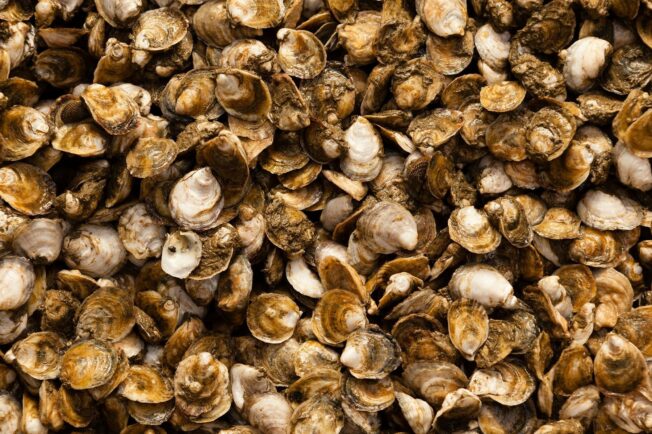
Oysters are a valuable species because they improve water quality, provide habitat for aquatic life and contribute to the region’s economy. Oysters filter water as they feed, which increases water clarity. It is estimated that at their historic population peak, oysters filtered all of the Bay’s water in less than one week. It takes about one year for the current population to do so. Oysters have also constituted one of the Bay’s most valuable commercial fisheries for more than a century. Pollution, historic overharvesting, and the diseases MSX and Dermo have caused the oyster population to decline severely. (Read More)
Nitrogen in Rivers Entering Chesapeake Bay: Long-Term Flow-Adjusted Concentration Trends
Nitrogen concentrations are highly variable, depending on the amount of water flowing in streams and rivers throughout the Bay watershed. Therefore, scientists calculate flow-adjusted trends to determine whether concentrations have changed over time. By removing the effects of natural variations in streamflow, resource managers can evaluate the changes in stream health that may result from nutrient-reduction actions or other changes within the watershed.
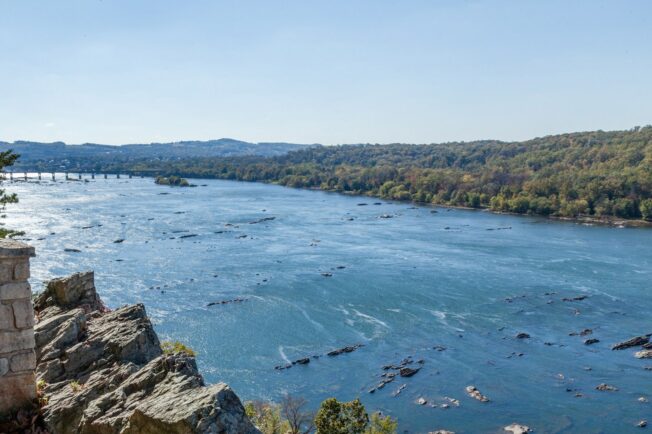
Since the 1980s, Bay Program partners have collected data on stream flow and water quality at 31 locations throughout the non-tidal portions of the watershed. These watershed monitoring sites collectively represent 78 percent of the area of the Bay basin and range in size from the 100-square-mile Choptank River watershed to the Susquehanna River’s 27,000 square mile watershed.
(Read More)
Nitrogen Loads and River Flow to the Bay
Each day, billions of gallons of fresh water flow through thousands of streams and rivers that eventually empty into the Bay. That water also carries polluted runoff from throughout the watershed. The amount of water flowing into the Bay from its tributaries has a direct impact on how much pollution is in the estuary: Generally, as river flow increases, it brings more nutrient and sediment pollution to the Bay. Runoff from winter and spring rains delivers pollution loads that drive summer water quality conditions in the Bay. Years with low or high amounts of precipitation can result in changes to pollution levels in the Bay, but not mean the health of the watershed is improving or declining. Not all rain water runs off the land. Some water seeps into the soil, carrying nutrients into groundwater. The travel time of nutrients (Read More)
Nitrogen Short-Term Flow Adjusted Concentration Trends Measured in Watershed Streams and Rivers
Nitrogen is a type of nutrient contributing to poor water quality in aquatic ecosystems. Elevated nitrogen levels may cause excessive algal growth, blocking out sunlight and reducing oxygen for fish and other underwater life.
Nitrogen concentrations are highly variable, depending on the amount of water flowing in streams and rivers throughout the Bay watershed. Therefore, scientists calculate flow-adjusted trends to determine whether concentrations have changed over time. By removing the effects of natural variations in streamflow, resource managers can evaluate the changes in stream health that may result from nutrient-reduction actions or other changes within the watershed.
Nitrogen concentrations are monitored near the head of tide (River Input Monitoring Program) in nine of the Bay's major tributaries, and at 39 locations upstream from the River Input sites.
(Read More)
Nitrogen Yields Measured in Watershed Streams and Rivers
Nitrogen is a type of nutrient contributing to poor water quality in aquatic ecosystems. Elevated nitrogen levels may cause excessive algal growth, blocking out sunlight and reducing oxygen for fish and other underwater life.
Nitrogen concentrations are monitored near the head of tide (River Input Monitoring Program) in nine of the Bay's major tributaries, and at 56 locations upstream from the River Input sites.
(Read More)
Phosphorus in Rivers Entering Chesapeake Bay: Long Term Flow-Adjusted Concentration Trends
Phosphorus concentrations are highly variable, depending on the amount of water flowing in streams and rivers throughout the Bay watershed. Therefore, scientists calculate flow-adjusted trends to determine whether concentrations have changed over time. By removing the effects of natural variations in streamflow, resource managers can evaluate the changes in stream health that may result from nutrient-reduction actions or other changes within the watershed.
Since the 1980s, Bay Program partners have collected data on stream flow and water quality at 31 locations throughout the non-tidal portions of the watershed. These watershed monitoring sites collectively represent 78 percent of the area of the Bay basin and range in size from the 100-square-mile Choptank River watershed to the Susquehanna River’s 27,000 square mile watershed.
(Read More)
Phosphorus Loads and River Flow to the Bay
Each day, billions of gallons of fresh water flow through thousands of streams and rivers that eventually empty into the Bay. That water also carries polluted runoff from throughout the watershed. The amount of water flowing into the Bay from its tributaries has a direct impact on how much pollution is in the estuary: Generally, as river flow increases, it brings more nutrient and sediment pollution to the Bay. Runoff from winter and spring rains delivers pollution loads that drive summer water quality conditions in the Bay. Years with low or high amounts of precipitation can result in changes to pollution levels in the Bay, but not mean the health of the watershed is improving or declining. Preliminary estimates show that approximately 47.8 million pounds of phosphorus reached the Bay during the 2011 water year (October 2010-September 2011). This is 29 million pounds more (Read More)
Phosphorus Short-Term Flow Adjusted Concentration Trends Measured in Watershed Streams and Rivers
Phosphorus is a type of nutrient contributing to poor water quality in aquatic ecosystems. Elevated phosphorus levels may cause excessive algal growth, blocking out sunlight and reducing oxygen for fish and other underwater life.
Phosphorus concentrations are highly variable, depending on the amount of water flowing in streams and rivers throughout the Bay watershed. Therefore, scientists calculate flow-adjusted trends to determine whether concentrations have changed over time. By removing the effects of natural variations in streamflow, resource managers can evaluate the changes in stream health that may result from nutrient-reduction actions or other changes within the watershed.
Phosphorus concentrations are monitored near the head of tide (River Input Monitoring Program) in nine of the Bay's major tributaries, and at 39 locations upstream from the River Input sites.
(Read More)
Phosphorus Yields Measured in Watershed Streams and Rivers
Phosphorus is a type of nutrient contributing to poor water quality in aquatic ecosystems. Elevated phosphorus levels may cause excessive algal growth, blocking out sunlight and reducing oxygen for fish and other underwater life.
Phosphorus concentrations are monitored near the head of tide (River Input Monitoring Program) in nine of the Bay's major tributaries, and at 56 locations upstream from the River Input sites.
(Read More)
Phytoplankton
Phytoplankton (algae) are the critical base of most Chesapeake food webs. Moderate, stable phytoplankton levels are needed for healthy bottom-dwelling species, which support larger species such as fish and birds.
However, too much or the wrong type of algae can be detrimental to the overall health of the Bay by decreasing oxygen, blocking sunlight and harming aquatic life. In some cases, algae blooms can also harm human health.
Phytoplankton serve as an excellent indicator of the health of the Bay’s surface waters because they are especially sensitive to changes in pollution, water clarity, temperature and salinity.
(Read More)
Planting Bay Grasses
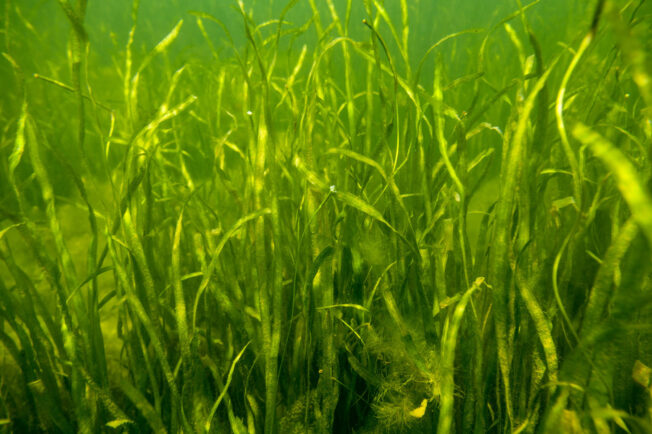
Bay grasses, or SAV, need clean, clear water to grow and naturally expand. For this reason, efforts to reduce water pollution have a positive influence on restoring bay grasses.
In addition to reducing pollution, some Bay Program partners collect seeds and plant bay grasses in the Bay and its rivers. These plantings are located in areas without bay grasses but where water quality should support growth.
(Read More)
Planting Forest Buffers
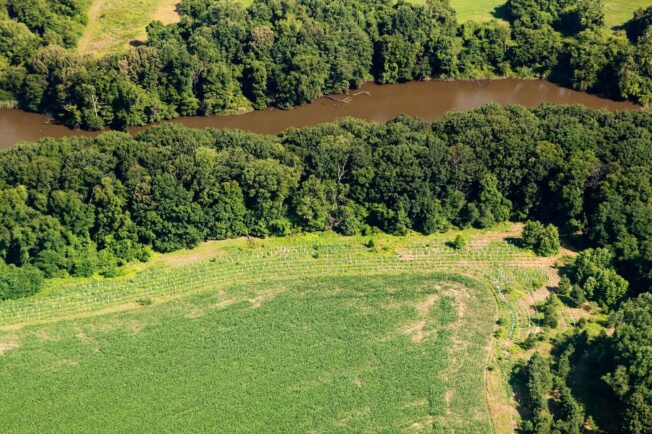
Forest buffers are trees and other plants that line the banks of waterways. Forest buffers are important because they:
Provide wildlife habitat
Stabilize stream banks from erosion
Keep river water cool, which is important for many fish.
Well-maintained forest buffers also absorb pollution, which helps improve the health of neighboring streams and rivers as well as the water downstream.
Bay Program partners are planting forest buffers along thousands of miles of streams, creeks and rivers throughout the Bay watershed.
(Read More)
Protected Lands
States, local governments, federal agencies and non-governmental organizations have identified millions of acres of lands with important conservation values—lands key to working farms and forests, to maintaining water quality, to sustaining fish and wildlife, to preserving our history, and to providing for outdoor recreation. These lands are what form the ecological and cultural heritage of the Chesapeake watershed. Population growth, development and climate change increase pressure on some of the most valuable lands. For decades, Bay Program partners have pursued land conservation through permanently protecting important conservation lands by buying key properties, accepting donations, arranging for easements and purchasing development rights.
(Read More)
Public Access
Open, green spaces and waterways with ample public access bolster public health and quality of life. People rely on these special places to exercise, relax, and recharge their spirits. Outdoor time strengthens family bonds and nurtures fit, creative children. At the same time, it builds personal connections with the very places that have shaped life in the region for centuries—especially its streams, rivers, and bays. Public access to natural areas also has a distinct economic value as tourism, much of which is associated with the area’s waters, and is a potent force in the region.
The sense of place that evolves from outdoor experiences along Chesapeake waters often leads to a feeling of shared responsibility for the resources. People who enjoy the outdoors are more likely to become active citizen stewards, engaged in the many conservation (Read More)
Reducing Nitrogen Pollution
The Bay cannot be restored without water that is clean, clear and rich in oxygen. Currently, the Bay and its rivers receive too much nitrogen, phosphorus and sediment for the ecosystem to remain healthy. The primary sources of these pollutants are agricultural runoff and discharges, wastewater treatment plant discharges, urban and suburban runoff and septic tank discharges, and air deposition. (Read More)
Reducing Phosphorus Pollution
The Bay cannot be restored without water that is clean, clear and rich in oxygen. Currently, the Bay and its rivers receive too much nitrogen, phosphorus and sediment for the ecosystem to remain healthy. The primary sources of these pollutants are agricultural runoff and discharges, wastewater treatment plant discharges, urban and suburban runoff and septic tank discharges, and air deposition. (Read More)
Reducing Sediment Pollution
The Bay cannot be restored without water that is clean, clear and rich in oxygen. Currently, the Bay and its rivers receive too much nitrogen, phosphorus and sediment for the ecosystem to remain healthy. The primary sources of these pollutants are agricultural runoff and discharges, wastewater treatment plant discharges, urban and suburban runoff and septic tank discharges, and air deposition. (Read More)
Reopening Fish Passage
Dams, culverts and other barriers block migratory fish from reaching their spawning grounds and reduce habitat for local fish in streams, creeks and rivers. These barriers are being removed or new lifts, ladders and passageways are being installed to allow fish to swim upstream.
Priority is given to fish passage restoration projects that open large stretches of habitat, remove dams, enhance migratory fish passage, and remove impediments in streams that were previously affected by acid mine drainage. Many of these projects also restore the flow of waterways and reduce sediment accumulation.
(Read More)
Restoring Oyster Reefs
Restoring oyster reefs throughout the Bay is a primary part of the strategy for increasing the native oyster population. To rebuild reefs, both oyster shells and alternate materials for oysters to grow on are planted in the Bay. Also, oysters are grown in hatcheries and then planted in natural and man-made habitats. Restoring reefs provides the potential to increase populations of spawning adult oysters and, in turn, larval production. Many of these rebuilt reefs are designated as oyster sanctuaries and protected from harvest. (Read More)
Restoring Wetlands
Because of the many benefits of wetlands – including providing habitat, filtering water and preventing erosion – work is ongoing to increase wetland acreage. This involves establishing wetlandoutcomes where they do not exist or reestablishing former wetlands to their natural state. Removing invasive species is also a way to rehabilitate degraded wetlands. Additionally, wetlands are often protected through land purchases or conservation easements. (Read More)
River Flow Into Chesapeake Bay
Each day, billions of gallons of fresh water flow through thousands of streams and rivers that eventually empty into the Bay. That water also carries polluted runoff from throughout the watershed. The amount of water flowing into the Bay from its tributaries has a direct impact on how much pollution is in the estuary: Generally, as river flow increases, it brings more nutrient and sediment pollution to the Bay. Runoff from winter and spring rains delivers pollution loads that drive summer water quality conditions in the Bay. Years with low or high amounts of precipitation can result in changes to pollution levels in the Bay, but not mean the health of the watershed is improving or declining. Not all rain water runs off the land. Some water seeps into the soil, carrying nutrients into groundwater. The travel time of nutrients (Read More)
Sediment in Rivers Entering Chesapeake Bay: Long Term Flow-Adjusted Concentration Trends
Sediment concentrations are highly variable, depending on the amount of water flowing in streams and rivers throughout the Bay watershed. Therefore, scientists calculate flow-adjusted trends to determine whether concentrations have changed over time. By removing the effects of natural variations in streamflow, resource managers can evaluate the changes in stream health that may result from erosion and runoff controls or other changes within the watershed.
Since the 1980s, Bay Program partners have collected data on stream flow and water quality at 31 locations throughout the non-tidal portions of the watershed. These watershed monitoring sites collectively represent 78 percent of the area of the Bay basin and range in size from the 100-square-mile Choptank River watershed to the Susquehanna River’s 27,000 square mile watershed.
(Read More)
Sediment Loads and River Flow to the Bay
Each day, billions of gallons of fresh water flow through thousands of streams and rivers that eventually empty into the Bay. That water also carries polluted runoff from throughout the watershed. The amount of water flowing into the Bay from its tributaries has a direct impact on how much pollution is in the estuary: Generally, as river flow increases, it brings more sediment and nutrient pollution to the Bay. Runoff from winter and spring rains delivers pollution loads that drive summer water quality conditions in the Bay. Years with low or high amounts of precipitation can result in changes to pollution levels in the Bay, but not mean the health of the watershed is improving or declining. (Read More)
Sediment Short-Term Flow Adjusted Concentration Trends Measured in Watershed Streams and Rivers
Suspended sediment consists of the fine and medium-grained particulate matter that is transported in streams and rivers. Excess sediment in stream channels, causes impaired benthic habitat and decreased water clarity. When delivered to the Chesapeake Bay, suspended sediment causes impaired aquatic habitat, reduced water clarity, and can fill in navigational channels and embayments.
Sediment concentrations are highly variable and strongly related to streamflow conditions. Flow-adjusted trends are calculated in order to statistically determine whether concentrations have changed over time by removing the effects of natural variations in streamflow. Because flow-adjusted trends are independent of streamflow variations, they permit evaluation of the changes in sediment concentration that may result from erosion and runoff controls or other changes within the watershed.
Sediment concentrations are monitored near the head of tide (River Input Monitoring Program) in nine of the Bay's major tributaries, (Read More)
Sediment Yields Measured in Watershed Streams and Rivers
Excess sediment suspended contributes to poor water quality in aquatic ecosystems. When there is too much sediment in the water it becomes cloudy, blocking sunlight from reaching underwater plants. Excess suspended sediment can also smother bottom-dwelling organisms and bury important aquatic habitats, and can fill navigational channels.
Sediment concentrations are monitored near the head of tide (River Input Monitoring Program) in nine of the Bay's major tributaries, and at 56 locations upstream from the River Input sites.
(Read More)
Striped Bass Abundance
The Chesapeake Bay is the primary spawning and nursery habitat for striped bass on the East Coast. Striped bass support one of the most important commercial and recreational fisheries on the Atlantic seaboard. The striped bass population rebounded from historic lows in the mid-1980s to highs that exceed the population target. Multi-state fishing moratoria in the late 1980s, as well as commercial quotas and recreational harvest limits set in the 1990s, were successful at rebuilding the stock. However, scientists are now concerned about the high prevalence of disease (mycobacteriosis) and whether there are enough prey available to adequately support this predatory fish. (Read More)
Tidal Wetlands Abundance
In addition to being places of tremendous beauty, wetlands connect the land to the water. Throughout the Chesapeake Bay, these areas of transition provide unique habitats for a rich diversity of land animals and aquatic life. Wetlands also act as sponges and natural filters by absorbing runoff and removing pollution from water before it enters streams, creeks, rivers and the Bay. But the Chesapeake’s wetlands are fragile and threatened by shoreline development, sea level rise and invasive species. Learn more about wetlands and wetlands restoration. (Read More)
Underwater Bay Grass Abundance (Baywide)
Underwater grasses provide significant benefits to aquatic life and serve many critical ecological functions in the Bay and its tributaries, such as:
Providing shelter for young striped bass, blue crabs and other species
Improving water clarity by helping suspended sediment particles settle to the bottom
Adding oxygen to the water
Reducing shoreline erosion
Scientists believe that having more grasses in the Bay and rivers will dramatically improve the entire ecosystem. The expectation is that as nutrient and sediment pollution decrease and water clarity improves, underwater grass acreages should expand. Experts closely monitor underwater grasses because their well-being is dependent on good local water quality. Therefore, their abundance is an excellent measure of the Bay’s health.
(Read More)
Underwater Bay Grass Abundance (Upper, Middle and Lower Bay Zones)
Underwater grasses provide significant benefits to aquatic life and serve many critical ecological functions in the Bay and its tributaries, such as: Providing shelter for young striped bass, blue crabs and other species Improving water clarity by helping suspended sediment particles settle to the bottom Adding oxygen to the water Reducing shoreline erosion Scientists believe that having more grasses in the Bay and rivers will dramatically improve the entire ecosystem. The expectation is that as nutrient and sediment pollution decrease and water clarity improves, underwater grass acreages should expand. Experts closely monitor underwater grasses because their well-being is dependent on good local water quality. Therefore, their abundance is an excellent measure of the Bay’s health. (Read More)
Underwater Bay Grass Density
Underwater grasses provide significant benefits to aquatic life and serve many critical ecological functions in the Bay and its tributaries, such as: Providing shelter for young striped bass, blue crabs and other species Improving water clarity by helping suspended sediment particles settle to the bottom Adding oxygen to the water Reducing shoreline erosion Scientists believe that having more grasses in the Bay and rivers will dramatically improve the entire ecosystem. The expectation is that as nutrient and sediment pollution decrease and water clarity improves, underwater grass acreages should expand. Experts closely monitor underwater grasses because their well-being is dependent on good local water quality. Therefore, their abundance is an excellent measure of the Bay’s health.. (Read More)
Wastewater
The Bay cannot be restored without water that is clean, clear and rich in oxygen. Currently, the Bay and its rivers receive too much nitrogen, phosphorus and sediment for the ecosystem to remain healthy. Wastewater treatment plant discharges are one of the primary sources of these pollutants, and permit limits drive efforts to reduce loads. However, annual wastewater discharges are affected by multiple factors including weather events. This indicator provides important information on progress toward having permit limits in effect that meet applicable water quality standards to supplement information on pollutant loads associated with wastewater, which are tracked in the Reducing Nitrogen, Phosphorus and Sediment Pollution indicators. (Read More)
Water Trails in the Chesapeake Bay Watershed
For people to deeply value the Bay and the thousands of streams, creeks and rivers that flow into it, they need access to wildlife and the outdoors. Public access areas allow people to enjoy activities such as fishing, swimming, kayaking, hiking and picnicking. Access to natural areas helps people create a personal connection with the Bay watershed and builds support for restoration efforts. Bay Program partners continue to increase and improve access in an environmentally sensitive manner through the Chesapeake Bay Gateways Network, water trails and the Captain John Smith Chesapeake National Historic Trail. Learn more about enhancing public access and find public access points around the watershed. (Read More)
Wetlands Enhancement and Rehabilitation
Wetlands serve multiple ecological functions. Restoring and enhancing wetlands can provide critical wildlife habitat for many species, including fish, birds, shellfish, amphibians and mammals. In addition to habitat, wetlands also help clean the water by filtering excess nutrients and sediments. (Read More)