
Crane flies
(Tanyptera)
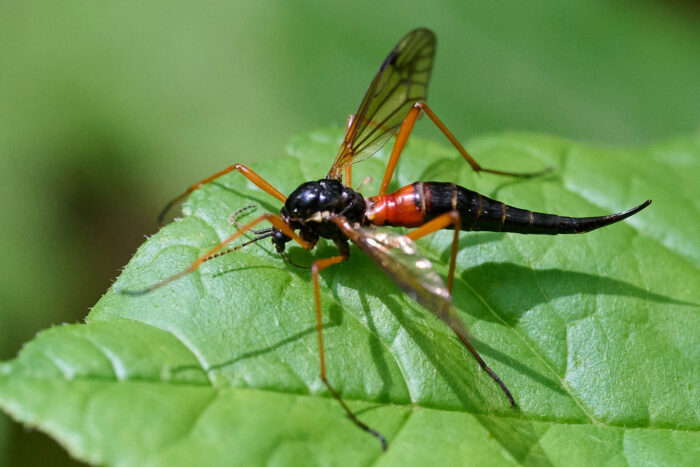
Perfect food for fish and waterfowl, crane flies are delicate insects that look like oversized mosquitoes but do not bite or sting.
This section shows one large critter image at a time. Use the thumbnails that follow to select a specific image to display here.
This gallery contains a grid of small thumbnails. Selecting a thumbnail will change the main image in the preceding section.
Appearance
Crane flies resemble giant mosquitoes but are harmless. They have slender, elongated bodies, long fragile legs and narrow wings that can span up to 3 inches. Adults are usually gray, brown, or tan in color, with clear or lightly veined wings. Larvae, are gray-brown, wormlike grubs that lack legs.
Feeding
Since adult crane flies only live for a handful of day, they do not feed, relying on energy reserves built up as larvae. Larvae feed on roots, fungi, algae and decaying organic matter in the soil and water. This helps to recycle nutrients that improves soil health.
Predators
Crane flies are preyed upon by birds, amphibians, fish, spiders and predatory insects. Their long legs detach easily when grabbed, helping them escape predators. Larvae are eaten by fish, frogs and birds that forage in soil and wetlands.
Flight
Crane flies have a weak, fluttery flight and often appear clumsy in the air. Their long dangling legs trail behind their narrow body and wings while they fly.
Reproduction and life cycle
Crane flies breed during spring and late summer in moist soil or marsh. Females lay hundreds of eggs and they hatch in about two weeks into larvae. Larvae live in freshwater streams and adults emerge in late spring through fall, living only long enough to reproduce.
Did you know?
- Crane flies are sometimes called “mosquito hawks,” even though they do not eat mosquitoes.
- The larvae are known as “leatherjackets."
Sources and additional information
- May 2025 Macro of the Month: Crane Flies - Minnesota Trout Unlimited
- What's Up With All the Crane Flies? - The University of Arizona
- Crane Fly - Texas A&M AgriLife Extension