
A 445-million-year-old critter continues to visit the Bay
The horseshoe crab uses a variety of adaptations to survive
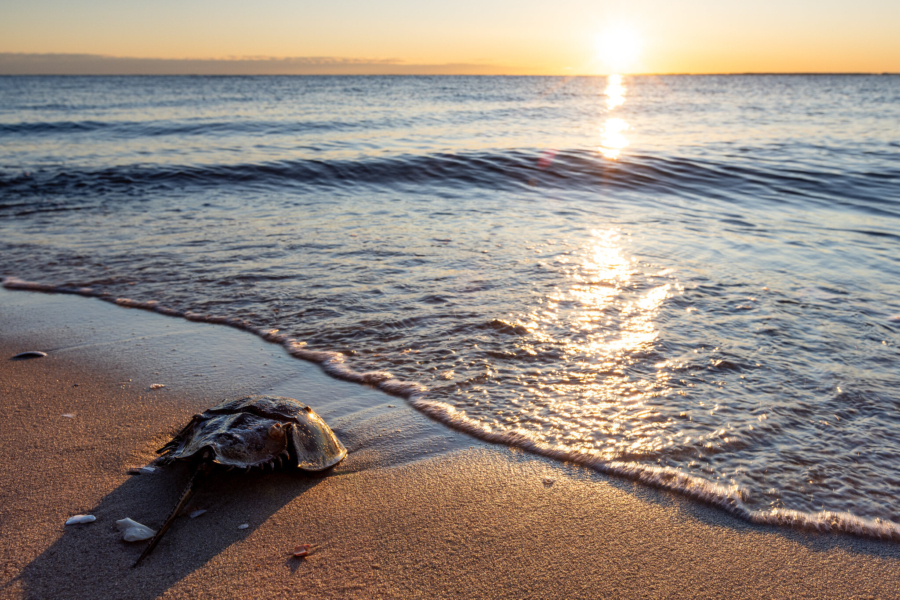
The Chesapeake Bay is home to a number of prehistoric creatures, from the loggerhead sea turtle to the Atlantic sturgeon, both of which have been around for somewhere between 100 and 120 million years. Though in terms of age, few hold a candle to the horseshoe crab. This fascinating arthropod has remained largely unchanged for around 445 million years, earning them the nickname "living fossils."
Every spring and early summer, thousands of horseshoe crabs emerge from deeper waters and gather on sandy beaches around the Chesapeake Bay to spawn. Timing their arrival with high tides during full and new moons, females lay clusters of thousands of green eggs while smaller males fertilize them. Over the course of a season, a single female can return to the same beach several times to lay eggs.
While it’s important to protect these nesting grounds from human disturbance, the thousands of eggs serve as a critical food source for migratory birds.
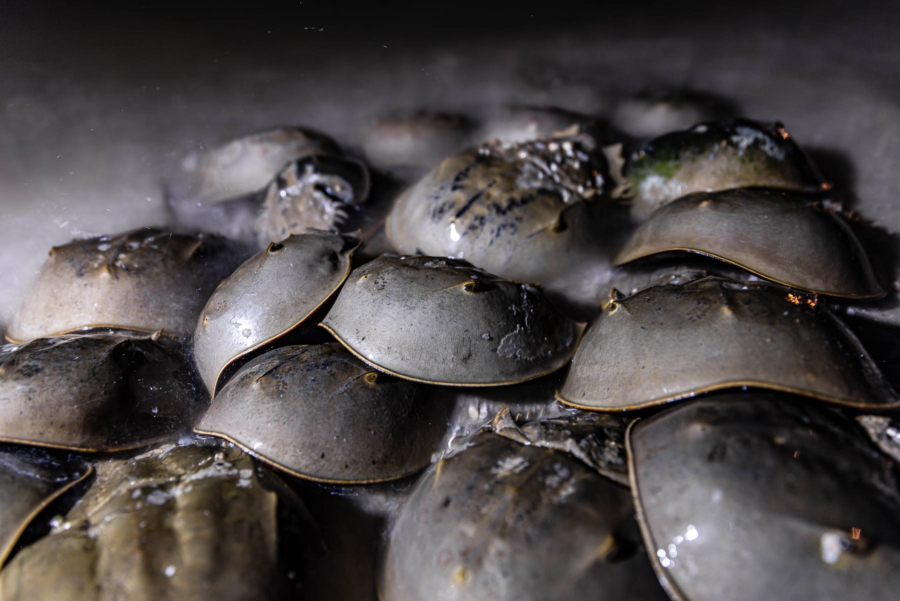
Adult horseshoe crabs spend much of the year on the Bay's bottom, where they search through sand and mud for worms, clams and other small invertebrates. Because they don't have jaws, horseshoe crabs crush their food with the spiny bases of their legs before pushing it into their mouths. Like other arthropods, they periodically molt, shedding their old exoskeletons as they grow. If you've ever found what looked like an empty horseshoe crab on the beach, it was likely just a discarded shell rather than a dead animal.
When walking along beaches of the Bay, it’s not uncommon to find a horseshoe crab flipped onto its back. In most cases, horseshoe crabs can survive in this position until the tide flips them back over, using extra water stored in their gills to stay hydrated. Horseshoe crabs will also use their strong tail, called a telson, to right themselves. With that said, it is still safe for you to gently flip an upside down horseshoe crab back over yourself.
Protected beaches along the Bay gives horseshoe crabs more space to safely mate and lay their eggs without predators interfering. From the 1850s to the 1970s, millions of horseshoe crabs were collected every year to be used as fertilizer for crops. Although regulations have been put into place to restrict this practice, horseshoe crabs are still harvested to be used as bait for anglers and for biomedical purposes.
The next time you visit a Chesapeake Bay beach, keep an eye out for this prehistoric creature that continues to find habitat along the estuary.
To learn more about critters that live in and around the Bay, visit our field guide.
Comments
There are no comments.
Thank you!
Your comment has been received. Before it can be published, the comment will be reviewed by our team to ensure it adheres with our rules of engagement.
Back to recent stories