
A familiar scene ushers in a new era of Chesapeake Bay restoration
The Executive Council approves a revised Watershed Agreement 42 years after the first one was signed
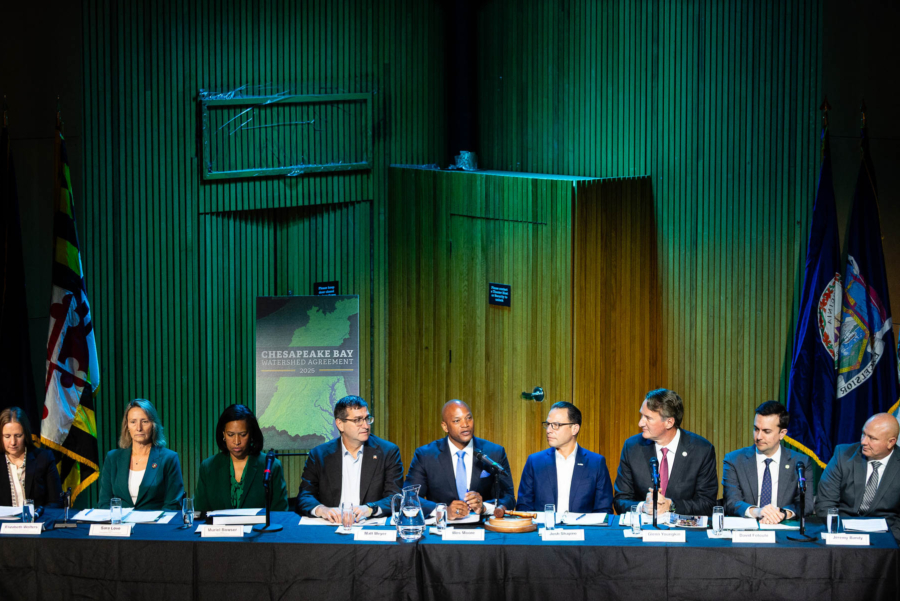
The scene was strikingly similar to one from 42 years ago. In front of a large crowd sat the governors of Maryland, Pennsylvania and Virginia; the mayor of Washington, D.C.; the deputy administrator of the Environmental Protection Agency (EPA); and the chair of the Chesapeake Bay Commission (CBC), dressed in their professional best and excitedly describing plans to restore the Chesapeake Bay.
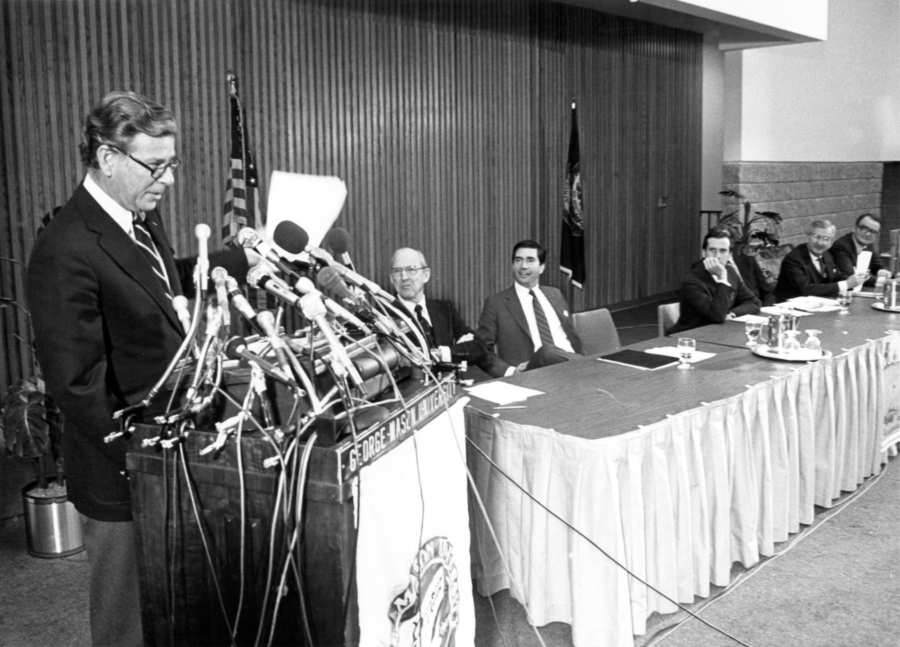
Forty-two years earlier, a similar group–including the Pennsylvania Lieutenant Governor and the EPA Administrator—also stood before a crowd, outlining a vision for the restoration of the Chesapeake Bay.
But the scene this December was also notably different. Joining the original signatories were the governor of Delaware, and representatives from New York and West Virginia. In the crowd were four board members of the Indigenous Conservation Council—Chief Anne Richardson of the Rappahannock Tribe, Chief Frank Adams of the Upper Mattaponi Tribe, Second Assistant Chief Reggie Stewart of the Chickahominy Tribe and Tribal Councilwoman Barbara Orf of the Nansemond Indian Nation. And instead of the one-page Chesapeake Bay Agreement that created the partnership known as the Chesapeake Bay Program, the officials announced the approval of the revised Chesapeake Bay Watershed Agreement, which outlines four goals and 21 outcomes covering everything from water quality to environmental literacy to wetland restoration.
A Revised Chesapeake Bay Watershed Agreement
Over the past 42 years, three other agreements have guided Chesapeake Bay restoration. The 1987 Chesapeake Bay Agreement established the first numeric goals to reduce pollution, while Chesapeake 2000 established 102 goals that expanded into fisheries management and sound land use practices.
Then came the 2014 Chesapeake Bay Watershed Agreement–the first agreement to add “watershed” in the title, with the headwaters states of Delaware, New York and West Virginia signing on. The agreement aligned with federal directives like the Chesapeake Bay Total Maximum Daily Load, and incorporated goals that considered changing environmental conditions and expanded objectives to engage all residents of the watershed. It also established expectations for transparency and accountability.
The 2014 agreement included 10 goals and 31 outcomes, several of which set 2025 as a target for achieving progress. While work toward many of these outcomes remains relevant and ongoing, updates were needed to reflect the most current science, data and policy. As a result, the partnership decided to revise the existing Watershed Agreement.
“This refreshed Chesapeake Bay Watershed Agreement marks a new chapter in our enduring partnership, made possible through contributions from experts in every field and input from every corner of the watershed,” Chesapeake Bay Commission Chair Sara Love proudly noted.
Bringing New Partners to the Table
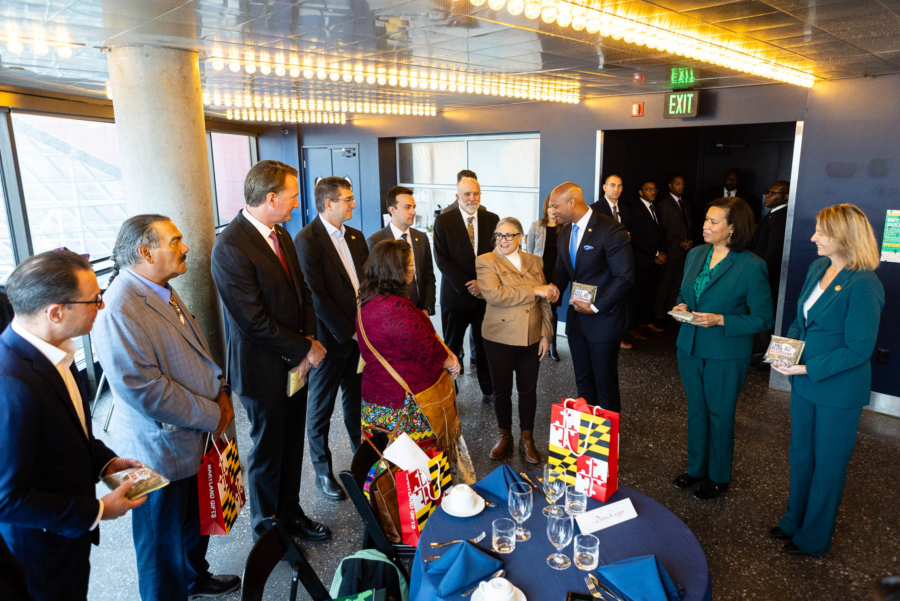
Board members of the Indigenous Conservation Council sat in the audience at the recent Chesapeake Executive Council meeting for a very important reason—the partnership had just been tasked to work with the federally recognized tribes of the watershed to determine how to best include them in the Chesapeake Bay Program moving forward. These recommendations are expected to be presented to the Principals’ Staff Committee by July 1, 2026.
Before the meeting began, the four tribal representatives met with members of the Executive Council for a gift ceremony. Chief Richardson presented each member with wild rice, which is an important symbol in Native traditions that, among its many meanings, honors growing relationships and interdependence.
The meeting also marked the first time the Agricultural Advisory Committee participated. The committee was established at the 2024 Chesapeake Executive Council meeting to facilitate greater engagement with the agricultural sector and advise the partnership on high-level policy recommendations.
“We are also excited to welcome, for the first time, the new Agricultural Advisory Committee and to begin exploring a formal relationship with Indigenous voices of the Chesapeake Bay,” said Abel Olivo, chair of the Stakeholders Advisory Committee.
A headwaters leader takes the reins of the partnership
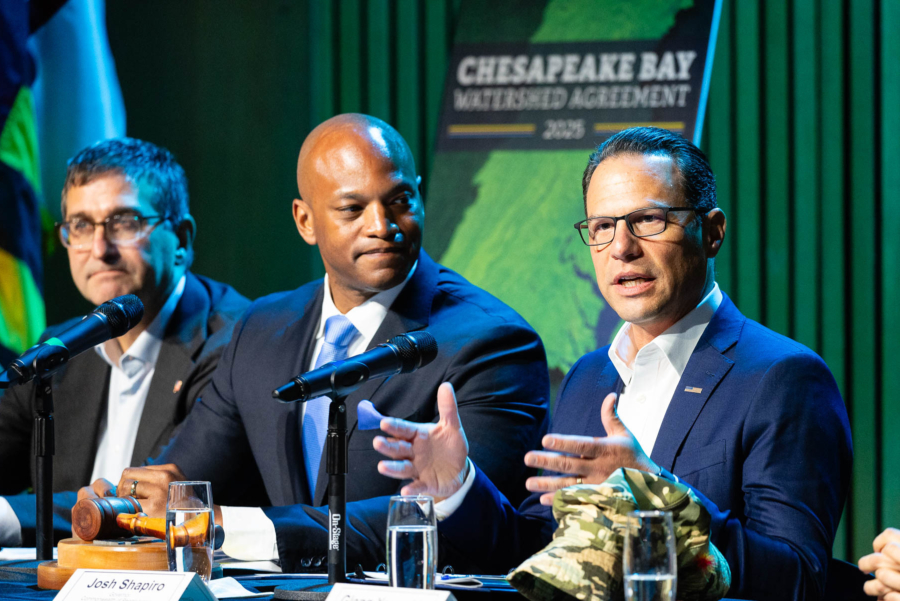
At a comical, yet symbolic, moment of the meeting, outgoing chair Maryland Governor Wes Moore and incoming chair Pennsylvania Governor Josh Shapiro exchanged hats. Gov. Shapiro’s was a wide-brimmed fishing hat decorated with the Maryland flag, while Gov. Moore’s ball cap sported a blue crab.
This light-hearted gesture underscored the importance of this moment. This marked the first time that Pennsylvania had taken over leadership of the partnership in 20 years.
“I’m honored to be elected as the next chair of the Chesapeake Executive Council by my fellow governors and I’m looking forward to continuing this work to get stuff done together for the people we serve,” Gov. Shapiro said.
Comments
There are no comments.
Thank you!
Your comment has been received. Before it can be published, the comment will be reviewed by our team to ensure it adheres with our rules of engagement.
Back to recent stories