
A food forest in Hyattsville, Maryland gives far more than it takes
The Emerson Street Food Forest is open to the public year round
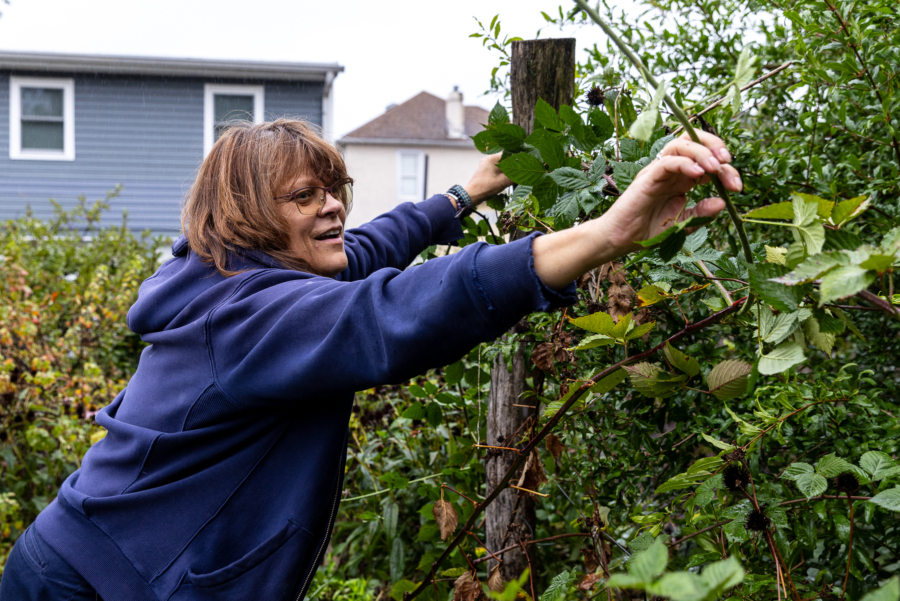
Every community deserves a public space nearby to get out and enjoy nature. But what about a place where you can enjoy nature while picking berries, apples, herbs and leafy green—all for free?
This is the idea behind the Emerson Street Food Forest in Hyattsville, Maryland.
A collaboration between the City of Hyattsville and the University of Maryland, the Emerson Street Food Forest is a public space where visitors can pick produce and see the environmental practice of permaculture in action.
Coined in the 1970s, permaculture is an approach to land management that uses arrangements observed in natural ecosystems. Instead of a traditional garden where crops are in their own separate rows, permaculture layers different plants over one another like they are in the wild. This allows plants to exist in harmony, providing each other with nutrients and deterring pests.
“What one plant gives away, the other one takes—and what one takes, the other one gives back,” said Dawn Taft, environmental programs manager for the city.
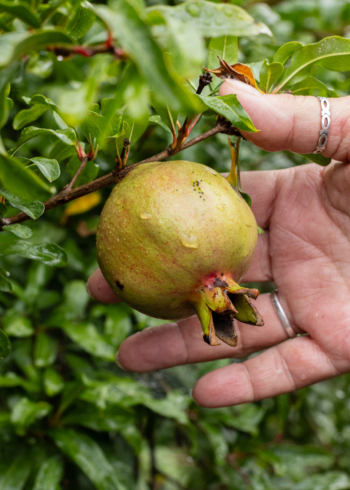
For years now, Taft has been helping to expand the Emerson Street Food Forest, which was designed by permaculture practitioner Lincoln Smith in 2014. Today, you can find an abundance of edible plants, from fruit and nut trees to perennial berries, herbs, legumes and leafy greens. Taft doesn’t use any herbicides or pesticides on the property, since there are no “weeds” to remove and there are enough birds and insects to eat pests.
“There have been no fertilizers, no pesticides, no herbicides, no nothing,” said Taft. “That's what permaculture is about.”
In the spirit of permaculture, residents have even contributed to the forest. According to Taft, a resident who moved from a house with a big yard to an apartment offered her own fruit and vegetables plants to the forest.
“She called me and had all these things to put in the garden. She brought a new fig, goji berries and raspberries,” Taft said.
Because it's a permaculture, the forest requires less work than a typical garden. There’s little weeding since most of the weeds have a purpose, no pesticide application since pests are naturally eaten by birds and insects and less water use since the plants are all native plants acclimated to the climate.
The food forest also provides food to local wildlife. Birds eat the berries or the insects that show up, and pollinators like butterflies and moths get sustenance from the flowers. Having this natural land use absorbs stormwater runoff in an area that otherwise has a lot of development.
Over time, Taft and others have been tinkering with the food forest to perfect its design. In one case, students from the University of Maryland took a persimmon tree that wasn’t producing anything and grafted other species of persimmon onto it. After not producing anything for ten years, that persimmon tree is currently producing fruit.
“I’ve been figuring it out piece by piece,” said Taft.
The Emerson Street Food Forest, located at 4515 Emerson Street, is accompanied by the smaller McClanahan Food Forest at the intersection of Oliver Street & Jamestown Road. To find out what’s available at the forests and what directions to follow when picking, visit the city’s food forest website.
Comments
There are no comments.
Thank you!
Your comment has been received. Before it can be published, the comment will be reviewed by our team to ensure it adheres with our rules of engagement.
Back to recent stories