
A hardwood head start for Virginia’s trees
Virginia Department of Forestry staff are on their way to growing 7 million trees in 2026
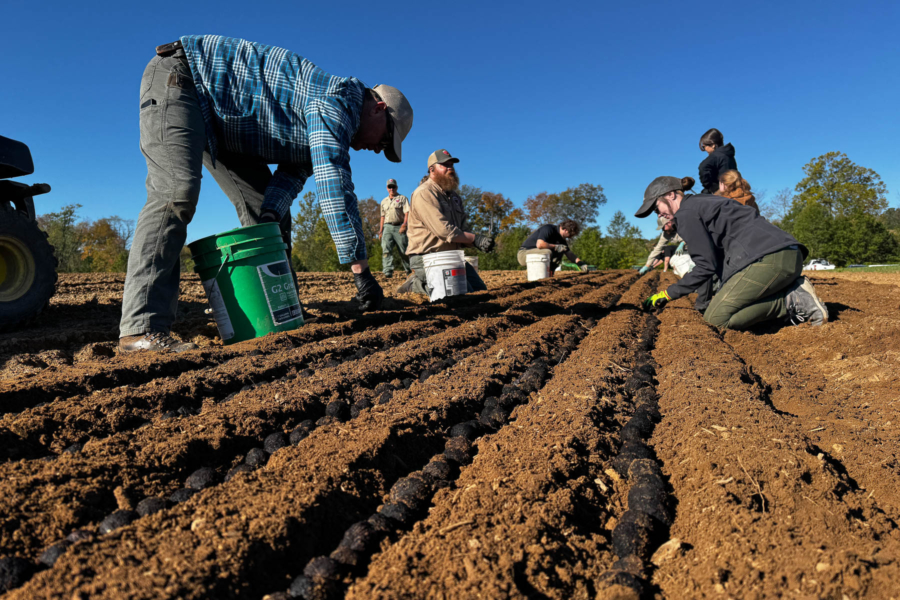
On a crisp fall morning at the Augusta Nursery, Virginia Department of Forestry staff knelt beside rows of soil, placing golf-ball-sized seeds in the dirt. A small truck transported buckets of seeds down to the field staff—a new generation of hardwoods waiting to find a home.
"We’re planting right around 4,000 pounds of seedlings today,” said Jake Good, assistant nursery manager at the Augusta Nursery. “Walnuts, butternuts and bur oak. Everything that’s too large to go through our seeding machine.”
Located in Crimora, the Augusta Nursery is one of two nurseries operated by the Virginia Department of Forestry. Their mission is to provide one-year-old seedlings to public and private landowners looking to plant trees, whether it’s for environmental benefits or personal enjoyment.
According to Good, about 60–70% of the nursery’s inventory goes toward wholesale conservation projects, such as stream restoration and coal mine reclamation. The rest is sold retail to customers across the country. Those retail proceeds are used to fund the nursery’s entire operation, from staff salaries to equipment.
"We're completely self-supported here, so we don't get taxpayer dollars at all,” Good said.
The Augusta Nursery is meeting a critical demand for trees all across the Chesapeake region. Whether planted in cities, suburbs or rural areas, trees help keep the water clean by absorbing polluted runoff and trapping sediment. Streamside trees make the water cooler for coldwater fish like trout, herring and sturgeon, while city street trees make hot summer days safer for residents.
But in many places, the demand for trees is higher than the number of available seedlings. This can cause large-scale tree planting projects to be postponed or gives practitioners fewer species to choose from.
“From what I understand, the supply of hardwood seedlings in the south is only about 10% of what the needs are for tree plantings,” Good said.
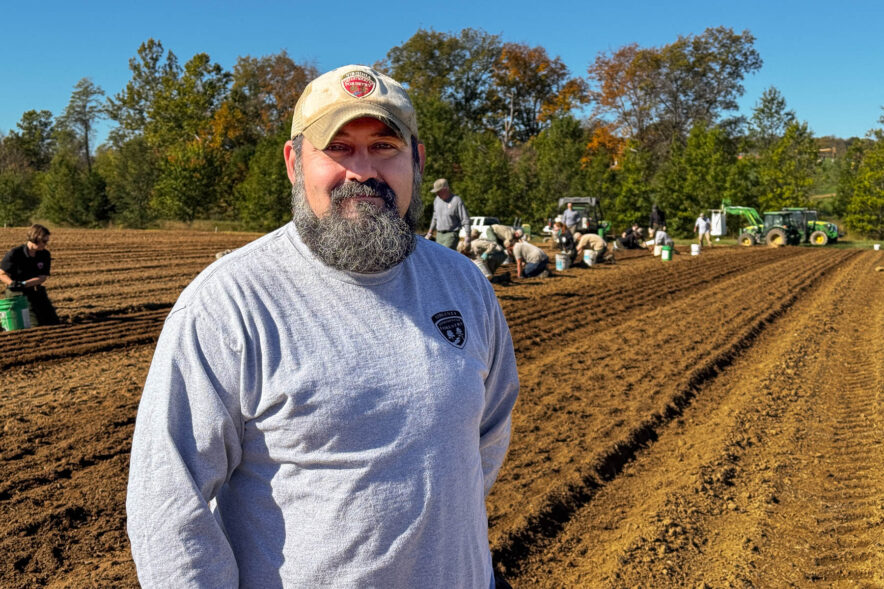
Joshua McLaughlin, nursery manager at the Augusta Nursery, has seen the nursery expand to meet the need for more trees.
"When I started 22 years ago, we were planting roughly about 12 acres worth of ground and about two million trees,” McLaughlin said. “This year, we're a little over 30 acres-worth of ground, growing almost seven million trees.”
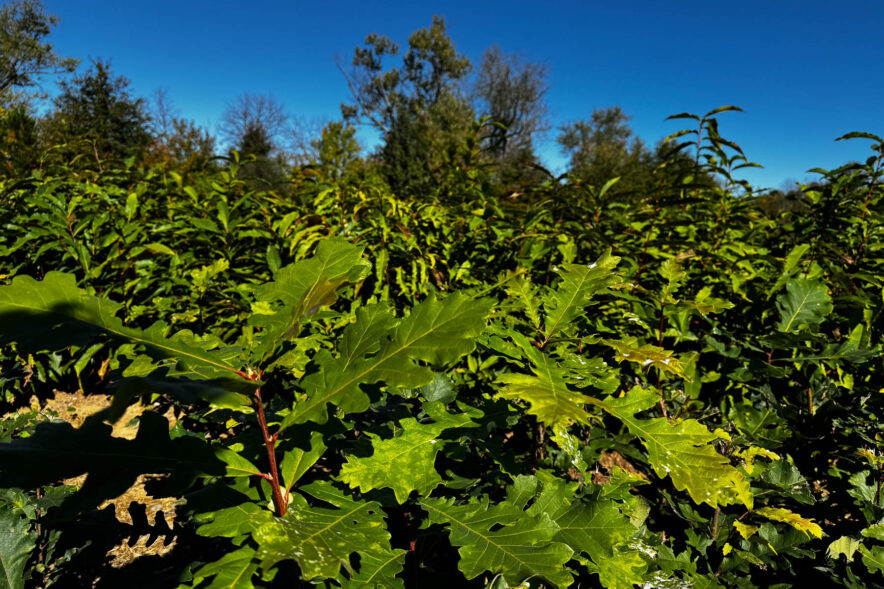
Augusta Nursery is currently growing 73 different species of native hardwood trees. McLaughlin and Good work together to figure out what species to grow based on current market demands. They plant the seeds in the fall and spring and sell them as bare-root seedlings after a year of growth.
Zoe Bergman, research program manager at Virginia Department of Forestry, is currently leading a research project on white oaks to help guide future planting at Augusta. Bergman and her colleagues are planting acorns from across the Eastern U.S. at the Augusta Nursery to study which ones grow the fastest and have the highest survival rates.
"The end goal for the project is twofold: first is for Jake and Josh to have a continual production of white oak acorns where they know the genetics,” Bergman said. “And then, two, to hopefully find some traits that help with climate adaptation.”
During the nursery’s October planting, McLaughlin and Good brought on field staff to help plant the seeds. With the sun hovering just above the folds of the Shenandoah Mountains, the dozen or so staff members worked through the morning to fill rows of soil that’ll be harvested around the same time next year.
According to McLaughlin, the nursery is an inexpensive option for homeowners, local governments or state and federal foresters. McLaughlin and Good hope to have their trees used for all kinds of reasons, whether that’s a landowner reforesting a large property or a homeowner planting a few shade trees.
“We just want people to plant trees," McLaughlin said.
Comments
There are no comments.
Thank you!
Your comment has been received. Before it can be published, the comment will be reviewed by our team to ensure it adheres with our rules of engagement.
Back to recent stories