
An innovative farming practice gives shade to livestock and cools trout streams
Friends of the Rappahannock plant a silvopasture in Virginia
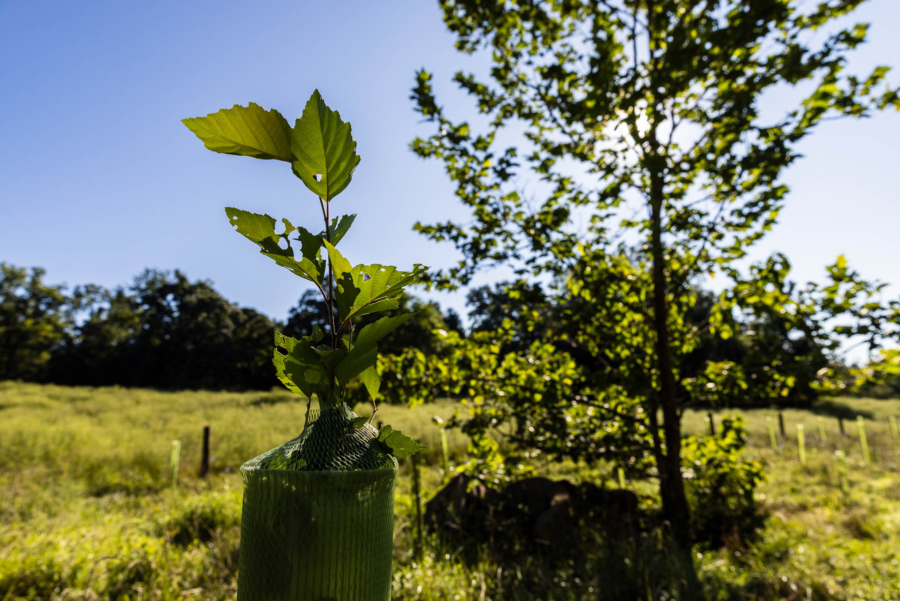
On a cow pasture in Greene County, Virginia stands a row of recently planted trees glowing in the morning sun. Bryan Hoffman, eager to show off the progress of a particularly fast-growing Black locust, positions himself in a patch of shade just big enough to cover his face.
“Not one year old and this tree is already providing a shadow,” said Hoffman, deputy director of the Friends of the Rappahannock (FOR). “A baby sheep could stand here and eat in the shade.”
Through his role at FOR, Hoffman is in the initial stages of developing a silvopasture—a unique agricultural practice that integrates trees into a grazing area. Part forest, part pasture, silvopastures are a way of providing food and shade for animals without limiting the area they can use for grazing. Found globally, one of the largest silvopastures is the Dehesa, a lightly-forested pasture of around 1,300,000 hectares that crosses from Central Spain into Southern Portugal.
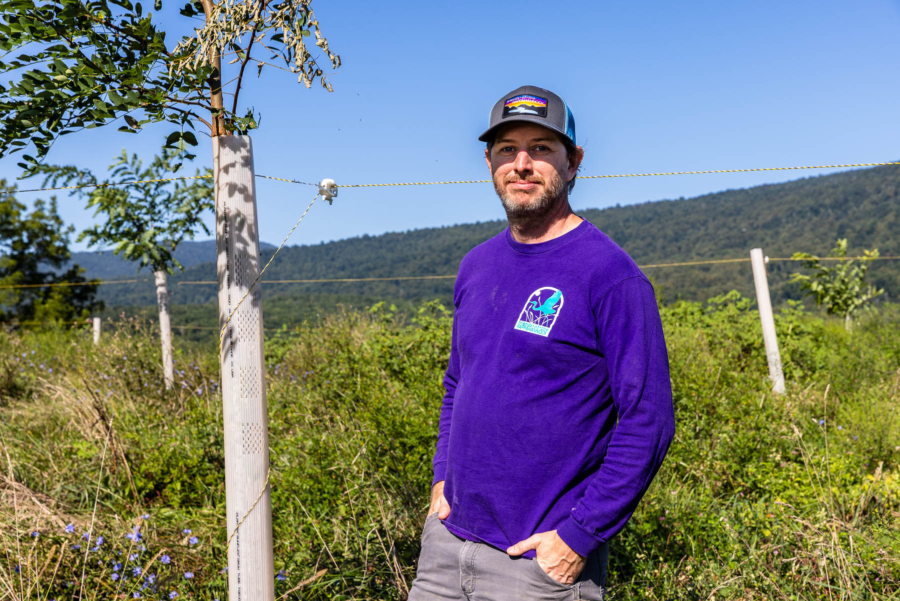
In the Shenandoah region, where some of the last stands of native brook trout can be found, the trees planted on a silvopasture are a way of protecting this critical freshwater habitat. Agriculture, timbering and residential development have all contributed to tree loss in the Rappahannock River headwaters, which limits the amount of shade cast over streams and causes the groundwater feeding those streams to warm. Freshwater fish like brook trout have suffered as a result, with studies showing that the population has decreased as much as 50% in more than 70% of the Shenandoah region’s streams.
“When you start clear cutting and removing your tree canopy… the water temperature in the streams is going to get above that 60 to 65 degrees, which is the maximum temperature that a trout will survive in,” said Hoffman. “Anything we can do to create shade helps to keep trout waters as trout water or prevents it from getting worse.”
In 2025, FOR piloted its first silvopasture on a farm in Greene County as part of its existing Trees for Shade program. Hoffman and his staff partnered with Trees for Grazers, a consultant based in Lancaster, Pennsylvania that designs silvopasture systems and recommends equipment.
Prior to the silvopasture project, FOR worked with the Greene County farmer to plant a forest buffer alongside his stream and install a fence to keep his cows out of the water. A water trough was added to offer a new source of drinking water, and the silvopasture became a way of giving the cows shade now that they couldn’t access the trees along the stream.
“We’re taking away their shade and this is a way of giving it back,” said Hoffman.
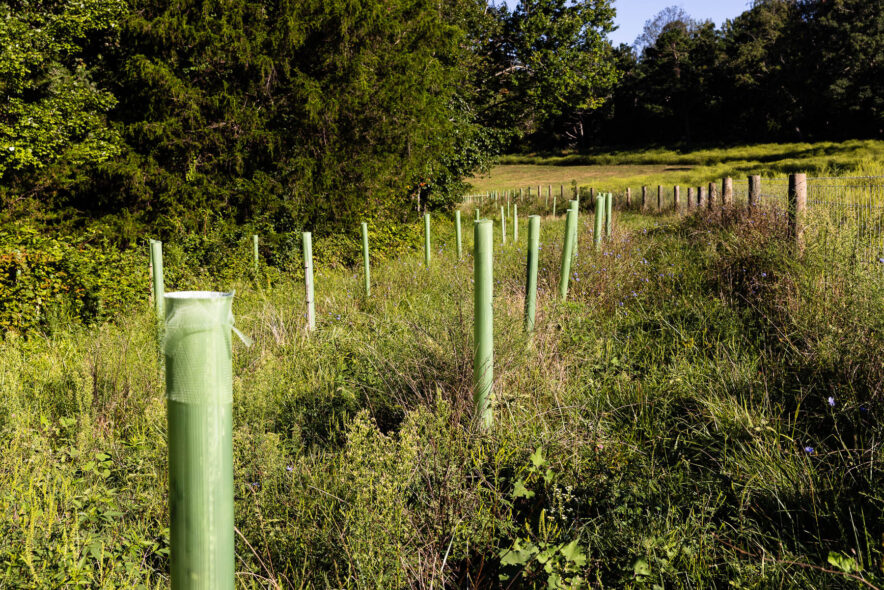
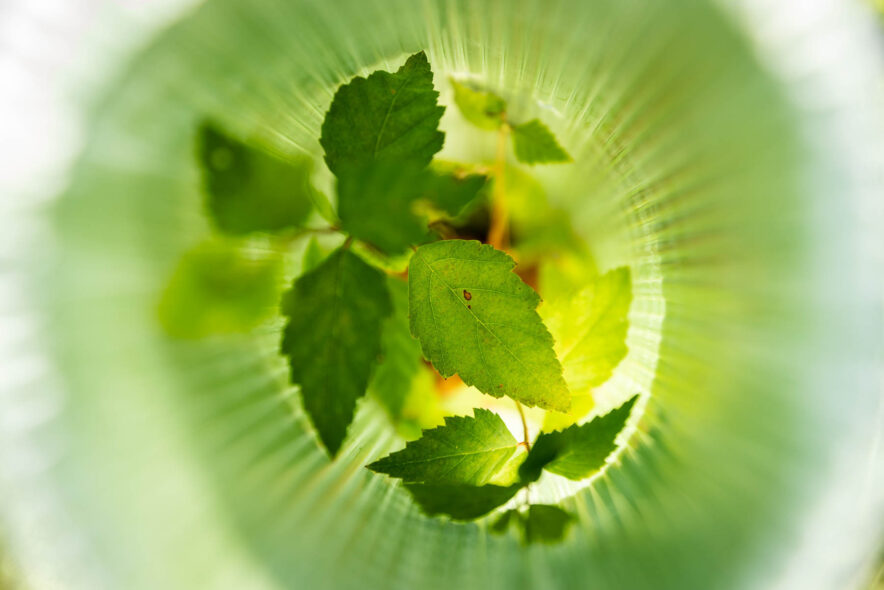
In the spring of 2025, contractors planted over 50 trees on the pasture, leaving enough space for the cows to maneuver. The trees used were a mix of fast-growing trees like the Black locust, which can start providing shade as soon as possible, and trees that drop acorns and seed pods like the Black oak and honey locust. According to Hoffman, this will give the cows some extra nutrition during the winter when there’s less grass to graze.
“It’s like handing out men’s health gummies,” said Hoffman. “Here’s all your vitamins and minerals for the week.”
To protect the newly planted trees, FOR placed electric fencing that shocks the cows if they get too close, teaching them where they can and can’t graze. According to Hoffman, the fencing will be taken down in 5-10 years when the trees are mature enough to withstand pressure from livestock.
The silvopasture, as well as its forest buffer, stream fencing and water trough, were funded through a variety of state and federal programs including the Chesapeake Bay Small Watershed Grant Program, which is managed by the National Fish and Wildlife Foundation and funded by the Environmental Protection Agency’s Chesapeake Bay Program Office.
In addition to the tremendous local benefits for trout streams, the Greene County silvopasture will also help reduce the amount of nitrogen, phosphorus and sediment flowing to the Chesapeake Bay. FOR might be focused on the Rappahannock, but its work contributes to healthier habitat for blue crabs, oysters, striped bass and other critters living downstream.
“What we do up here, where I live in the Blue Ridge Mountains, directly impacts how tasty our crabs are downstream,” said Hoffman.
Comments
There are no comments.
Thank you!
Your comment has been received. Before it can be published, the comment will be reviewed by our team to ensure it adheres with our rules of engagement.
Back to recent stories