
Building on a thriving, six-year-old forest buffer in the Rappahannock River headwaters
Friends of the Rappahannock leads an effort to plant forest buffers
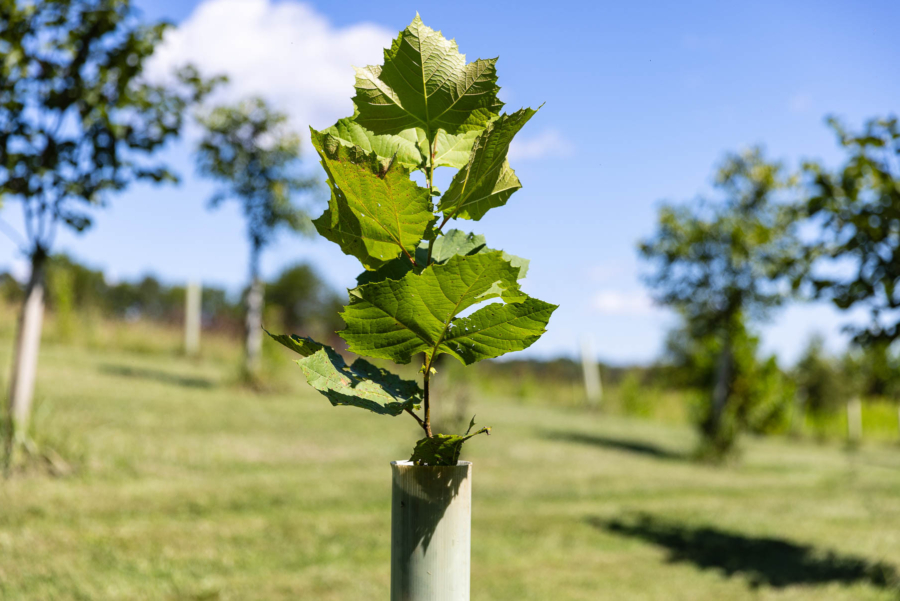
Located in the rolling hills of Orange County, Virginia, and bordered by a stream in the Marsh Run watershed, Willow Springs Farm is an ideal setting for conservation. The former cattle farm includes acres already enrolled in the Conservation Reserve Enhancement Program, and is under a conservation easement that protects it from future development. In 2019, the landowner reached out to the Friends of Rappahannock (FOR) looking to make even more improvements to his property.
“The landowner was interested in further expanding conservation values across the property,” said Byran Hoffmann, deputy director of FOR. “We helped him explore all the programs and opportunities.”
After assessing the property, Hoffmann and the landowner agreed that the stream required some support. Years of runoff from the farm and properties upstream had put significant pressure on the waterway, causing erosion and tree loss.
“We had a couple black willows, and a lot of cedar, and some old pine [trees],” said Hoffmann, “And the pine and cedar were not doing well.”
For phase one of the project, FOR planted a 75-foot-wide forest buffer within the stream’s floodplain. Funding for the project came from the Arbor Day Foundation and the Environmental Protection Agency. High School students completing their required environmental education projects, called a Meaningful Watershed Educational Experience, or MWEE, joined other volunteers in helping to plant the buffer.
Nearly six years later, that buffer is going strong.
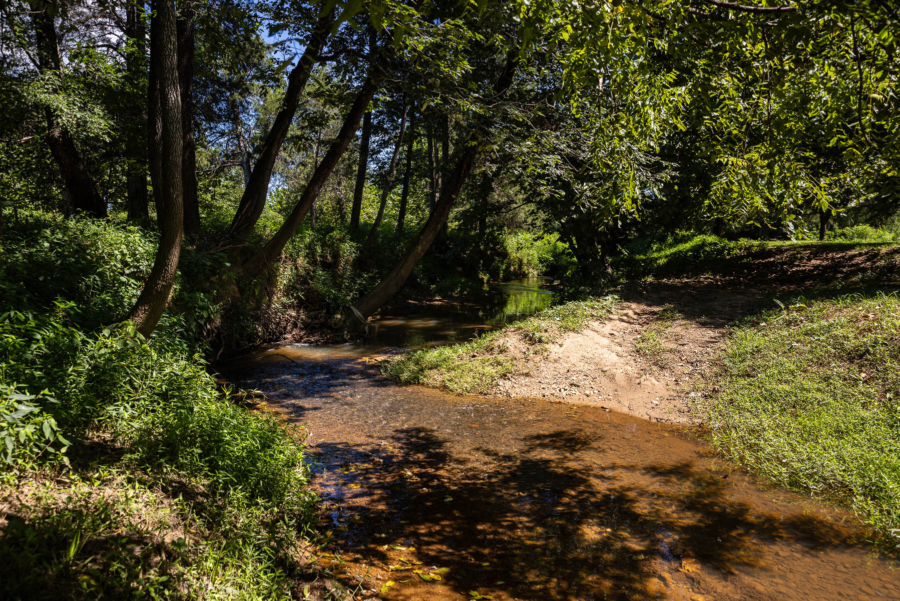
Trees that were around 18 inches when planted are now as high as 15 feet, leaving only a few pockets of sun on the ground in that 75-foot-wide space.
According to environmental experts, forest buffers are the most cost-effective way of protecting the health of rivers and streams, and ultimately, the Chesapeake Bay. Rainfall washes nitrogen, phosphorus and sediments into waterways, which can degrade habitat for fish and shellfish, while the pressure from rain worsens erosion. But healthy stands of trees absorb that runoff and slow down the pace of water.
“If the rain hits the trees and hangs out there a couple hours before it drips to the ground, then it has to either flow across the landscape or infiltrate into the groundwater and migrate into the stream,” said Hoffmann. “So we’ve extended that time of concentration, which reduces the stress on the stream bank.”
Forest buffers also provide lots of shade, which cools nearby streams and the groundwater feeding those streams. Cooler water often means better habitat for sensitive fish like brook trout—a species that Bay Program partners seek to protect through an outcome in the Chesapeake Bay Watershed Agreement.
Moreover, trees planted along a streambank hold the land in place, which keeps sediment from slipping into the water.
“That’s the primary goal of the buffer, besides the shade and water quality, is to help stabilize those stream banks,” said Hoffmann. “Less sediment means better habitat for the critters.”
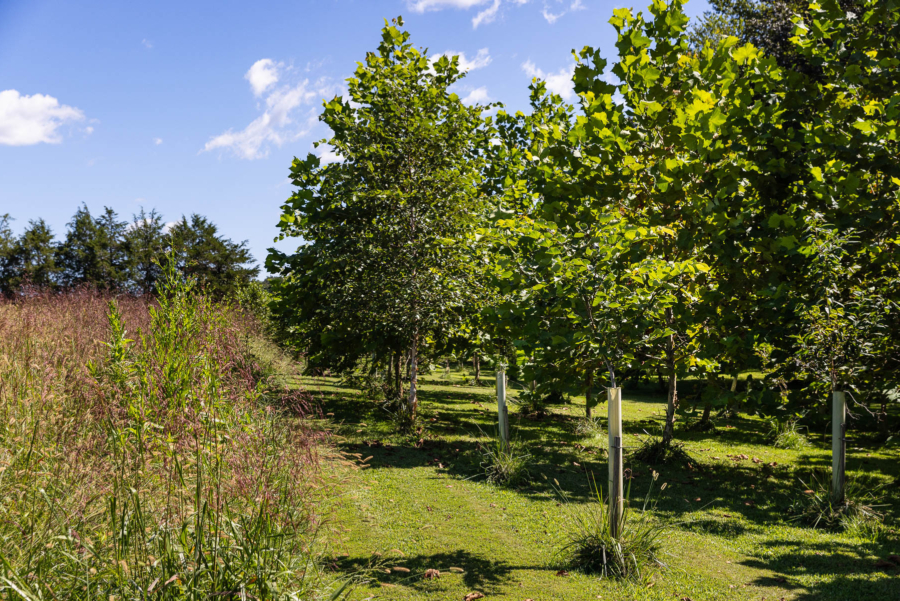
In spring of 2025, FOR returned to replant a few trees and perform maintenance activities like removing tubes from mature trees. According to Hoffmann, the landowner and his crew have done an incredible job maintaining the forest buffer, mowing and hand-weeding around the trees to protect them from invasive plants and pests without the use of pesticides.
“This buffer is the best maintained buffer I’ve ever seen,” said Hoffmann.
Each year, Chesapeake Bay Program partners work toward the Forest Buffer Outcome established in the Chesapeake Bay Watershed Agreement. In 2024, partners planted approximately 227 miles of forest buffers, which was a decrease from the previous year when 640 miles were planted. The draft revised Chesapeake Bay Watershed Agreement, anticipated to be approved by the Chesapeake Executive Council at the end of 2025, proposes to continue this work.
In November, FOR and volunteers will be back on the property to plant over 1,800 additional trees. Once again, high school students completing their MWEEs will be participating.
Ultimately, Hoffmann envisions the forest buffer connecting with a field on the property currently filled with tall grass and shrubs, creating a wildlife corridor for different animals to use. Hoffmann said that enhancing that field with native plants preferred by rare grassland birds could be the next step of the Willow Springs Farm project.
“Getting this landscape converted to a native warm season grass and wildflower meadow is going to turn these 300 acres into a biodiversity hotspot,” Hoffmann said.
Comments
There are no comments.
Thank you!
Your comment has been received. Before it can be published, the comment will be reviewed by our team to ensure it adheres with our rules of engagement.
Back to recent stories