
Chesapeake Bay Awareness Week 2026 celebrates “defenders and protectors” of the Bay
Celebrate Chesapeake Bay Awareness Week and honor the many features of the Bay watershed that create and sustain a national treasure.
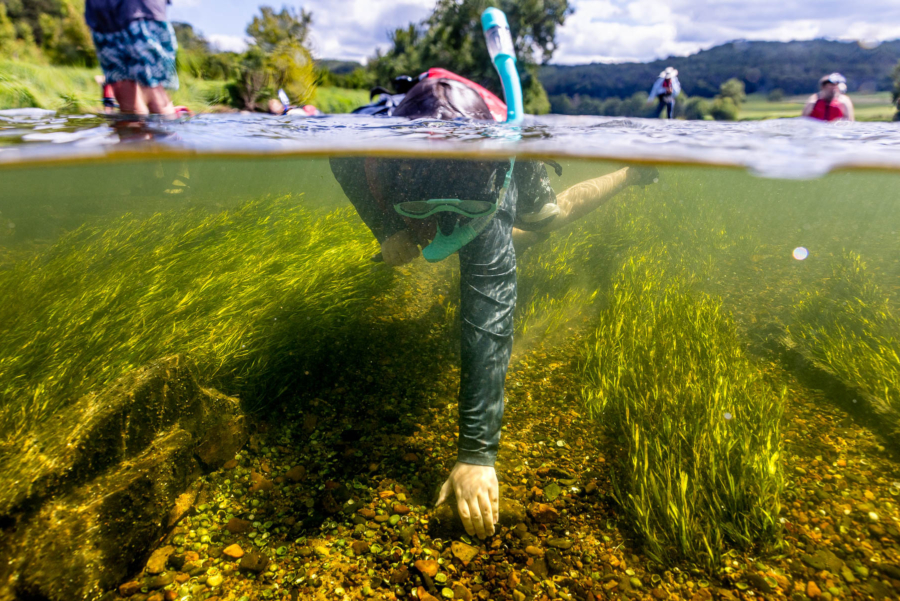
Home to over 18 million residents and tens of millions of plants and animals, the Chesapeake Bay watershed is a national treasure that touches six states and the entire District of Columbia.
Every year, we celebrate the nation’s largest estuary during Chesapeake Bay Awareness Week. First designated in 2016 with the help of the Chesapeake Bay Commission, this event encourages inhabitants and fans of the Chesapeake Bay to explore, learn and appreciate all aspects of the Bay.
This year’s theme, “Built by Nature, Protected Together” highlights the varied habitats, species and elements that support and defend the Chesapeake Bay watershed. Each inhabitant, resource and visitor can impact the Chesapeake Bay watershed in their own unique way. From June 6 to 14, we’ll feature the elements of the Bay, both natural and manmade, that sustain the Bay.
For this year’s #BayAwarenessWeek, we asked staff and partners of the Chesapeake Bay Program to share how they protect their local environment and their favorite tips to defend one of our best local resources.
Serving the community
Ryan Adams, Virginia Conservation Network
“One of my favorite ways to give back is volunteering with the Hampton Clean City Commission during Clean the Bay Day and Clean the Bay Week. I’ve been involved with the commission as a board member, commissioner and volunteer since 2017. It’s always a great opportunity to raise awareness about protecting the environment and connect with other members of the community, local businesses and academic institutions like Hampton University.”
Paddleboarding on the Bay
Bayleigh Albert, Virginia Sea Grant
“One of my favorite activities is paddleboarding in the Chesapeake Bay. This activity allows me to strengthen my body and improve my balance, all while producing zero emissions.”
Creating backyard habitat
Michael Augustin, Chesapeake Conservancy
“Almost every day, I take a walk throughout my neighborhood with my family and we get to see the small pieces of nature that still thrive in our area. Birds chirping, bugs buzzing and squirrels darting through the trees. To help increase our local biodiversity, we’ve added a small birdhouse and bath to our backyard and planted native, pollinator-friendly plants. A bee box may be in our future too!”
Protecting local birds
Nancy Wright, Chesapeake Wildlife Heritage
"One unique activity we've supported in the Chesapeake Bay watershed for over 30 years is housing and protecting native purple martins. You’ve probably seen landscapes with beautiful purple martin houses or gourds hanging from poles. Purple martins are almost completely dependent on human-made houses, so we install nesting structures in appropriate habitat, maintain their homes and monitor purple martin colonies for martin landlords around the Eastern Shore."
Scooping up trash at the beach
Marisa Baldine, Alliance for the Chesapeake Bay
"I love visiting our local beaches for fishing, fossil hunting and birding. Unfortunately, it is almost impossible to get through a walk near a local waterway without finding trash. Balloons, cast nets, fishing line and plastic bottles are common offenders. As one person, I can't collect everything I see but I always try to pick up at least some of the items on the beach."
Comments
There are no comments.
Thank you!
Your comment has been received. Before it can be published, the comment will be reviewed by our team to ensure it adheres with our rules of engagement.
Back to recent stories