
Chesapeake Bay science gets a boost from artificial intelligence
Bay scientists hold a workshop to determine the uses and challenges of AI
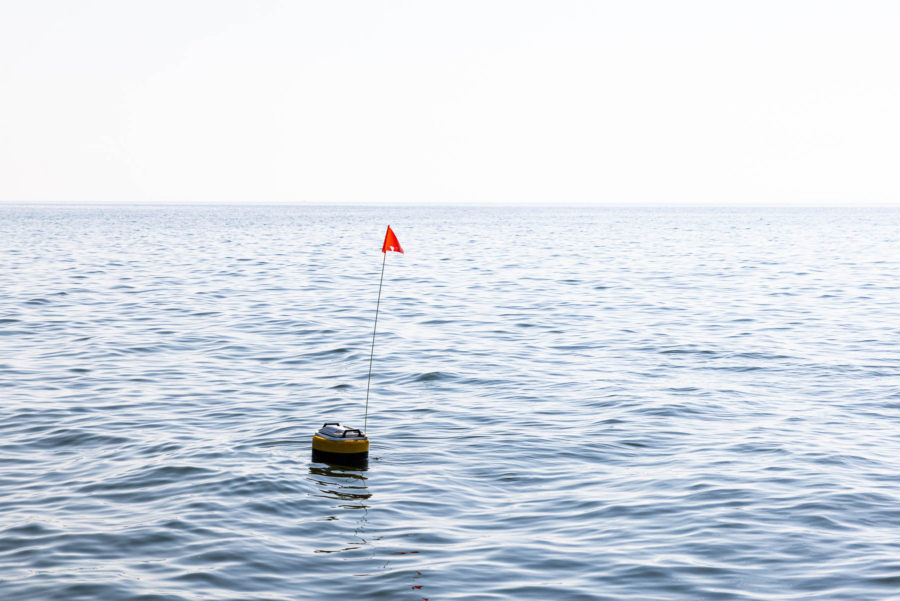
As one of the largest estuaries in the world, the Chesapeake Bay is a highly complex system. What’s even more complex is the 64,000-square-mile watershed that drains into it. To protect this region, scientists gather vast amounts of data that help assess the estuary’s health, predict emerging threats and guide restoration efforts.`
Now, artificial intelligence (AI) and machine learning are helping scientists detect patterns across large, complex datasets and offering new ways to use that information.
To explore these possibilities, the Chesapeake Bay Program’s Scientific and Technical Advisory Committee (STAC) convened a workshop of leading scientists. Their report outlines how rapidly evolving technology could help improve the Bay’s health.
Monitoring: Forming a better understanding of the health of the Bay
Chesapeake Bay Program scientists produce tons of information related to the health of the Bay, such as the abundance of wetlands and underwater grass, changes in wildlife populations and the over water quality of a given tributary.
AI and machine learning are already improving these monitoring capabilities. For example, the Chesapeake Bay Program’s high-resolution land use data uses imagery taken from satellites and planes to classify land uses like houses, forests, roads and wetlands. These classifications are important because they help us understand what rivers and streams are most threatened, and which may be less vulnerable. Essentially, AI can pore over those images to detect patterns and help paint a more accurate picture of the watershed.
“What people have been using machine learning, a form of AI, to do is bring in information that may not even be visible to the naked eye, as well as patterns that are not intuitive or not immediately apparent,” said Matthew Baker, a STAC member and professor at University of Maryland, Baltimore County. According to Baker, the technology is used to “improve those classifications to more correctly identify or contextualize what is going on in any particular location.”
As the AI tools improve, STAC members believe that our monitoring capabilities will only get better, leading to faster and more accurate assessments of the Bay and how it's changing.
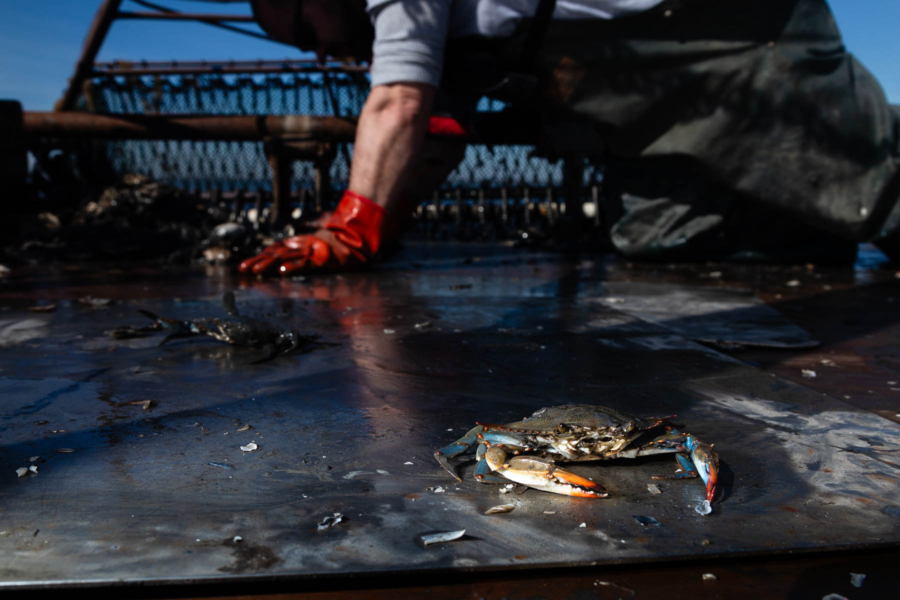
Modeling: Forecasting changes to the water quality and habitat
Understanding the Bay’s current health is only part of the picture—we also need to know what the future holds. Using AI, our researchers have been able to better forecast storm surges, land use changes and the size of the summer dead zone, all factors that determine where and when species will be able to survive. In the future, AI could help make better predictions and even pinpoint where the changes are coming from.
“We not only improve our predictions, but we hope to have a pretty better idea about what characteristics of the system are driving the differences,” Baker said.
Another potential application of AI is with the Chesapeake Bay Program’s pollution models. In order to meet Chesapeake Bay pollution goals, state planners rely on a sophisticated model known as the Chesapeake Assessment Scenario Tool to make plans and track their progress. According to STAC members, AI can be used to improve the accuracy of this model, making restoration planning more efficient.
“Some of these models can be quite complicated and have interacting effects that are difficult for even well-trained investigators to understand or anticipate,” Baker said. “And so, using computers to help us do that is hopefully one of the applications where we can make a lot of progress very quickly.”
Implementation: Connecting decades of research and knowledge
Over the years, the Chesapeake Bay Program has supported countless studies and research projects designed to improve efforts like tree planting, farming conservation practices and community outreach. Not just monitoring and modeling, but actual implementation.
According to STAC members, one potential application of AI would be to store, synthesize and communicate all of that research. This would ensure that knowledge and lessons learned don’t get lost over time, and that any environmental practitioner, from a small community group to a federal planning team, can have access to this information when designing its projects.
“One of the things that we discussed was the capacity for an AI system, a chat bot of some kind, to be sort of like a curator and have ready access to this digital library of models and datasets and approaches,” Baker said. “A digital Chesapeake Bay Program librarian, if you will.”
Taking a hybrid approach
A key conclusion from the STAC report is that AI and machine learning should not replace existing science or decision-making processes. Individual scientists, practitioners and community groups will still need to collect data and ground-truth the results that AI provides. However, there are opportunities for AI tools to support scientists, managers and practitioners when used carefully.
For example, AI could help develop restoration plans—such as what rivers to prioritize or wildlife to focus on. But STAC members said that in order to trust AI’s advice, the information it uses needs to come from a variety of trusted sources.
“We would want to include people in that process and especially stakeholders,” Baker said. “Because one of the things that we know is that these models can reflect the bias of the information that's given to them.”
Comments
There are no comments.
Thank you!
Your comment has been received. Before it can be published, the comment will be reviewed by our team to ensure it adheres with our rules of engagement.
Back to recent stories