
Five summertime visitors to find in the Chesapeake Bay
Warmer water attracts species from southern climates
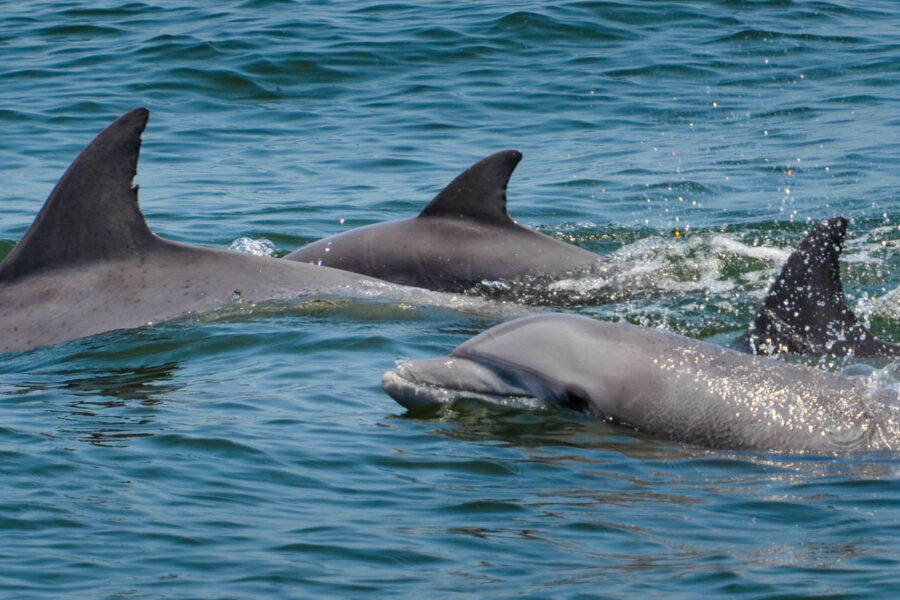
As the weather warms, the Chesapeake Bay becomes more hospitable to a wider variety of species. Sharks, dolphins and a range of fish all visit the Bay from spring to fall to enjoy the abundance of food, spawning grounds and habitat.
Below are several species you can expect to see more of come summer.
Bottlenose dolphin
Bottlenose dolphins are among the most iconic ocean visitors to the Chesapeake Bay each summer. Traveling north from warm Atlantic waters as early as May, large pods enter the Bay to pursue dense schools of menhaden, croaker and spot. The Bay’s sheltered, nutrient-rich waters serve as both a prime summer feeding ground and a nursery for mothers raising newborn calves. You can help scientists track dolphin visits by creating an account with Chesapeake Dolphin Watch.
Loggerhead sea turtle
Every May and June, hundreds of juvenile and adult loggerhead sea turtles swim into the Chesapeake Bay from southern Atlantic waters. The Bay’s shallow mud flats and grass beds act as a rich summer feeding ground packed with horseshoe crabs, blue crabs and mollusks. Because sea turtles are cold-blooded, they rely on the summer heat of the estuary to maintain their active metabolic rates. By October, when water temperatures begin to drop, they migrate back out to the ocean and head south toward Florida or the Bahamas.
Cownose ray
Cownose rays undertake a massive seasonal migration, traveling in large schools from winter habitats in the Gulf of Mexico and South Atlantic up to the Chesapeake Bay by late spring. Females enter the brackish waters of the Bay to give birth to their pups and mate before the summer ends. The Bay's vast mud flats offer an abundant buffet of clams, oysters and crustaceans for the rays to feed on throughout the warm months. As autumn approaches, they gather into swimming schools and retreat to warmer ocean waters.
Summer flounder
The bottom-dwelling summer flounder visits the Bay spring to fall to forage on shrimp, squid, worms, crustaceans and other fish. The fish buries itself in the sandy bottom of the estuary where it waits to ambush prey. Most summer flounders remain in the middle to lower Bay, but some travel as far north as Maryland’s Gunpowder River. As water temperatures decrease, they will usually migrate offshore for winter.
Bull shark
Bull sharks migrate to the Chesapeake Bay every summer—but don’t worry, no shark attacks have ever been recorded in the Chesapeake Bay. Thanks to their rare ability to regulate internal salt levels, bull sharks can venture far up the Bay and into low-salinity river tributaries. Female bull sharks use these protected, nutrient-rich estuarine areas as nurseries to give birth to their pups. Once fall arrives and water temperatures start to dip, adults and juveniles alike migrate back down the Bay into the deeper ocean.
These are just a handful of the ocean visitors that migrate to the Chesapeake Bay. Have you seen any of these species in the wild or have others to add to the list? Let us know in the comments!
Comments
There are no comments.
Thank you!
Your comment has been received. Before it can be published, the comment will be reviewed by our team to ensure it adheres with our rules of engagement.
Back to recent stories