
Native black willow thrives along riverbanks
This tree is known for its dark, almost black bark
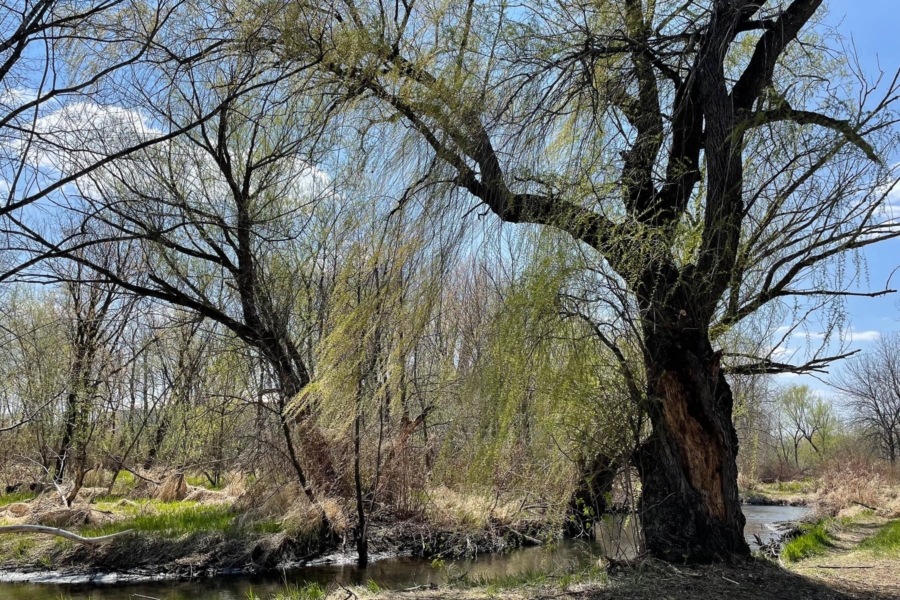
Healthy rivers and streams often require nearby trees holding the soil in place and shading the water. However, not all plants like this type of habitat. The roots and trunks of streamside trees get wet far more often than those deep in the woods or mountains.
Luckily, the black willow is one of those trees that thrives in moist areas.
This tree is native to much of eastern and central North America. It grows 30 to 70 feet tall and as wide as 85 feet. True to its name, black willows have dark brown, almost black bark and narrow, elongated leaves that are either green or greenish-yellow.
Black willows are unique looking trees that also have plenty of environmental benefits. The shade provided by such large trees helps keep the water cool, which creates healthy habitat for freshwater fish like trout. During spring, clusters of drooping flowers known as catkins hang from the tree, which is a terrific food source for wildlife.
The tree is also a great choice for erosion control. When riverbanks are stripped of trees and start to degrade, the soil along the river starts to wash into the water when it rains and floods. However, black willow trees root easily in wet soil and help hold the riverbank together.
Of all willow trees, black willows are the largest and have the most extensive range. We are fortunate to have such a unique looking and beneficial tree growing in the Chesapeake region.
To learn more about trees that are native to the Bay watershed, visit our field guide.
Comments
There are no comments.
Thank you!
Your comment has been received. Before it can be published, the comment will be reviewed by our team to ensure it adheres with our rules of engagement.
Back to recent stories