
Shikellamy State Park establishes new fish passage on the Susquehanna
Dam detour allows migrating fish to return to their historic spawning grounds
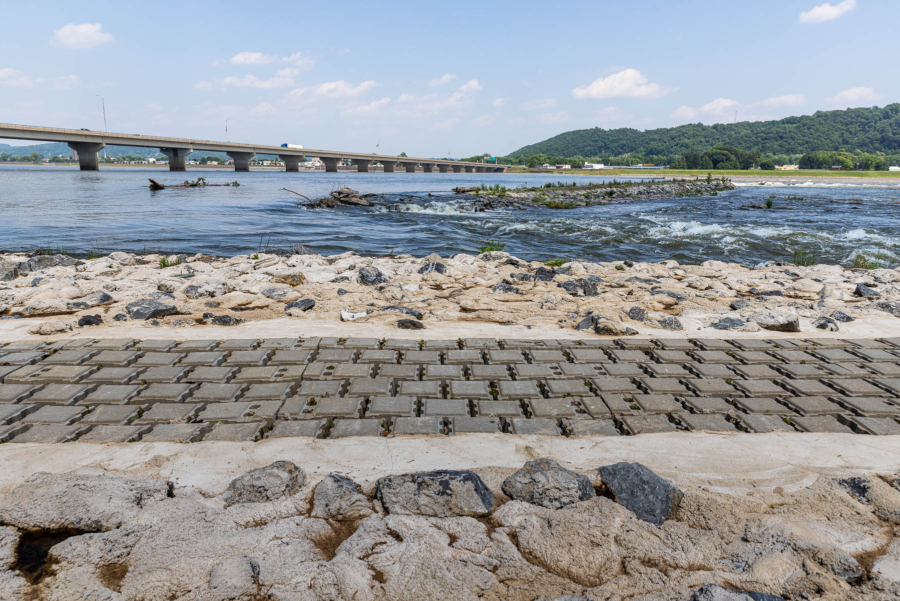
Deep in the Susquehanna River in Northumberland County, Pennsylvania, native fish like the American eel and shad are on the move. Each year, these fish migrate between the ocean and the freshwater rivers of the Chesapeake Bay watershed, traveling to and from their natural spawning grounds.
Although these species have used this route for generations, dams put in place during the 20th century disrupt their natural migration patterns. These barriers often prevent fish from reaching spawning grounds or locating food to fuel their journey. Combined with poor water quality and historic overfishing, stream blockages have drastically reduced populations throughout the watershed as well, particularly for shad and herring. Due to the rapid decline in population, shad fishing is currently closed until their numbers are restored.
Connecting the towns of Shamokin Dam and Sunsbury, the Adam T. Bower Memorial Dam is considered to be the longest inflatable dam in the world, stretching 2,700 feet. Each year when the dam is inflated, it creates Lake Augusta allowing for anglers and boaters to enjoy additional water access.
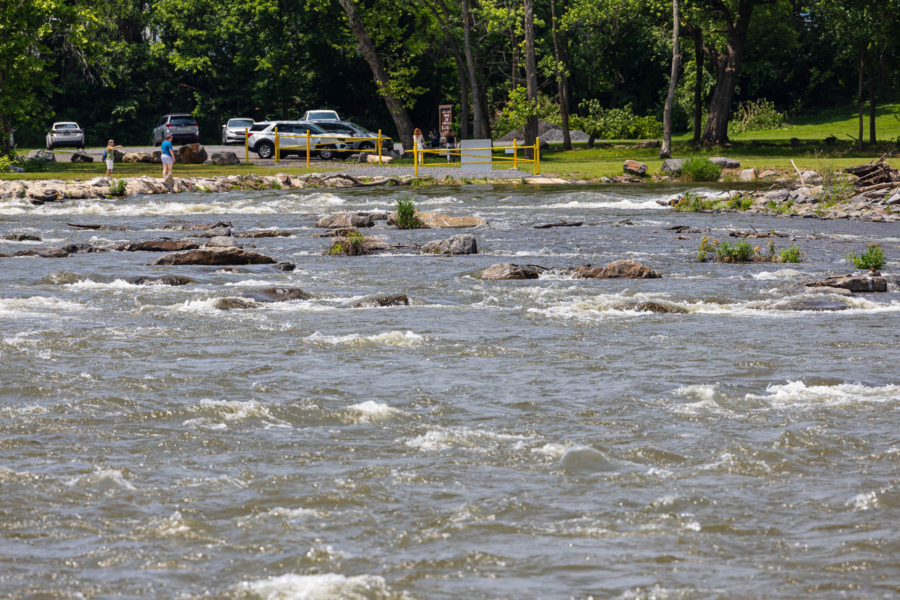
“This dam in particular has been a major hurdle for 50 years,” said Jack Hill, natural resource specialist with the Pennsylvania Department of Conservation and Natural Resources (DCNR) Bureau of State Parks. “People have been looking at ‘how to get fish over this dam,’ and with a lot of help and partnership, we figured it out.”
Although shad and eels are attracted to high water flows as they migrate up the river, once they reach the dam it is too high for them to make the leap. To combat this problem while preserving the economic benefits of the dam, DCNR sought to construct a fish passage to allow for migratory species to bypass the obstacle.
This led to the construction of the new 900-foot fish passage located directly next to the dam. The design includes four resting pools, which are deeper segments of the passage allowing for fish to rest and to stay contained if water levels change, and five riffles constructed with riprap and boulders to mimic a natural riverbed. When water flow is coming in from the side, the fish can sense the change in the current coming from the passage, bypassing the dam.
“The fish have a sixth sense where they can sense water flow a lot better than we can,” Hill said. “Naturally they will be pulled into that direction as they swim back and forth when they reach the dam. They know they can't go straight up the river, but then they'll find this flow over here and eventually work their way around.”
Other species benefit from the “natural” fish passage design too. In addition to migrating fish, smaller minnows, insects and other organisms use the sidelines as habitat. This attracts waterbirds like ducks and eagles, who will use the area as a resting spot.
“To me, it's momentum for restoration,” Hill said. “This was a big hurdle that the fish are able to get around now in the middle of the Susquehanna.”
In the 2014 Chesapeake Bay Watershed Agreement’s Fish Passage Outcome, the partnership aims to open 132 stream miles every two years for fish passage, either by removing barriers or installing fish passage devices. Eliminating some dams not only improves fish migration, but restores the flow of water and reduces sediment buildup behind the dams. Since the start of the Bay Program’s fish passage work in 1988, the partnership has opened 30,526 miles for migratory fish throughout the watershed.
Now that Adam T. Bower Memorial Dam fish passage installation is complete, the next goal is to increase the population of shad to where fishing for them can be permitted again. The increase in their population would help the economy in local areas, attracting anglers who will patronize local restaurants, hotels, shops and river guide services, utilizing rafts, canoes and kayaks.
“When you take a step back and look at the whole watershed, it’s about connection. As people are connected to the water it all goes back to that,” Hill said. “By doing this project here, even though we're hundreds of miles up from the Bay and hundreds of miles from the headwaters, this connects both together.”
Comments
There are no comments.
Thank you!
Your comment has been received. Before it can be published, the comment will be reviewed by our team to ensure it adheres with our rules of engagement.
Back to recent stories