
Snorkeling the Shenandoah River offers a “fish-eye view”
Potomac Riverkeeper Network kicks of 2025 Riverpalooza
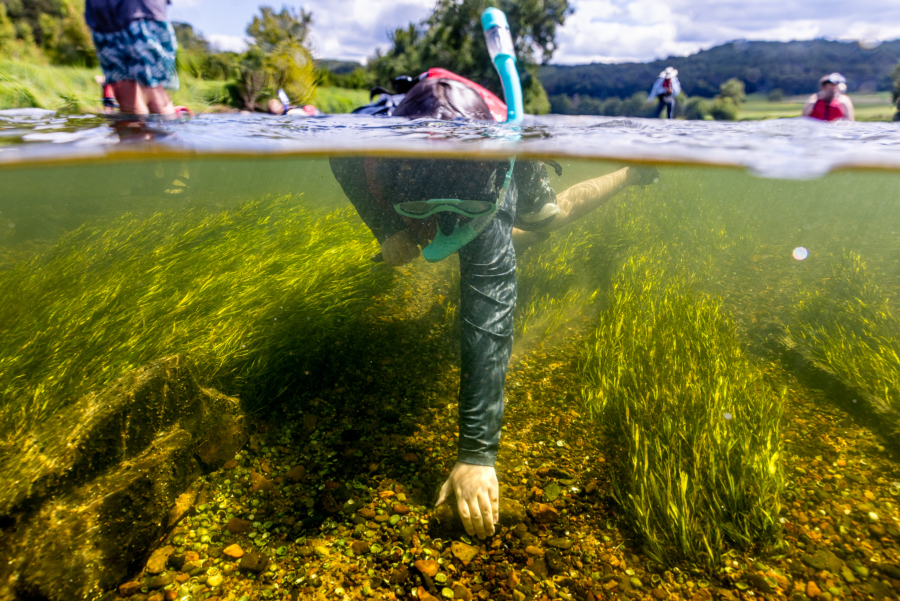
While I’ve paddled down many rivers I’ve never snorkeled in one, at least not until last month when I attended the Potomac Riverkeeper Network’s Shenandoah Snorkeling Paddle.
Hosted by the Potomac Riverkeeper Network, the event was one of five outings held during the organization’s Riverpalooza. Each year, Riverpaloooza gives community members and outdoor enthusiasts an opportunity to explore the lands and waters of the Potomac River watershed and learn about its issues. The Shenandoah River is one of several tributaries in the Potomac River watershed, which drains to the Chesapeake Bay.
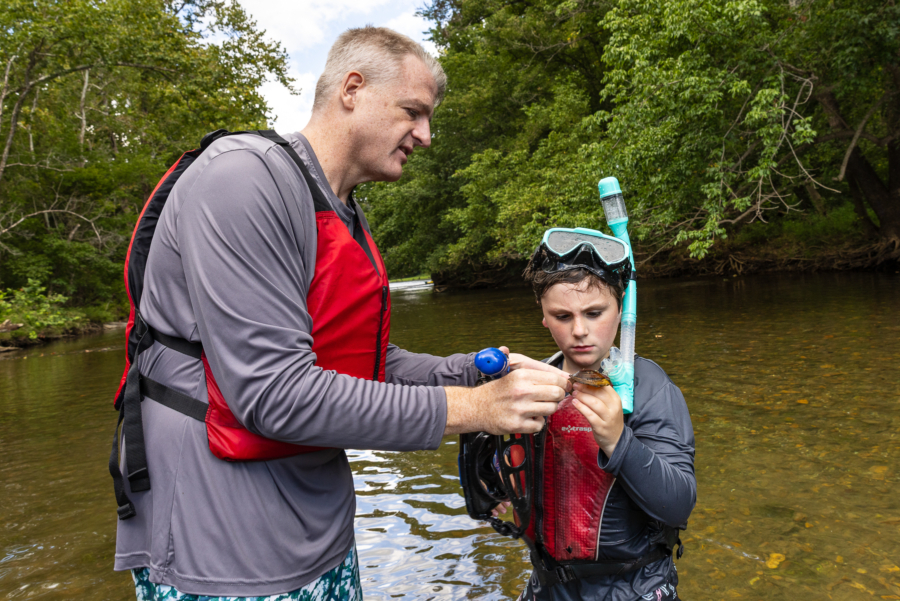
On a sunny August morning, I joined a group gathered under a shaded gazebo to collect our life jackets, paddles and snorkels. To kick off the event, Shenandoah Riverkeeper Mark Frondorf provided an overview of the Potomac Riverkeeper Network and the health of the Shenandoah River, while Mike Selckmann of the Interstate Commission on the Potomac River Basin described wildlife and geological features to look out for.
The primary reason for the snorkeling was to search for freshwater mussels, which were once widespread throughout the river but have decreased significantly due to a combination of sediment runoff, warming waters and mercury contamination from a nearby powerplant. Mussels are mostly sedentary critters that cling to the riverbed, which meant that attendees would have to navigate the riverbed while looking for them.
“It’s going to be a little bit of an easter egg hunt,” Frondorf said.
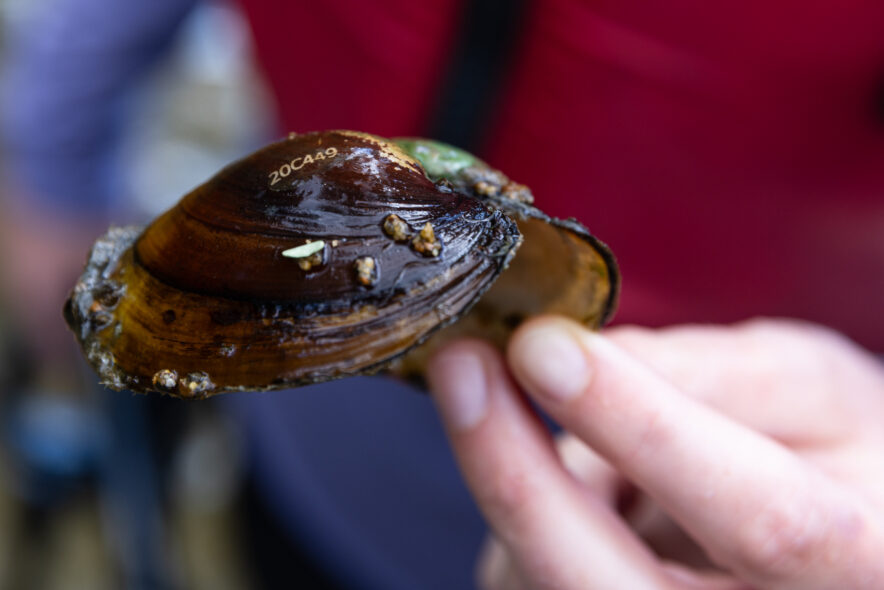
Freshwater mussels are critical to the health of rivers such as the Shenandoah. Like oysters, they are filter feeders that suck bacteria, sediment and organic matter from the water, which makes it cleaner. But while oysters enjoy the brackish water of the Bay, freshwater mussels enjoy non-salty rivers like the Shenandoah.
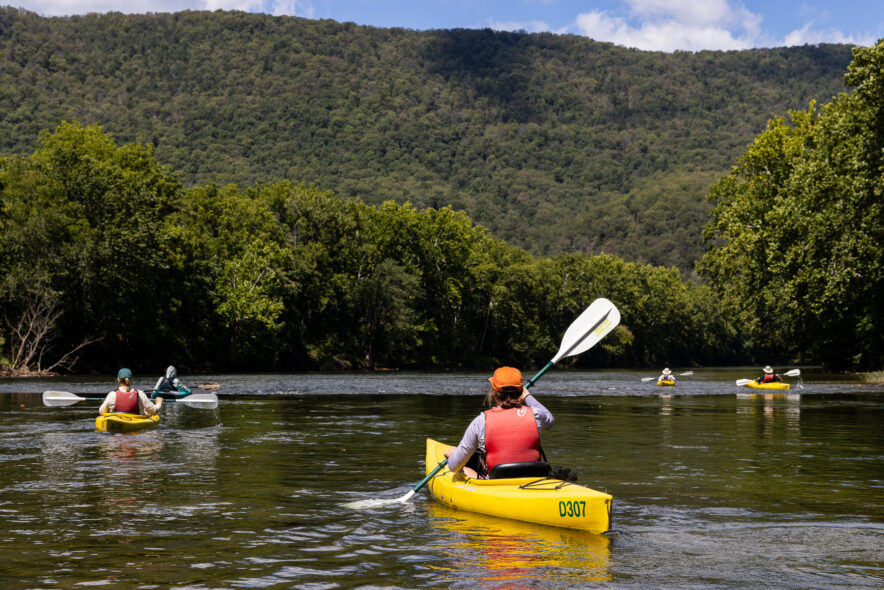
After a short bus ride, we arrived at an open shoreline and entered our canoes. Following Frondorf, the group paddled out to a small island where mussels had been seen previously.
Snorkeling the river was a lot easier and more relaxing than I expected. As explained by Selckmann, there are basically two approaches: the first is to spread your body flat like a skydiver and let the current carry you forward, and the second is to face the current with your snorkel mask in the water, and pull yourself forward on rocks like a mountain climber. I tried the first option and was amazed at how clearly I could see the pebbly riverbed.
Emma Finnigan, who traveled to the event from her home in the D.C. area, summed up the experience concisely. “You get a fish-eye view,” Finigan said.
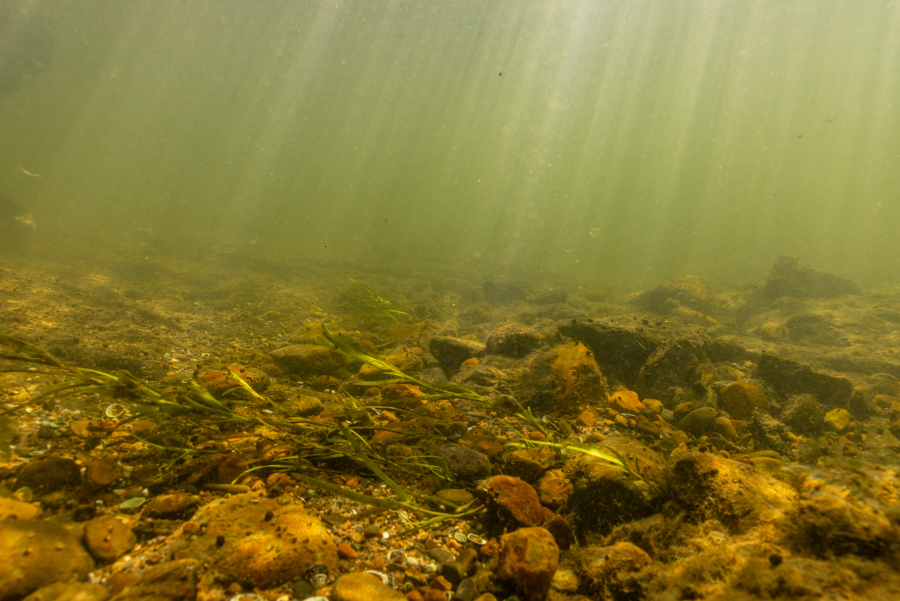
The group paddled to a second location and did more snorkeling while chatting about what we were seeing. We found just a few live mussels during the trip, along with a handful of empty shells. In some cases, we found mussels with markings on them from past monitoring efforts. According to Frondorf, the U.S. Fish and Wildlife Service tags mussels in the Potomac River watershed to get a better understanding of species’ populations.
Mussels require free-flowing streams that are well-oxygenated. They need sediment to burrow into but can suffocate when covered by too much silt. When only parts of a river are suitable habitat but aren’t connected, they’re known as refugia, which inhibits mussel reproduction and survival.
“What you’re looking for are pockets of ideal habitat—adequate flow but low refugia,” Selckmann said. “You want soft sediments but you don’t want silt.”
Another important factor is access to host fish like American eels and yellow perch. Freshwater mussels release larvae known as glochidia into the water, which attach to the gills of fish traveling upstream. By hitching a ride, the young mussels are distributed throughout the river instead of simply floating downstream.
We ended the trip with a long but enjoyable paddle down the river and over a handful of small falls. As the river widened out, I started to notice the incredible mountain backdrop surrounding the tributary. Flowing through the Shenandoah Valley, the Shenandoah River has a much different topography than other tributaries closer to the Bay. It is a region that has supported mussels and other special creatures for countless generations.
“The Shenandoah is unique in how many times it bends,” said Selckmann. “The mountain that the river meanders through is ancient.”
Comments
There are no comments.
Thank you!
Your comment has been received. Before it can be published, the comment will be reviewed by our team to ensure it adheres with our rules of engagement.
Back to recent stories