
The elusive hogchoker is one of the most abundant fish in the Bay
Don’t confuse this small flat fish for a flounder
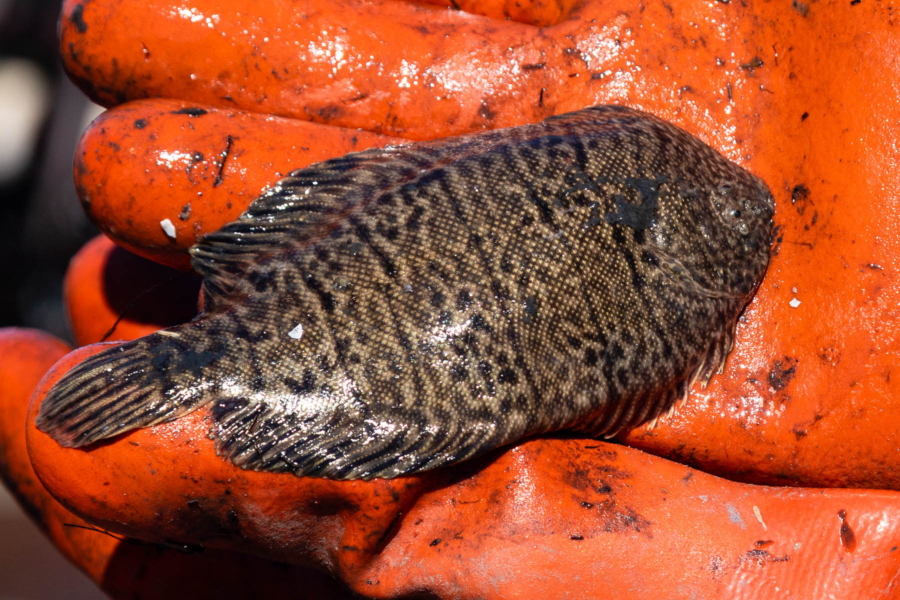
When you think of Chesapeake Bay fish, iconic species like striped bass, shad and Atlantic croaker likely come to mind. But hidden beneath the Bay's muddy and sandy bottom lives a fish with one of the strangest names in the watershed: the hogchoker.
While it may not attract the attention of anglers or seafood lovers, this small flat fish is one of the Bay's most abundant year-round residents and an important part of the estuary's ecosystem.
The hogchoker (Trinectes maculatus) rarely grows longer than six inches, but it has developed an impressive set of adaptations for life on the Bay floor. Like a flounder, young hogchokers begin life with an eye on each side of their flat body. But as they mature, one eye migrates across the top of the head until both sit together on the right side. This unusual transformation allows the fish to lie flat against the bottom while keeping watch for food and predators.
The Chesapeake Bay provides ideal habitat for hogchokers. They can be found throughout the estuary, inhabiting both shallow and deeper waters. Preferring sandy, silty and muddy bottoms, hogchokers often spend much of their time partially buried in sediment. Their dark brownish-gray coloration and ability to blend into their surroundings make them remarkably difficult to spot. In fact, even experienced anglers who spend decades on the Bay are often surprised to learn the fish exists or confuse them with flounder.
While they’re difficult to spot, hogchokers are relatively abundant in the Bay and live here year-round. The fish feed on worms, crustaceans and other invertebrates at the bottom of the Bay, and are eaten by larger fish and birds such as bald eagles and osprey.
Of course, the first question most people ask is: Why "hogchoker"? According to Bay lore, farmers once fed these small fish to their pigs. The fish's stiff, bony and scaly bodies were difficult for hogs to swallow, leading to the memorable nickname.
Have you ever found a hogchoker in the wild? Let us know in the comments!
Comments
There are no comments.
Thank you!
Your comment has been received. Before it can be published, the comment will be reviewed by our team to ensure it adheres with our rules of engagement.
Back to recent stories