
The spooky ghost pipe isn’t here to haunt the forest
Or is it…?
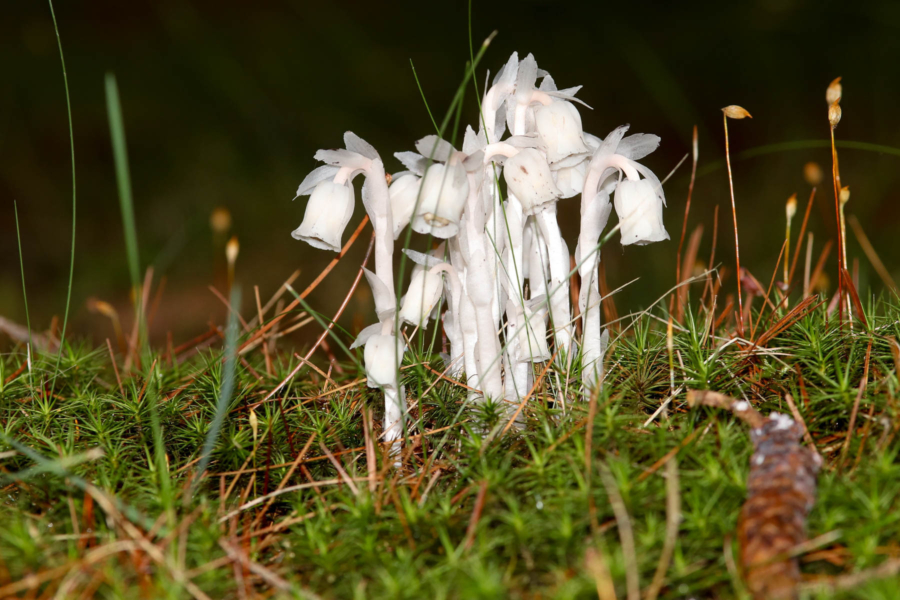
The bone-white, fungus-looking ghost pipe is one of the spookiest plants in the Chesapeake region. But no need for alarm— though it might suck nutrients out of underground fungi and grow in the shadows, the plant isn’t actually haunted (at least we can’t prove that it is).
The ghost pipe gets its name from its completely white color, which is due to the lack of chlorophyll, the green pigment that plants typically use to make food during photosynthesis. Since the ghost pipe does not undergo photosynthesis, it acquires its nutrients by hacking into an underground food delivery system between fungi and trees.
Deep in the soil, fungi deliver phosphorus, nitrogen, carbon and other minerals to trees, and in exchange, the trees provide the fungi with resources such as carbohydrates. Ghost pipes take advantage of this relationship by sucking out nutrients from the fungi without giving anything in return.
Although ghost pipes are unique in how they obtain food, their reproduction and life cycle is very similar to that of other flowers. Blooming from early summer through early autumn, the flower of the ghost pipe contains 10-12 stamens and a single pistil. The flowers start off in a downturned position, where pollinators can land on the petals. Once the flowers are pollinated, the plant produces fruit and the flower turns upright. Next, the seeds are carried by the wind and scattered through the forest floor for the next season.
Because the ghost pipe does not need sunlight for photosynthesis, it is able to thrive in dense forests and other heavily shaded areas. Without any pigmentation, the petals of the flower will turn purple and then black while they shrivel at the end of its season, all adding to its eerie energy.
Ghost pipes spend the majority of their lives underground, only emerging during its blooming season to spread its seeds. While this plant is native to much of the Eastern U.S., it is not very common and is a true treasure if you’re able to find it.
Even though the ghostly plant rises from the shadows of forest floors, there’s nothing to fear. Ghost pipes take on the important role of maintaining a healthy ecosystem by recycling nutrients and supporting the web of fungi, trees and soil in the forest. If you come across a ghost pipe in the woods, don’t be scared, celebrate the uniqueness of this striking flower!
Comments
There are no comments.
Thank you!
Your comment has been received. Before it can be published, the comment will be reviewed by our team to ensure it adheres with our rules of engagement.
Back to recent stories