
With a lifetime on the water, loons are skilled hunters and nervous walkers
The common loon visits the Chesapeake Bay each fall
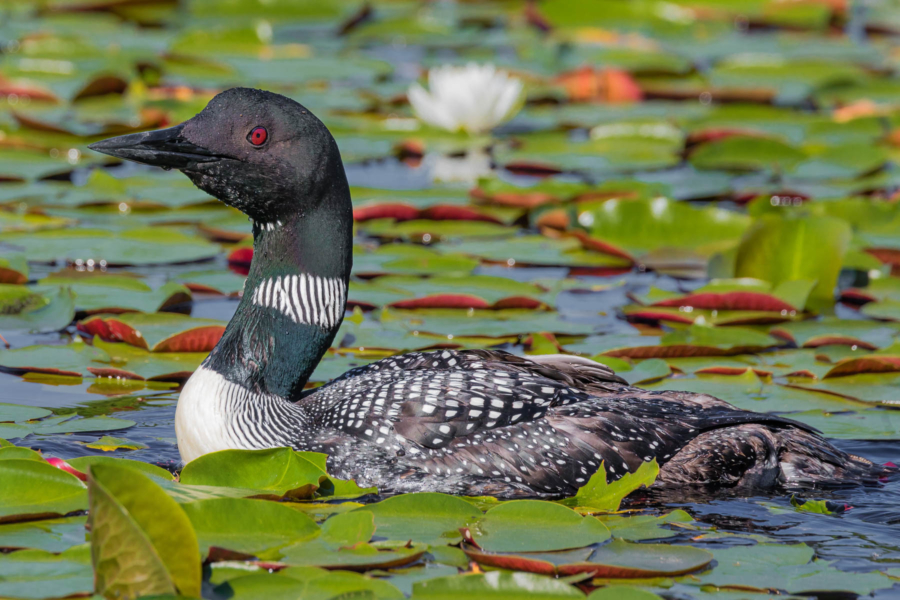
As far as waterfowl go, loons spend an extraordinary amount of time on the water, diving beneath the surface in search of small fish. When their northern habitat begins to freeze over, these birds have no choice but to migrate south to places like the Chesapeake Bay, where the water is cold but stays ice-free most winters.
Loons migrate to the Bay in large numbers starting in mid-October. Upon arrival, they hunt for small fish—particularly menhaden—just below the surface. To catch prey, loons peer into the water before diving to chase down their target.
The common loon is a master hunter in the water but clumsy on land because its legs are positioned far back on its body. The bird typically only goes on land to build nests and raise their young, and in some cases need to be rescued if they stray too far from the water.
During a few weeks in mid-winter, loons begin molting and growing new feathers, leaving them completely flightless. At this point, the loon is more or less a “sitting duck,” and has to live off the fat reserves it gathered while hunting in fall and early winter.
During the spring and summer breeding season, common loons are easily identified by their jet-black heads, sharp bills, black-and-white neck collars and checkered backs. When wintering on the Bay, however, their appearance transforms; they adopt a muted gray head, neck, and back paired with a white throat and chest. While these duller tones are less striking, they provide vital camouflage against the cold, dark waters of the Bay.
Loons are mostly quiet during the winter, but during the fall migration they produce several distinct calls—including a haunting, quivering wail. On calm, fog-filled mornings along the Bay, this wail creates an otherworldly atmosphere.
As deeper winter sets in, some flocks leave the Bay to continue south toward the Outer Banks of North Carolina. By February and early March, they return to the Chesapeake before beginning their final journey back to their northern breeding grounds.
Although the overall loon population is stable, researchers have documented a decline in loons visiting the Chesapeake Bay, due in part to a lack of available food.
Comments
There are no comments.
Thank you!
Your comment has been received. Before it can be published, the comment will be reviewed by our team to ensure it adheres with our rules of engagement.
Back to recent stories