
Delmarva fox squirrel
(Sciurus niger cinereus)
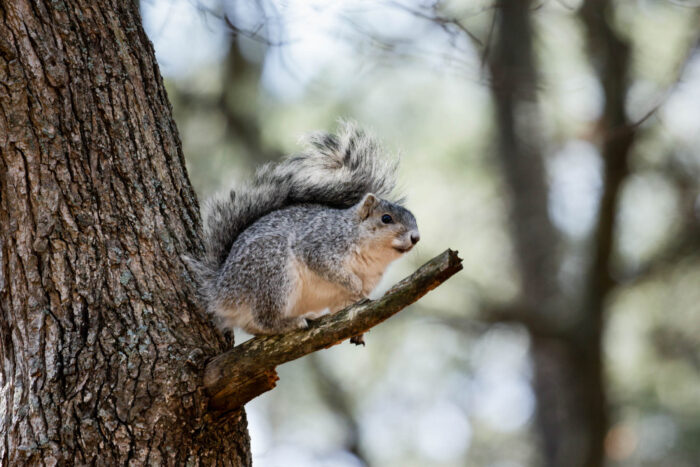
The Delmarva fox squirrel is a large, gray squirrel that lives in quiet forests on the Delmarva Peninsula.
This section shows one large critter image at a time. Use the thumbnails that follow to select a specific image to display here.
This gallery contains a grid of small thumbnails. Selecting a thumbnail will change the main image in the preceding section.
Appearance
The Delmarva fox squirrel has a steel or whitish gray body and a white belly. It has short, thick, rounded ears. Its full, fluffy tail has black edgings and can grow to 15 inches long. The fox squirrel can grow to 30 inches in length and weigh up to three pounds.
Feeding
The Delmarva fox squirrel feeds on nuts, seeds and acorns from gum, oak, pine, maple, walnut and hickory trees. It will also eat buds, flowers, fruit, fungi, insects and mature green pine cones.
Predators
Red foxes, minks, weasels, raptors, and unleashed dogs and cats are all natural predators. Raccoons, opossums and rat snakes may prey on young squirrels.
Voice
Delmarva fox squirrels will make a series of barks or chatters, similar to those of an eastern grey squirrel, when alarmed. They also make loud chewing sounds when feeding and a series of whines or screams during courtship.
Reproduction and life cycle
Mating occurs in late winter and early spring. The squirrel usually makes a den in a tree hollow but will also nest on a tree crotch, in tangles of vines on tree trunks or at the end of large tree branches. About 44 days later (usually in February to April) the female gives birth to a litter of one to six young. The female cares for her young until they are weaned. Young reach sexual maturity after one year. Delmarva fox squirrels can live to six years old.
Did you know?
- The Delmarva fox squirrel is one of 10 recognized subspecies of fox squirrels, which are the largest tree squirrels in the western hemisphere.
- In 1967, these squirrels were listed as an endangered species because of habitat loss due to development and timber harvesting. However, after a rigorous recovery plan and range expansion, the U.S. Fish and Wildlife Service de-listed the squirrels in November 2015.
- They can easily be distinguished from the common gray squirrel by their larger size, lighter color and shy, quiet behavior.
- Rather than jumping from tree to tree, Delmarva fox squirrels will descend down a tree and travel on the ground to the next tree.
Sources and additional information
- Species Profile: Delmarva Fox Squirrel – U.S. Fish & Wildlife Service
- Maryland Mammals: Delmarva Fox Squirrel – Maryland Department of Natural Resources
- Critter Corner: Delmarva Fox Squirrel – National Wildlife Refuge Association
- Delmarva Fox Squirrel – Assateague Island National Seashore