
Hoary bat
(Lasiurus cinereus)
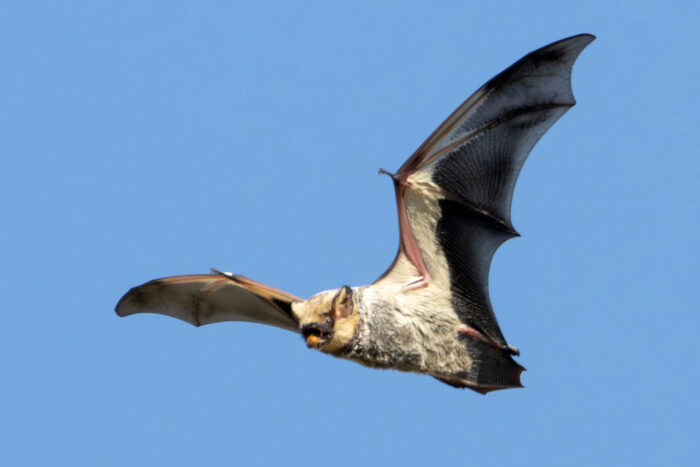
The white-speckled hoary bat is the largest bat in the watershed but is relatively uncommon despite having a large range.
This section shows one large critter image at a time. Use the thumbnails that follow to select a specific image to display here.
This gallery contains a grid of small thumbnails. Selecting a thumbnail will change the main image in the preceding section.
Appearance
Hoary bats have dark fur that is tinged with white, giving them a hoary (a word that means old or grayish-white) appearance. Their fur is black at its base, but fades to tan and then dark brown. The membrane along their tail is fully furred and their wings are both dark and light brown.
Feeding
The hoary bat is a skilled hunter with strong wings. It hunts at night using echolocation. It feeds on larger insects like moths.
Predators
Birds of prey such as owls, hawks and eagles.
Flight
Hoary bats fly in a more direct pattern than other bats, which makes them easier to see. They don’t always use echolocation to fly.
Voice
In addition to using echolocation, makes very quiet, squeaky “micro calls.”
Reproduction and life cycle
Hoary bats likely begin mating during fall migration and continue after reaching their winter grounds. They produce between two and four young. Young hang from trees while the mother forages, and are able to fly on their own after about five weeks.
Did you know?
- Hoary bats are the largest bat in all six states of the Chesapeake Bay watershed.
- Despite having a large geographic range, Hoary bats are relatively uncommon.
- Hoary bats migrate over longer distances than most bats.
- As long-distance migratory species, hoary bats are at greater risk of flying into wind turbines.
Sources and additional information
- Hoary-Bat - Maryland Department of Natural Resources
- Hoary Bat - Virginia Department of Wildlife Resources
- Species Spotlight: Hoary Bat - Bat Conservation International