
Seaside Goldenrod
(Solidago sempervirens)
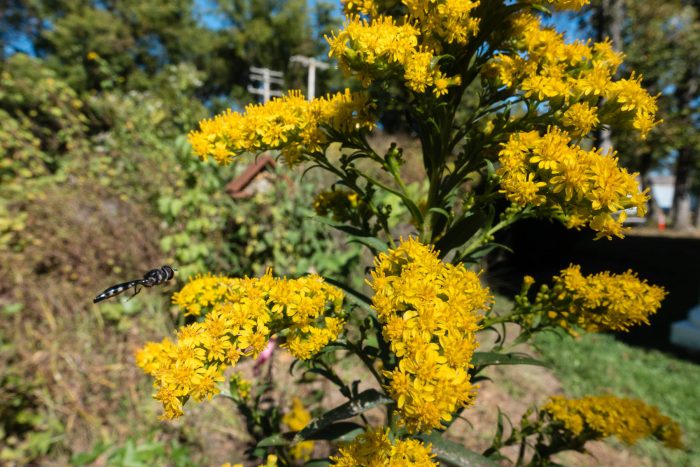
Seaside goldenrod is a native perennial plant with large, golden yellow flower clusters that bloom in late summer and autumn.
This section shows one large critter image at a time. Use the thumbnails that follow to select a specific image to display here.
This gallery contains a grid of small thumbnails. Selecting a thumbnail will change the main image in the preceding section.
Appearance
Seaside goldenrod has large clusters of tiny, golden yellow flowers at the top of a tall stem. Flower clusters are upright or slightly drooping and bloom in August to October. Long, waxy, evergreen leaves are arranged alternately along the stem, getting bigger toward the bottom of the stem. Seaside goldenrod grows 3 to 6 feet tall.
Reproduction and life cycle
After blooming, flower clusters mature into seed heads. Seed heads are filled with fuzzy, nut-like fruit capsules that each contain one seed. Wind spreads the seeds.
Did you know?
- Seaside goldenrod is a good flower to plant in swales (sunken marshy areas) and rain gardens because it can tolerate rock salt used on roads in winter.
- It can play an important role in providing nesting habitat for shorebirds like willets, killdeer and black skimmers.
Sources and additional information
- Native Plants for Wildlife Habitat and Conservation Landscaping: Chesapeake Bay Watershed – U.S. Fish and Wildlife Service
- Life in the Chesapeake Bay by Alice Jane Lippson and Robert L. Lippson
- Chesapeake Bay: Nature of the Estuary, A Field Guide by Christopher P. White
- PLANTS Database: Solidago sempervirens – USDA Natural Resources Conservation Service
- Seaside Goldenrod – Connecticut Botanical Society