
2026 Blue Crab Advisory Report shows below-average population, but no overfishing
While the population of juvenile crabs rebounded, adult numbers are below average
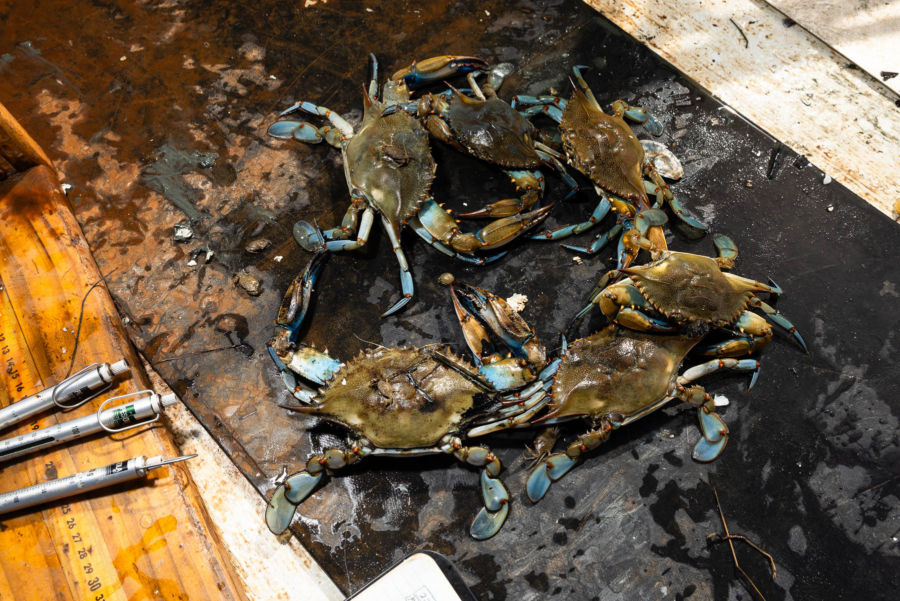
Blue crab survey results showing an increase in the Chesapeake Bay’s overall population were good news to seafood lovers and scientists alike. But experts continue to monitor and analyze data about this iconic species.
In June, members of the Chesapeake Bay Stock Assessment Committee released their 2026 annual Blue Crab Advisory Report with recommendations on how to maintain the fishery. The report indicates that, based on the current biological reference points, such as the abundance of female and juvenile crabs, the Bay’s blue crab population is not overfished. But despite the increase over last year’s numbers, the overall population of 349 million is below the 1990–2025 average, and the adult female population (81 million) is below the ideal target number (196 million).
Because of this, in the Blue Crab Advisory Report, the Committee recommends that the jurisdictions that manage fishing for blue crabs in the Chesapeake Bay—Maryland, Virginia, and the Potomac River—continue to be cautious when setting fishing guidelines.
“By bringing together data from all three jurisdictions, the Blue Crab Advisory Report gives us a shared, science-based understanding of the population—helping managers collaborate across different fisheries to sustain blue crabs, a resource that supports our local economy and remains a cornerstone of Chesapeake Bay heritage and culture,” said Ingrid Braun-Ricks, chair of the Chesapeake Bay Stock Assessment Committee.
There is a bright spot in analysis of the population numbers: The population of juvenile crabs in winter 2025–26 was estimated to be 228 million. That’s the highest since 2019.
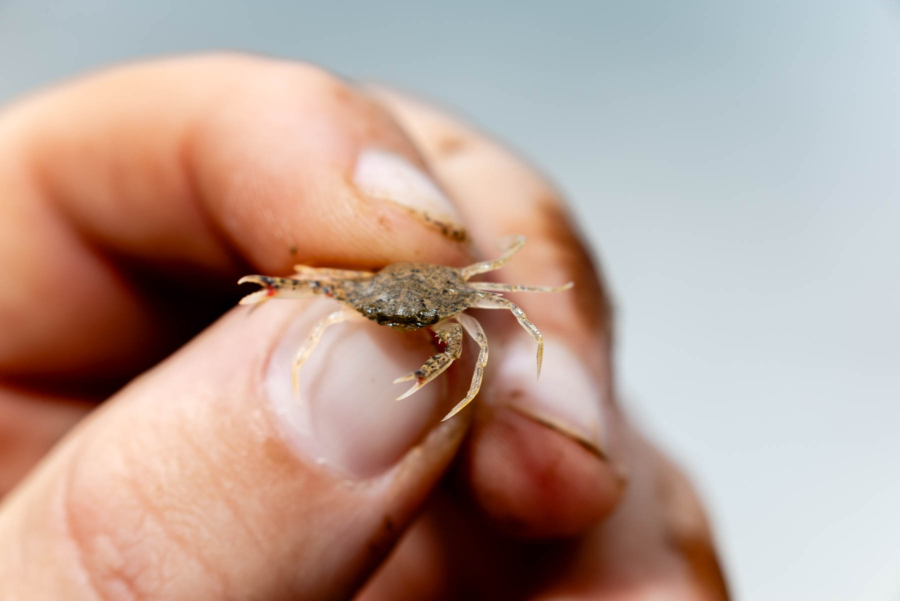
The Blue Crab Advisory Report noted the effects of this past winter’s extended cold snaps. While crabs overwinter buried in the mud at the Bay’s bottom, cold water temperatures can still kill them. The “overwintering mortality” was 5.17% of the population, above the average of 4.19%.
Researchers continue to investigate the reasons behind low population and juvenile numbers, including habitat availability (marshes, underwater grasses), predation (red drum, blue catfish), environmental conditions (water temperature, salinity, hypoxia) and oceanic conditions (wind, tidal currents).
While the Blue Crab Advisory Report is developed annually, less frequently, scientists take an in-depth look at the population in a scientific work called a stock assessment. The most recent blue crab stock assessment for the Chesapeake Bay was released in 2011 and updated in 2017. A new stock assessment, developed at the University of Maryland Center for Environmental Science, was recently finalized. Stock assessments are used by scientists and resource managers to develop the biological reference points that are used to guide management decisions.
The Chesapeake Bay Program supports work to ensure a sustainable blue crab population. The updated Chesapeake Bay Watershed Agreement includes outcomes to “achieve a sustainable Bay-wide blue crab fishery through cross-jurisdictional coordination that supports healthy blue crab populations and thriving fish populations.” This work includes maintaining abundance and harvest rate targets that follow stock assessment guidance and development of the annual Blue Crab Advisory Reports.
Comments
There are no comments.
Thank you!
Your comment has been received. Before it can be published, the comment will be reviewed by our team to ensure it adheres with our rules of engagement.
Back to recent stories