
A Chesapeake native shrub on the front lines of shoreline protection
The groundsel tree is highly resistant to salt spray and flooding, making them great for coastal landscaping
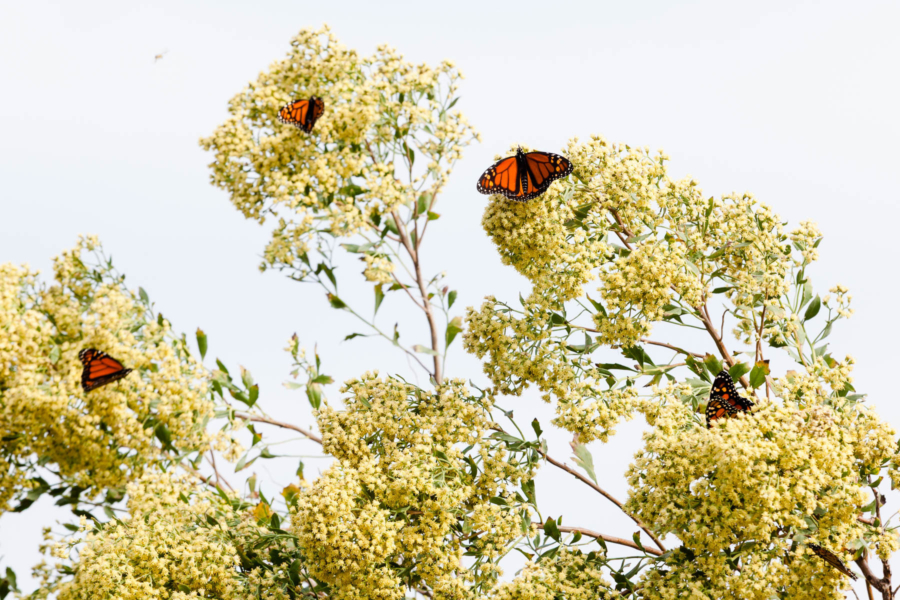
The groundsel tree, also known as the eastern baccharis, may not be by the type of plant you pick up at the store and put in your yard, but it plays an important role in protecting shorelines along the Bay and other coastal areas.
This native shrub thrives in salty, windy conditions where many plants typically would struggle to survive. Its extensive root system helps stabilize soils along shorelines, reducing erosion caused by waves, storms and rising water levels. By holding shorelines in place, groundsel trees prevent land loss and sediment runoff that blocks sunlight from reaching underwater plants.
Groundsel trees also act as natural buffers between water and land. Their dense growth slows runoff during rainstorms, preventing sediment and pollutants from reaching the Bay, improving water quality. The density of the species also acts as a natural flood wall, reducing the severity of flooding during storm surges. The waxy finish on their leaves make the groundsel tree highly resistant to salt spray, keeping the plant intact during harsh conditions.
Beyond limiting erosion and flooding, groundsel trees provide valuable wildlife habitat. Their flowers bloom much later than other plants, offering an important source of nectar for pollinators when options are limited. The shrub also provides shelter and room for nesting for various bird species in the Chesapeake region.
As communities around the Chesapeake region look to protect or enhance shorelines, native plants like groundsel will come in handy. The tough shrub that thrives in harsh conditions is the perfect plant for coastal landscaping when it comes to supporting the Bay.
Learn more about the groundsel tree and other plants that are native to the Bay watershed by visiting our field guide.
Comments
this was a very educational and riveting post. i learned a lot about the groundsel and and compelled to discover more shrubs
Thank you!
Your comment has been received. Before it can be published, the comment will be reviewed by our team to ensure it adheres with our rules of engagement.
Back to recent stories