
A green training program offers opportunities in the restoration workforce
GreenLift seeks to reduce recidivism rates for returning citizens
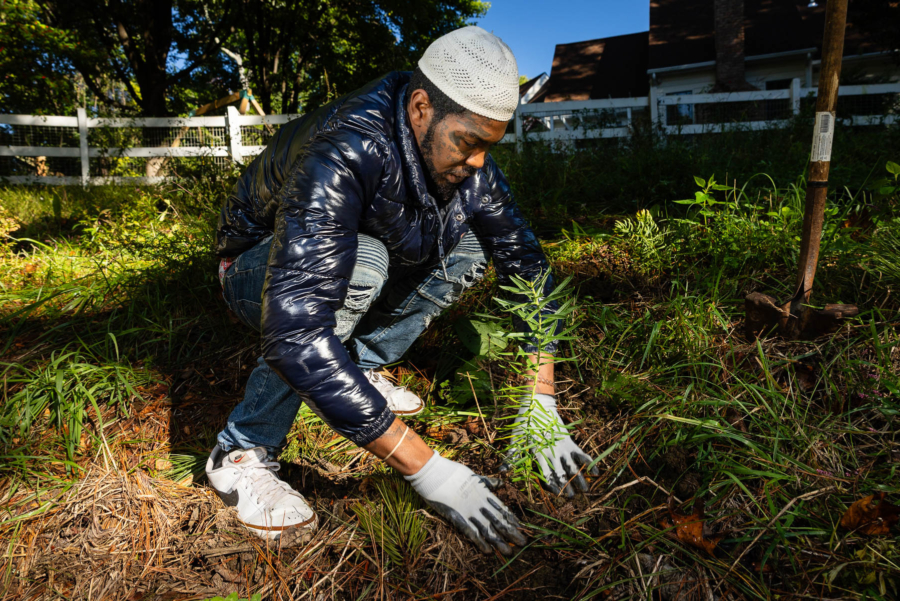
During the COVID-19 pandemic, as communities were social distancing, Vanessa Bright spent time landscaping her Maryland home. With help from a local master gardener, Bright went from “just planting annuals” to learning about native plants and their importance as habitat. And the simple act led her to dive deeper and deeper, until she wove conservation into the existing work of the Maryland Reentry Resource Center (MRRC), the nonprofit she had founded.
Bright, a licensed master social worker, started the center in 2019 after teaching in a prison "and then wanting to do more to help people that were coming home.” Her nonprofit’s mission seeks to “reduce recidivism in Maryland by empowering returning citizens” by improving access to employment opportunities and training—as well as nature-inspired programming.
After her gardening experience broadened her interests, Bright was connected to Suzanne Etgen, executive director of the Watershed Stewards Academy (WSA) and Beth Ginter, executive director of the Chesapeake Conservation Landscaping Council (CCLC). They encouraged her to apply for a grant from the National Fish and Wildlife Foundation’s Chesapeake Bay Stewardship Fund.
“I applied and we got it,” Bright said. “The grant was to train folks in conservation landscaping using Beth Ginter and CCLC and then provide the wraparound services that we [at MRRC] already provide.”
In 2023, MRRC’s green training program was spun off into a separate LLC, called GreenLift. Now in its sixth cohort of roughly a dozen participants, GreenLift trains its participants in conservation landscaping and connects them with watershed organizations in need of skilled practitioners.
“We do a small bit of classroom training where we just go over the basic science of how plants work, why the health of the Chesapeake Bay is important,” said Devin Landry, project manager for GreenLift. Other lessons cover stormwater management, conservation landscaping and identifying native and invasive plants.
“The majority of the field training is invasive species management,” Landry said.
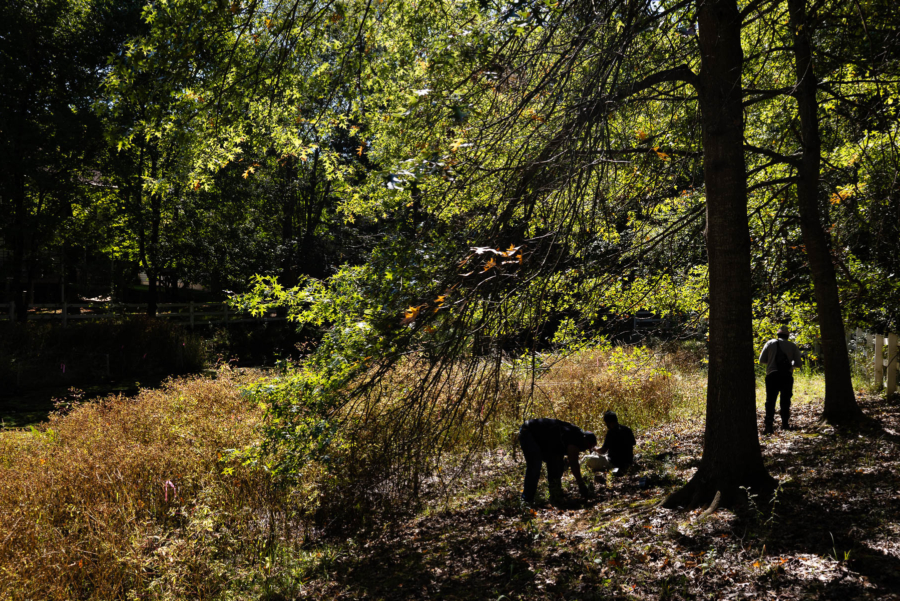
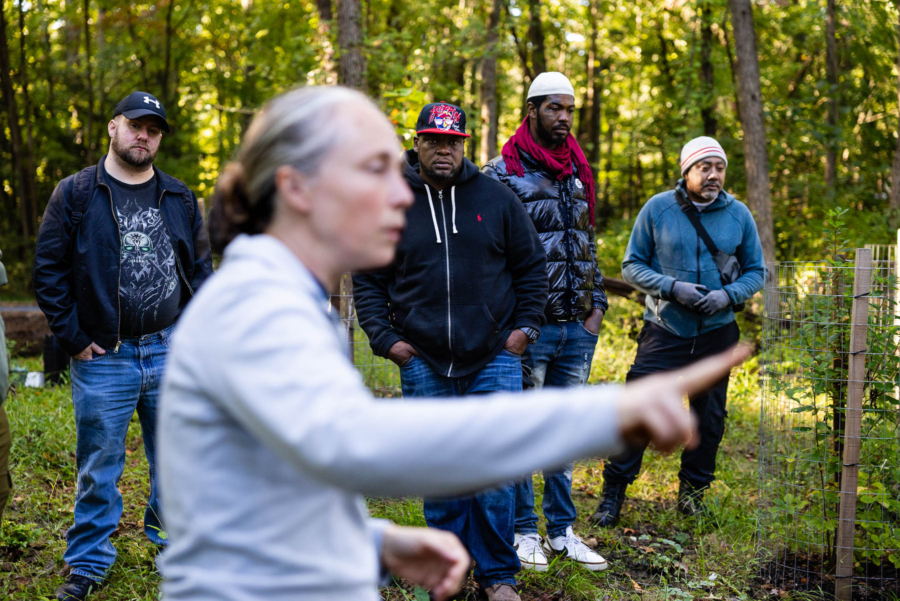
On an October morning, GreenLift participants met with Arundel Rivers Federation (ARF) director of grants and restoration Jennifer Carr at one of her nonprofit’s restoration sites in Annapolis, for their first day in the field. Carr addressed the group as they looked at a stormwater pond that ARF recently retrofitted with native marsh wetland habitat. Funded by the Chesapeake Bay Trust, City of Annapolis and State of Maryland, that project also includes a stream restoration component to keep nutrient and sediment pollution from flowing downstream.
“What we want is for this pond to fill up [with stormwater] and give that sediment a chance to settle out in here, because we don't want it going into Harness Creek,” Carr told the group. She also pointed out several species of invasive plants that ARF had worked to control at the site.
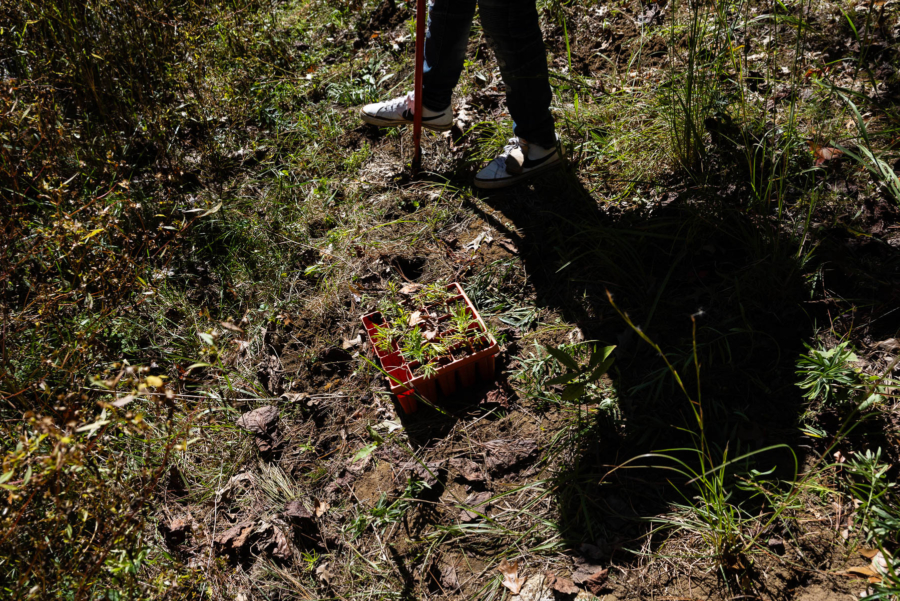
When Carr finished speaking, Elaman and the other participants got to work, filling in the perimeter of the pond with additional native plants. They stayed dry, though some of their clothes were peppered with seeds from the vegetation.
One of GreenLift’s participants, Ahmed Hann, crouched beside the pond, digging holes for a tray of plants while wondering about future opportunities.
“My background is finance, marketing, always sitting behind the desk,” Hann said. “So being in nature, seeing trees…this might be a new career path for me.”
He wasn’t the only participant mulling future career opportunities. Sergio Potes said he works part-time installing residential and commercial solar power, and hopes the GreenLift experience will help with long-term plans that include college and possibly marine biology or environmental law.
“I don't think it gets any more green than, you know, your job and then your hobby also being green,” Potes said.
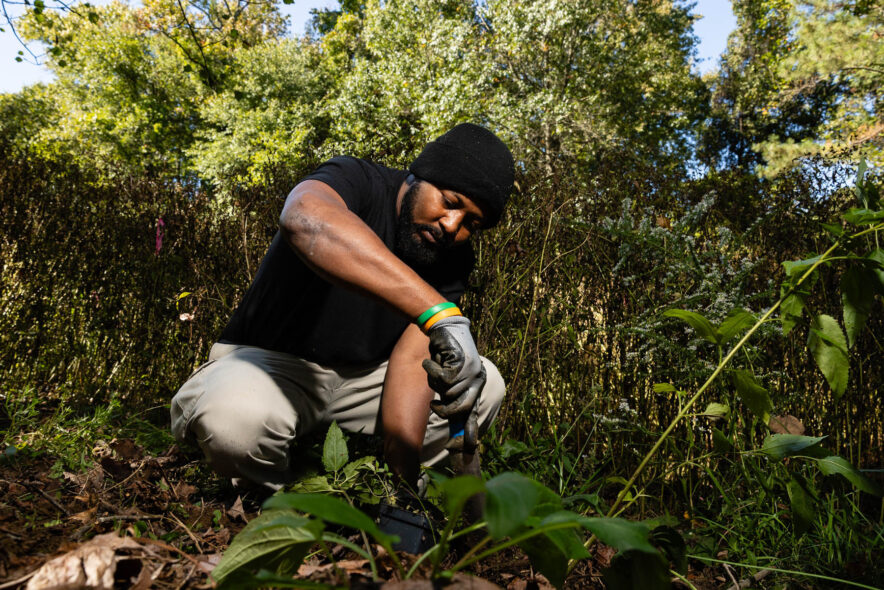
Along with supporting participants’ individual goals, GreenLift is also helping address the immediate demand for environmental workers. Carr noted that “a lot of our contractors do struggle to find and maintain someone with the set of skills” as well as the “endurance and willingness” for demanding restoration and maintenance.
“The intersection with our work is great because we often do need maintenance help that is affordable on our job sites,” Carr said. “We get to watch them grow during their training, and then some of them are able to continue on with one of [GreenLift’s] workforce crews afterwards,” Carr said.
She added that GreenLift “does a great job connecting the folks with the actual certifications they need for our type of maintenance work.”
As the current cohort of GreenLift participants complete their months-long program, they will each become a certified Chesapeake Bay Landscape Professional. The program also has a nature-inspired therapy component that includes hiking through urban parks and trails.
By the end of the program, participants gain exposure to a number of local organizations working to meet restoration goals, increasing the odds that they might find a potential future employer.
“The conservation effort is always in need of more trained professionals to actually complete this work,” Landry said.
Comments
There are no comments.
Thank you!
Your comment has been received. Before it can be published, the comment will be reviewed by our team to ensure it adheres with our rules of engagement.
Back to recent stories