
A long time D.C. resident wants people to connect with and cherish their local river—like he does with the Anacostia
Hamid Karimi, member of the Stakeholders Advisory Committee, shares his feelings on Bay restoration
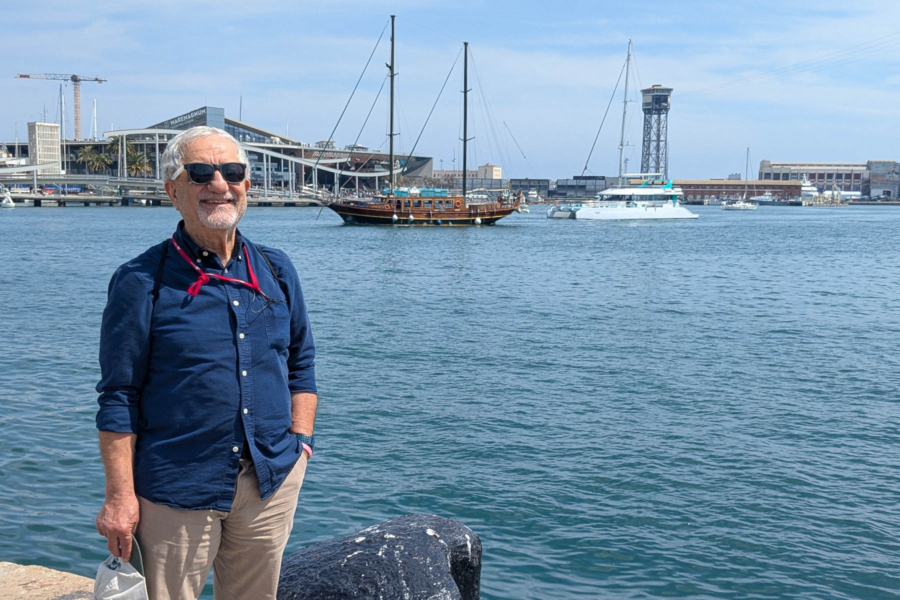
You would be hard-pressed to find a stronger champion for clean Washington, D.C. water than Hamid Karimi. A longtime D.C. resident, Karimi was the former deputy of the District of Columbia’s Department of Energy and Environment (DOEE) and spent over 35 years in various positions at the agency. He represented D.C. on a number of committees within the Chesapeake Bay Program, and after his retirement, was appointed by the mayor of D.C. as a member of the partnership’s Stakeholders’ Advisory Committee. We had the opportunity to speak with Karimi about his career and views on Chesapeake Bay restoration.
Can you describe your personal connection to the Chesapeake Bay?
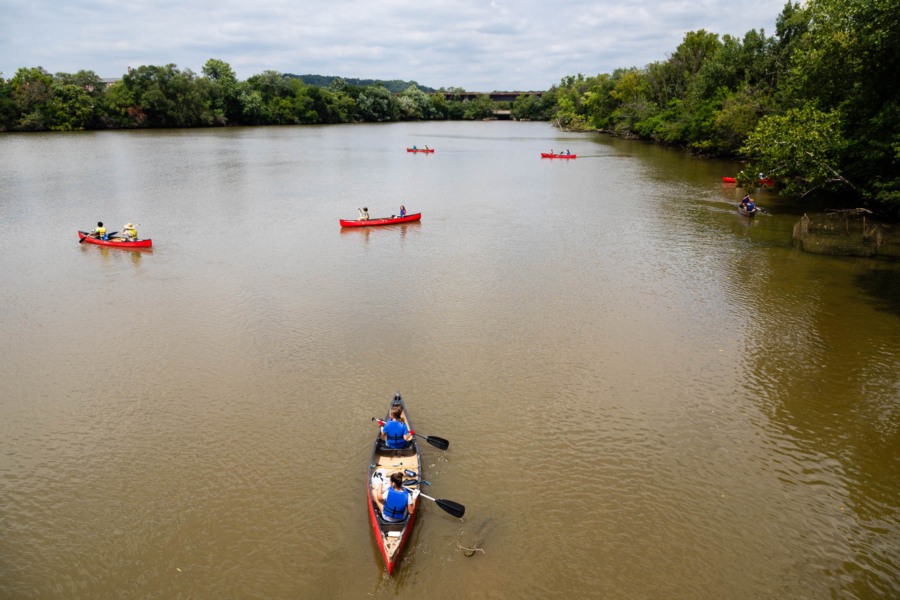
When I first began working in Washington D.C., I was a biochemist hired to do sample analysis, with no involvement in environmental advocacy and no personal connection to the Chesapeake Bay. That changed, however, when during my first year, a friend took me out on a short canoe trip on the Anacostia River, where we paddled near Kingman and Heritage islands.
Out on the water, I had an incredible moment of realization that we could be in the middle of such a dense urban area while simultaneously feeling like we were engulfed by nature where we could listen to bird calls and spot blue herons. Mind you, this was 35 years ago, way before any substantive progress on the Anacostia had been made. But that experience helped me understand that natural habitats are precious resources that cannot be bought or imported. The Anacostia River has been entrusted to us and if neglected, it is irreplaceable.
That day on the water changed me and sparked my heavy involvement in environmental work, first with the Anacostia, then with other tributaries and rivers, and ultimately with the Chesapeake Bay. I canoe on the river once or twice a year, and it still brings tears to my eyes. I feel deeply grateful to live near and experience the beauty of the Anacostia, and I’ve developed a lasting, almost spiritual connection to it.
As a longtime DC resident, what messages do you feel resonate most with the public when it comes to Chesapeake Bay stewardship?
I believe that you can lecture about its beauty and abundance and give out the “Save the Bay” bumper stickers, but for many folks that messaging can feel distant and detached. Especially if you live miles upstream or in a dense urban area like D.C., and are physically, economically or culturally disconnected from the Bay. That was one of the challenges I tried to convey when I represented DC on the Chesapeake Bay Program committees. If we only communicate updates on modeling or monitoring data, or talk about hypoxia in the deep channel, it can become so theoretical and devoid of a personal connection that the message is ineffective.
Instead, there is a need for the Bay Program to continue to find strategies that connect people to their own local rivers and streams. By helping people learn more about their own local waterways, it won’t matter if they are less knowledgeable of the Bay and its issues. In my time on the Stakeholders’ Advisory Committee I have learned new perspectives from the other members of which I don’t have firsthand experience, for example, the struggles that farmers face. Farmers care about the streams that run through their farms and supporting them in keeping their water clean is one of the most helpful things we can do. If people care for their local watersheds, then the Bay will benefit in the long run. My connection to the Chesapeake Bay started with the river I could see, touch and paddle on. It was through my personal experiences on the Anacostia River that I understood that the most powerful environmental work happens when you start local. However, those local experiences need to be communicated to those who make policy decisions, who mainly reside in urban settings such as Annapolis and Richmond.
Given your experience in science, policy and enforcement, what do you think are the biggest gaps and barriers that still exist between scientific recommendations and implementation on the ground?
Our biggest challenge has been the lack of progress on nonpoint source pollution. While addressing point source pollution was expensive, with billions being spent on wastewater treatment plants such as Blue Plains Water Treatment Plant, it was in many ways the “easy” part. With point source pollution, such as a sewer that is discharging into a river, you can easily identify where the problem is and work to fix it. I have experienced the Anacostia River when there was a great deal of pollution from raw sewage, and it created the most foul odor and turned the water gray with toilet paper and other pollutants. This sewage pollution was highly visible, came from a single source, and there was a clear process under the EPA’s regulatory authority to address the issue. The undeniable evidence of sewage pollution along with regulatory pressure convinced policymakers to take action.
Nonpoint source pollution, however, is an entirely different challenge. It is much more difficult to understand or visually connect a lush green lawn with fertilizers and pesticides or a productive farm to the potential runoff that is polluting the Bay. Unlike sewage and point source pollution, nonpoint sources are not as obvious or unpleasant in a way that can motivate behavior or policy changes. Plus, you have to convince local policymakers who have many competing responsibilities for resources, like schools, public safety, potholes, etc…so saying that we also need to keep the river clean from nonpoint source pollution is not the strongest bargaining position. Because there is no legislation that regulates nonpoint source pollution, the only way to truly solve the issue is at the source, which means influencing the behavior of millions of people and landowners. This is why it is critical that we find a creative communication strategy that helps people understand that their daily actions have an impact on the environment, while coming up with resources that incentivize people to enact their own behavior change. I do not think there is much political appetite for strict runoff regulations, so communication and incentives will be key.
For many decades, it has been illegal to swim in the Anacostia River due to historical pollution that is harmful to human health. Recently, we have seen improvements in the river and a push to open waterways for recreational swimming. What are your perspectives on a swimmable D.C.?
When I first came to D.C., I was appalled at the idea of anyone wanting to swim in the Anacostia, and I believed that any effort to make the river fishable or swimmable was aspirational and unachievable. Forty years ago, the river was filled with trash, raw sewage and, occasionally, even bodies. But the transformation that the Anacostia has gone through should serve as a model for other urban areas. While there is still a lot of progress to be made, there are now several times a year when the river is swimmable. But longterm swimmability requires giving more people direct experiences with the river, through swimming, canoeing, fishing or exploring. The more engaged people are means more public pressure to push for progress and prevent any backsliding. There is a program called “Anacostia Green Boats”, where people rent a canoe for free in exchange for collecting and bringing back trash from the river. This is a program replicated from Copenhagen, Denmark. It helps people build more personal connections to the river.
The biggest challenge that remains for a swimmable Anacostia River is that over 80% of the watershed is in Maryland and after a major storm, the runoff will flow into the Anacostia River and make it unswimmable. Therefore, Maryland and DC will need to work together to keep the Anacostia clean because pollution knows no political boundaries. This ties back to the larger challenge – the Chesapeake Bay will never achieve meaningful restoration goals until we address nonpoint source runoff and all jurisdictions participate wholeheartedly. In the years ahead, I hope that we can expand the number of swimmable days in the Anacostia River.
You have traveled extensively and have seen iconic waterways around the world. Is there a particular waterway that is memorable and why?
I have been very fortunate to travel on many of the world’s most famous rivers, including the Nile, Danube, Rhine and Amazon, as well as toured the Puget Sound, Everglades, Great Lakes region and several other iconic watersheds. While I am not deeply familiar with the environmental programs of other countries and can’t speak with authority about their effectiveness, my personal experiences on these waterways were either inspiring or more sobering.
While touring a section of the Nile below the Aswan Dam in Egypt, the amount of trash I saw was heartbreaking. Removing or preventing trash from entering a river is one of the most visible and effective ways to improve water quality. When trash is visible, people are less likely to view the river as a resource worth protecting. It reminds me of when D.C. considered implementing a bag tax. During a focus group, a resident said she never littered in her own neighborhood, but in messier neighborhoods, she figured, “What’s one more cup?”
I have also been on the Danube and Rhine rivers, and while they may look clean on the surface with a little bit of visible trash, I would guess that the centuries of heavy industry that line their riverbanks has contributed to a negative impact on the water quality. While I was in China, although I only saw the mouths of some smaller rivers, I noticed there was no visible trash. Keeping rivers clean and free of trash can help shape a culture of personal responsibility and collective stewardship.
I am proud of the accomplishments we have made here in the Chesapeake Bay watershed. Our region has incredible collaboration among nongovernment organizations, state and federal agencies, and communities. I hope we don’t lose momentum with the revised Chesapeake Bay Watershed Agreement. There is more to do and we need to build on those successes and keep moving forward.
As the Chesapeake Bay Program looks beyond 2025 and reinvisions the Chesapeake Bay Watershed Agreement, what priorities do you believe should shape this next stage of restoration and conservation?
As we move beyond 2025, we primarily want to make sure we don’t lose momentum and backslide from our progress. I think this next stage should prioritize three main points: communicate achievements, set aspirational goals, and track and regularly report on specific progress.
- Communicate achievements: Clearly document and communicate our achievements and progress to date. The public should understand what commitments were made and what progress was achieved. It should be specific, for example, how far along we are on the Bay TMDL goals or how we are working to reach no net loss of wetlands.
- Set aspirational goals: I sincerely believe that aspirational goals make a difference. Consider the Anacostia River as an example. It was once thought impossible to restore it to a swimmable river and yet we achieved it. The Watershed Agreement should stretch beyond what general opinion may believe is achievable and give us something meaningful to work toward. We should see a commitment to moving forward and not backtrack.
- Track and regularly report on specific progress: Hearing what has been achieved is tremendously powerful, but we also need to know and understand the consequences when we fall short of the goals. We need specific targets measured incrementally along the way so the public can understand trends and progress. Regular public reporting builds trust, ensures accountability, and can even create healthy competition between the jurisdictions.
The Alliance for the Chesapeake Bay is honored to support the appointed volunteers of the Chesapeake Bay Program's Stakeholders’ Advisory Committee. We are committed to serving as an unbiased convener so the members can achieve their mission through learning and discussion. Views expressed by the members are not those of the Alliance.
Comments
There are no comments.
Thank you!
Your comment has been received. Before it can be published, the comment will be reviewed by our team to ensure it adheres with our rules of engagement.
Back to recent stories