
After historic restoration, public trails, education and art will line the Little Conestoga Creek
The Blue Green Connector will connect 225,000 Lancaster residents with the creek
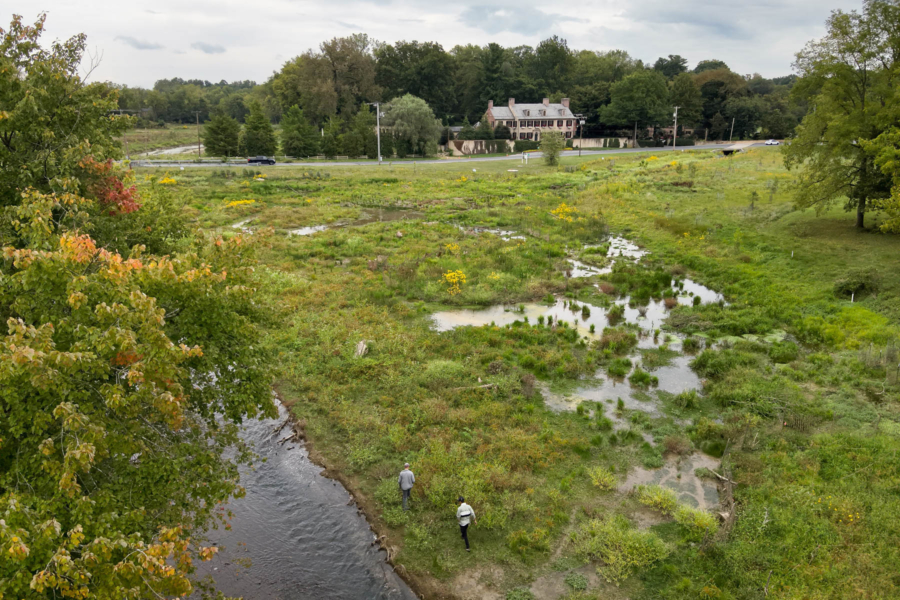
Stream restoration projects are a great way to improve local water quality and fish habitat. But what if you could not only restore a creek but also turn it into a place for recreation, learning and connection?
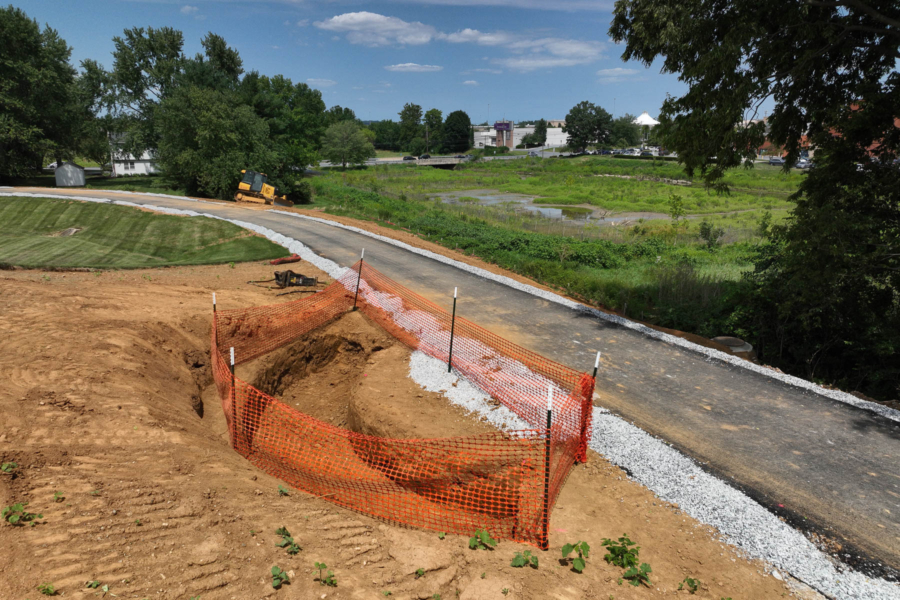
This is the idea behind the Blue Green Connector, a project currently being developed on Little Conestoga Creek in Lancaster County, Pennsylvania. Led by the Steinman Foundation and Little Conestoga Creek Foundation, the Blue Green Connector is set to include 3.5 miles of paved, ADA-accessible trails and recreational experiences along recently restored sections of the creek once plagued by sediment pollution.
Emily Landis, who serves as director of education and environmental strategy for the Blue Green Connector, said the project combines two of Lancaster’s most important environmental issues: stream health and recreation.
“Seventy-five percent of our waterways are impaired,” Landis said. “And in Lancaster, many of the streams are developed in a way where we can’t see or access and enjoy them.”
Restoring the creek
With some of the most fertile non-irrigated soil in the country, Lancaster County is packed with thousands of small farms that provide food to people throughout the region. However, centuries of farming have taken its toll on the environment.
Historically, forests cleared for farms led to high amounts of sediment washing off the land and filling streams. This “legacy sediment” erodes from streambanks and blocks groundwater within the floodplain from feeding and recharging the creek. Little Conestoga Creek eventually flows to the Chesapeake Bay via the Susquehanna River, and is one of many waterways in Lancaster impacted by legacy sediment.
In 2022, the Steinman Foundation, an organization whose mission is to improve the quality of life in Lancaster County, decided to sell its historic Conestoga House along the Little Conestoga Creek and use the proceeds to help restore the creek. Initially, the Foundation aimed to restore the section of the creek near the Conestoga House, but their ambitions quickly grew.
“They looked upstream and downstream and asked, ‘can we restore other areas?’,” Landis said. “It became the largest floodplain restoration project in Lancaster County's history to date.”
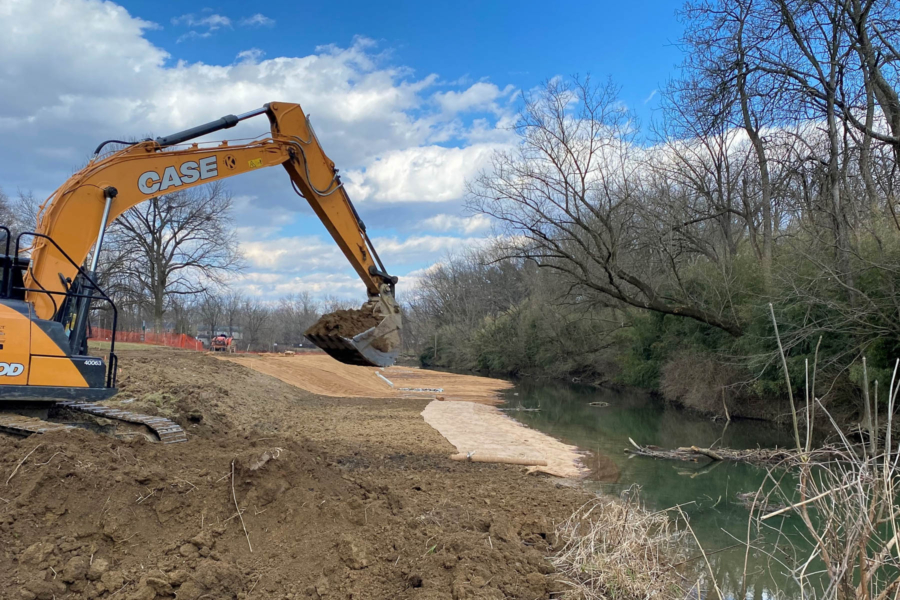
Over the past several years, a group of nonprofits as well as federal, state and municipal partners have restored about 12 acres of Little Conestoga Creek at three different sites—amounting to half of their long-term goal. Crews removed multiple Olympic-sized swimming pools-worth of legacy sediment from each site, reducing pressure on its banks and allowing natural springs to feed the stream. They restored the streambank to a more natural slope and planted native trees and shrubs along its banks and in surrounding wetlands.
According to Landis, the work has resulted in cooler water, improved floodwater storage and higher biodiversity—all signs of a healthy stream. Once complete, the project is estimated to keep four million pounds of sediment and thousands of pounds of nitrogen and phosphorus from entering the creek and flowing downstream to the Bay each year.
To fortify this work, the foundation is working with the Alliance for the Chesapeake Bay to reforest the Little Conestoga Creek corridor. The Alliance planted 300 trees at one of the project sites this past spring, and they have plans for much more work.
“There's the potential to reforest approximately 30 additional acres along the Little Conestoga Creek,” Landis said.
The Steinman Foundation expects to complete work at all six floodplain restoration sites by 2028, bringing a total of 25 acres of floodplain wetlands back to health. By then, the organization also hopes to launch the trail system along with various educational experiences.
Connecting residents with the creek
Now that the restoration work is half complete, the Steinman Foundation and its partners are busy designing and building out the trail experience for residents to enjoy.
According to Landis, the Blue Green Connector will serve as a “learning laboratory” where residents can both enjoy nature and learn about environmental science, history and how to help clean water and healthy ecosystems in Lancaster.
When finished, the trail system will provide walking and biking paths between various community hubs, including a college, hospital, grocery store, businesses and other parks and trail systems. Once connected, it will provide access to about 225,000 residents in the Lancaster metro area. The trails are also set to include an amphitheater, a meditative labyrinth path and nature-oriented sculptures created by local artists.
“Everything is meant to be intentional and everything serves a purpose,” Landis said. “Not only to be beautiful, but to have a learning opportunity interwoven as well.”
Watershed scientists and biologists are already using the space to conduct studies. Researchers with the Chesapeake Watershed Initiative at Franklin & Marshall College have been monitoring changes to the creek following the restoration efforts, including water quality, aquatic life, hydrology and carbon sequestration. Meanwhile, a biologist at F&M College has installed acoustic sensors for birds and bats along the creek, and will soon introduce wildlife cameras to track animal movement along this burgeoning wildlife corridor.
MarieClaire Egbert, Communications Director with the Steinman Foundation, is developing a public-friendly water quality dashboard with F&M College that features live data from in-stream sensors. She envisions neighbors, teachers and anglers using the dashboard to monitor the health of the creek.
“Ultimately our goal is to take this dense data and make it universally accessible,” Egbert said.
In addition to residents and researchers, the Blue Green Connector will also meet the needs of environmental educators. The completed trail system will include a mix of exhibits, educational signage, wildlife viewing stations, outdoor classrooms and demonstration areas that teachers can use to educate students about their local environment.
"Teachers are really eager to get their students out of the classroom and into healthy, functioning ecosystems,” Landis said. “The Blue Green Connector is an accessible resource for these important outdoor learning opportunities."
A case study in partnership
The Blue Green Connector was launched by two organizations—the Steinman Foundation and Little Conestoga Creek Foundation—but now it encompasses numerous nonprofit, academic and government partners all working toward a common goal.
At the local level, four different municipalities have committed to supporting the project through planning and funding. Additionally, Lancaster County, the PA Department of Environmental Protection (DEP), PA Department of Conservation and Natural Resources, the U.S. Environmental Protection Agency and a group of private foundations and donors have all helped fund the project through different programs. DEP staff were honored with a Governor’s Award for Environmental Excellence for the innovative permitting strategy they developed to accelerate the project.
“There's been a lot of really meaningful and exciting partnerships,” Landis said.
Those partnerships have brought forth a project that goes far beyond the typical stream restoration project. As Little Conestoga Creek begins to heal, the Blue Green Connector may serve as a place for residents to become inspired by the progress and reconnect with their local waterway.
"The Blue Green Connector is a place where nature, community and learning come together,” Landis said. “We hope this project catalyzes further restoration in Lancaster County.”
Comments
The Little Conestoga runs behind my home in Manor Twp. (Georgetown Hills). The Creek has been inundated over the years with deadfall timbers and the related trash that collects behind the log jams. I would like to organize a group to clean up this stretch of the Creek. How can I do this?
Thank you!
Your comment has been received. Before it can be published, the comment will be reviewed by our team to ensure it adheres with our rules of engagement.
Back to recent stories