
Raising a stream to save the Severn River
Less than a year after restoration, wildlife is already returning to a resilient Jabez Branch
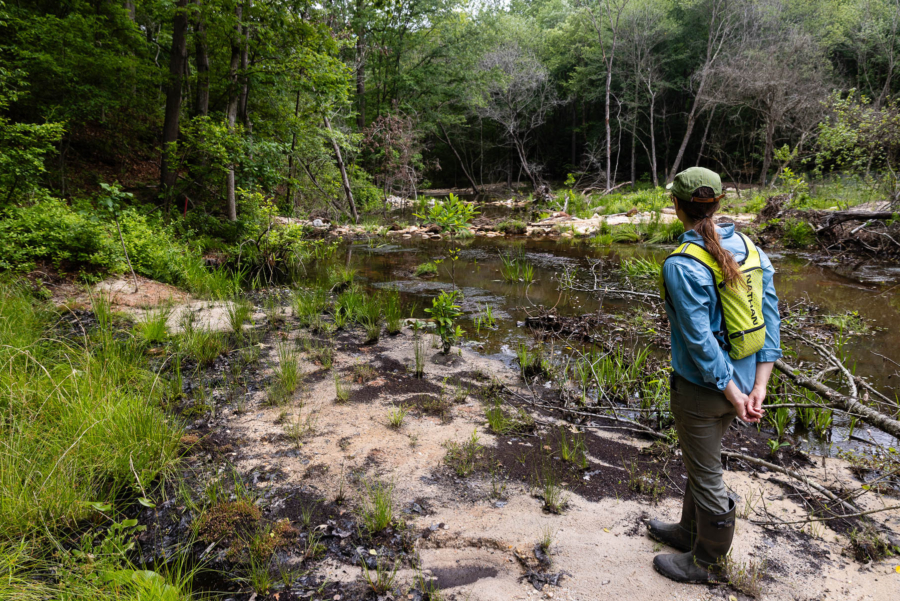
Like many small streams surrounding the Chesapeake Bay, Jabez Branch faced a long decline. It was first smothered as centuries of soil erosion from agriculture filled the forested tributary with a layer of sediment up to 10 feet thick. In the 1900s, new buildings and highways created supercharged stormwater that now flows hot and fast off of paved surfaces, cutting through its sediment-laden stream beds like a firehose.
The problem is clearly visible in an aerial photograph made following a half-inch rainstorm. In it, a sediment plume spreads across the Severn River for three miles downstream from Jabez Branch. It’s a picture that organizations and agencies are hoping to erase with a massive stream and wetland restoration in the river’s headwaters.
“The Jabez has always been on the Seven River Commission's list of problems that they identified for the Seven River, in terms of the amount of sediment and nutrient runoff that we're getting there,” said Severn Riverkeeper Sara Caldes. “It has a lot to do with the creation of Route 32 and [Interstate] 97 and that whole confluence of state highways, but also just in terms of our basic patterns of impervious surfaces that we're introducing too close to streams that then convey into tidewater ultimately.”
The Severn’s problems stem from what’s called nonpoint source pollution—some extra lawn fertilizer here, an oily parking lot there—getting washed into streams during storms. Many small injuries to the land add up to a degraded river downstream. Caldes said that addressing the problems upstream is the most effective remedy for the Severn.
“We have a bit of a slogan in our office—if you can fix the streams and if you can fix the creeks, you can fix the river,” Caldes said. “It's one creek at a time.”
Though many streams face the same threats, Jabez Branch has been able to persist in a way that hints at the possibility of returning some of its former glory. For decades, a stretch of Jabez Branch was the last refuge in all of Maryland’s coastal plain for a wild population of brook trout, thanks to the stream’s cold groundwater springs, dense forest cover and relatively little development. Brook trout need the coldest, cleanest water to persist, and exceeding just 4% of paved area in a watershed can doom its brook trout population. Brook trout haven’t been seen in Jabez Branch since 2018, when two adults were found during a survey.
A small, first-order stream feeds into Jabez Branch about 100 meters downstream from where those last two brook trout were caught. Humbly called Jabez 3, it was found to be severely degraded in a 2015 study by the State Highway Administration, triggering a decade of monitoring, planning and an ambitious restoration effort.
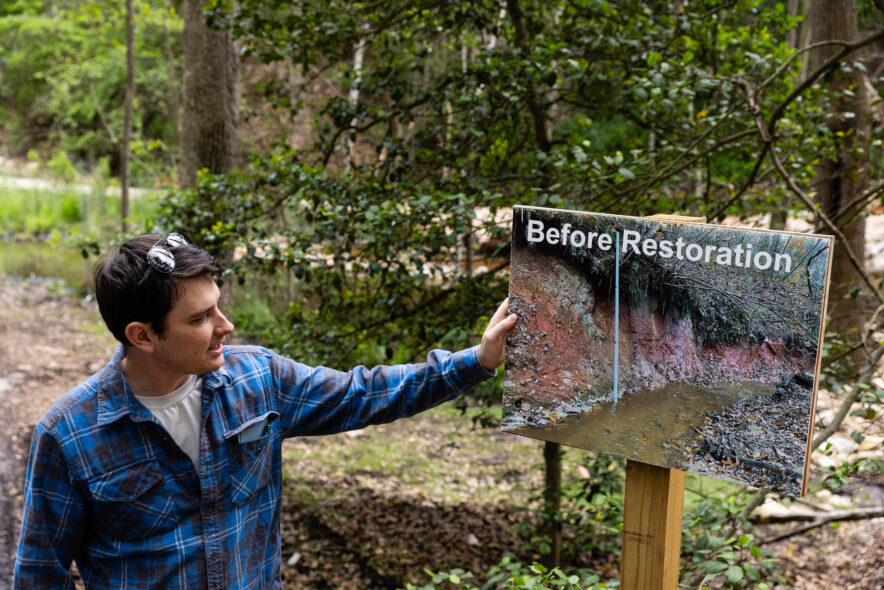
Ten years ago, Caldes attended a walk-through of Jabez 3 that made it clear to visiting officials that the stream had issues—visible were its steep eroding banks, up to 12 feet tall, cutting off the channelized stream from its floodplain that should have allowed water to seep back into the ground and feed freshwater wetlands. It had become a major source of sediment that hampered fish species downstream in Severn Run and the Severn River, like spawning runs of yellow perch.
In 2016, the Maryland Department of Natural Resources (DNR) supported the design of a restoration project for Jabez 3. And from 2017 to 2023, Caldes worked through the regulatory process to get approval for construction.
“People need to understand how hard it is to get these things permitted,” Caldes said.
Funding for the restoration, called the Jabez Branch Coastal Resilience Project, eventually amounted to $9.1 million, including a significant portion from DNR and almost $1 million from the National Fish and Wildlife Foundation (NFWF) Innovative Nutrient and Sediment Reduction grant program, which is funded by the Chesapeake Bay Program.
In late 2024, the last loads of sand, gravel and cobblestone were in place on a restoration site stretching nearly half a mile. Instead of removing harmful sediment, the design called for adding layers of material on top of it, to raise Jabez 3, allowing the water to slow down and reconnect with its floodplain.
“A healthy stream should be able to recharge groundwater, and groundwater should be able to come back up in seeps,” Caldes said.
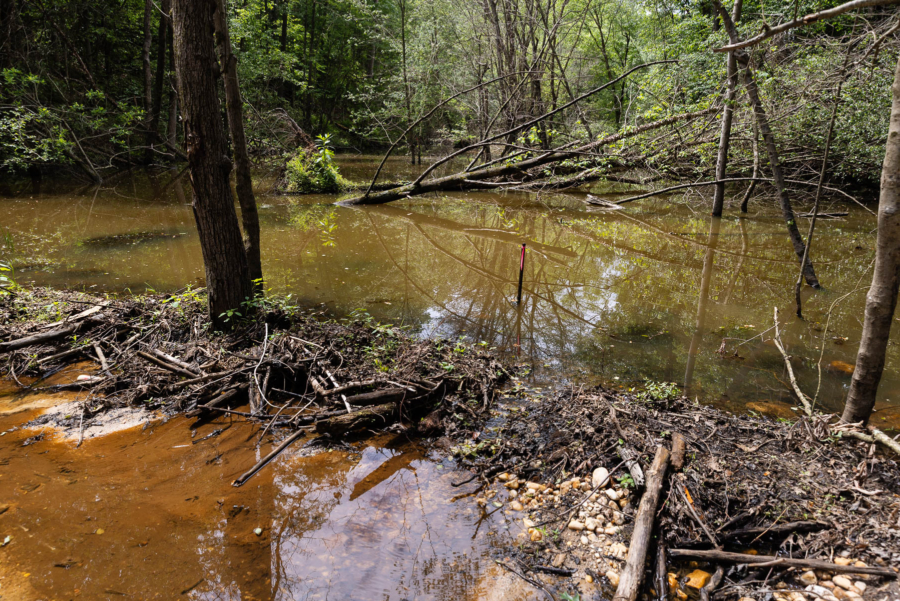
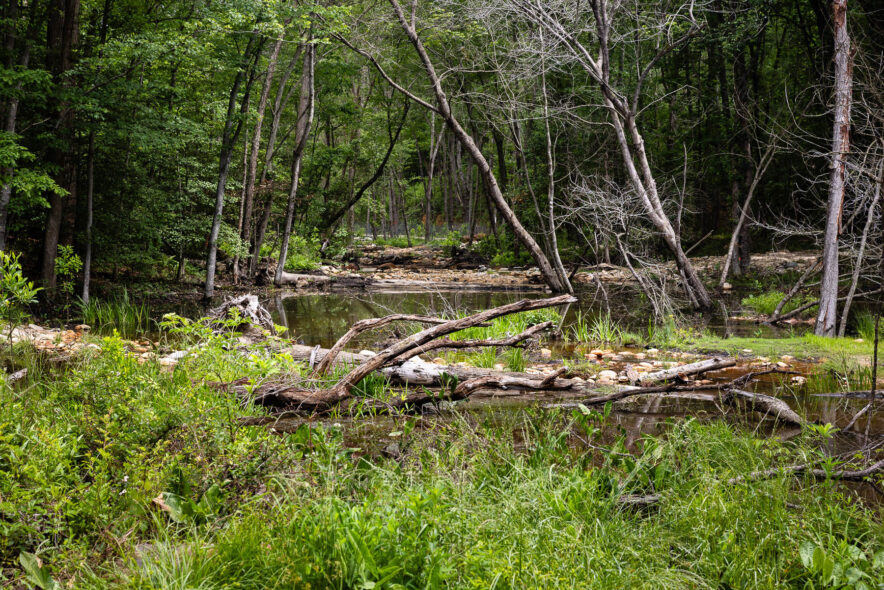
The stream now flows through a long series of regenerative step pools constructed by the firm Underwood and Associates to mimic the effect of beaver dams. And wetlands along Jabez 3 have been doubled in size, to about five acres.
“We haven't even gotten through a full growing season, but already the preliminary data is promising,” said Keith Binsted, a partner and lead designer at Underwood and Associates. “There are more fish species here now than were here pre-construction.”
On a visit to Jabez 3 this spring, just months after construction was completed, Binsted pointed out that actual beavers had already moved in, building dams and adding their own supportive flourishes to the new stream’s design.
“I'm personally most excited about the beaver; that's kind of a seal of approval for me,” Binsted said. “But I can also get excited about the rare plant species that we have reestablished on this site.”
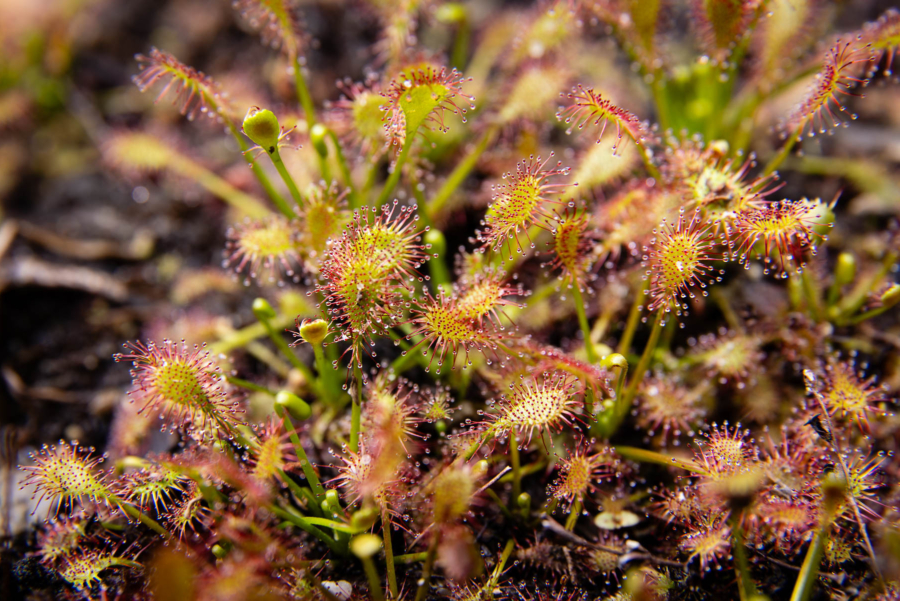
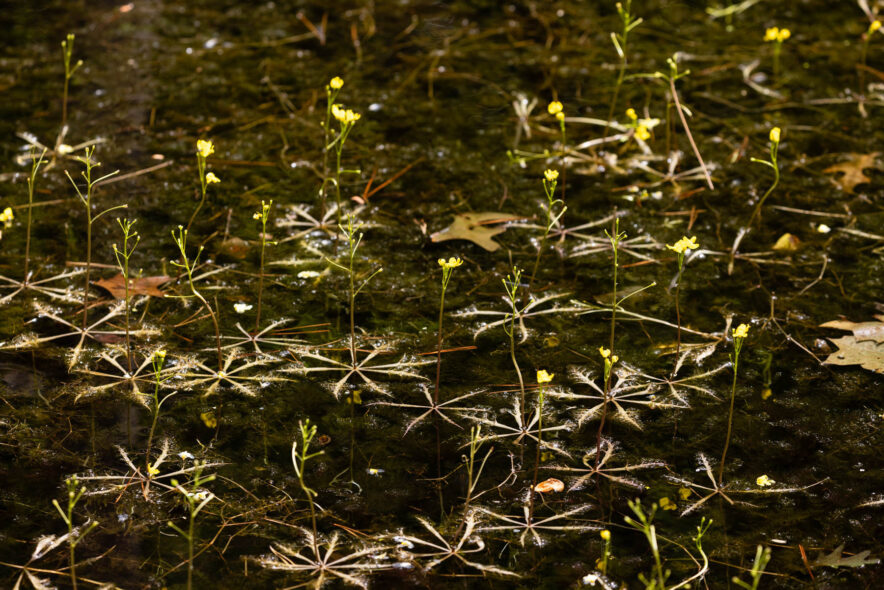
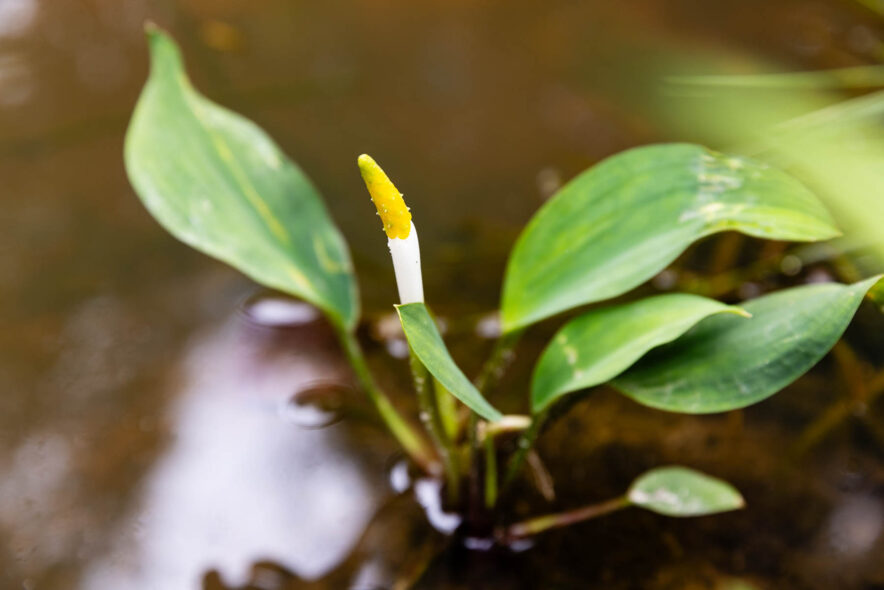
Stepping gingerly off a temporary boardwalk, Binsted tested the depth of one of the new sphagnum bogs that now line Jabez 3, home to sundews and other carnivorous plants. Throughout the site are newly planted Atlantic white cedar trees, wetland plants like golden club and aquatic vegetation like bladderwort.
“The amount of habitat that's been created in, like, one year is what I find most interesting,” Caldes said.
And by addressing a headwater source of pollution, the Severn River stands to benefit the next time a major storm passes through.
“The aquatics, the amount of plant material, the wildlife,” Caldes said. “It's a series of systems that are all working together now rather than at odds.”
Comments
There are no comments.
Thank you!
Your comment has been received. Before it can be published, the comment will be reviewed by our team to ensure it adheres with our rules of engagement.
Back to recent stories