
Bay Program gives summer updates on oyster habitat, underwater grasses, blue crabs and public access
Find out how these outcomes are proposed to continue in the revised Chesapeake Bay Watershed Agreement
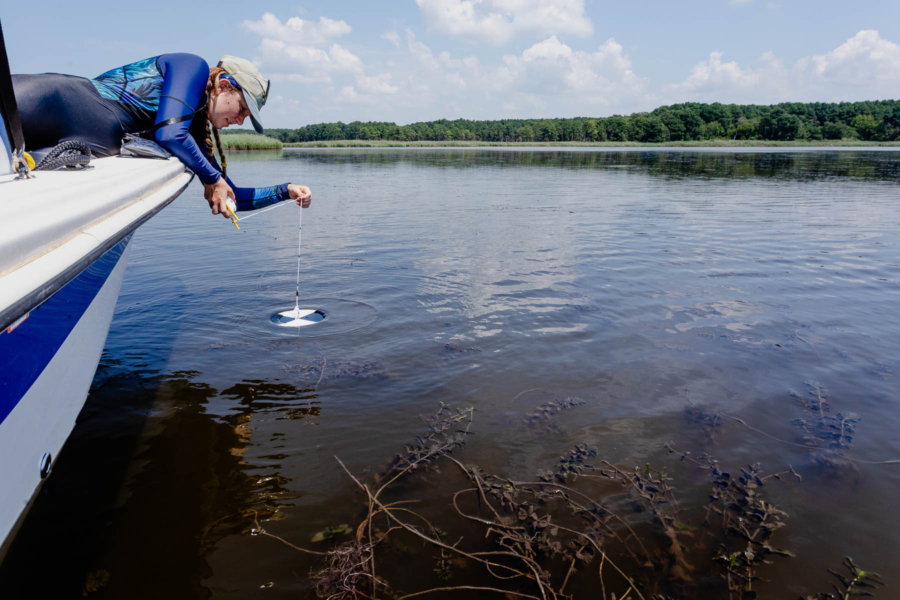
It’s been a busy summer for the Chesapeake Bay Program. As much as we’d all like to take some extra beach days, we've been hard at work releasing new data related to Outcomes in the Chesapeake Bay Watershed Agreement, while also making draft revisions to the Agreement.
Since 1983, the Chesapeake Bay Program has been working to achieve a wide range of goals and outcomes that protect the Bay. This summer, we announced the latest progress on a handful of outcomes related to oyster habitat, underwater grass, public access and everyone’s favorite Bay critter—the blue crab!
World’s largest oyster reef restoration project is nearly complete
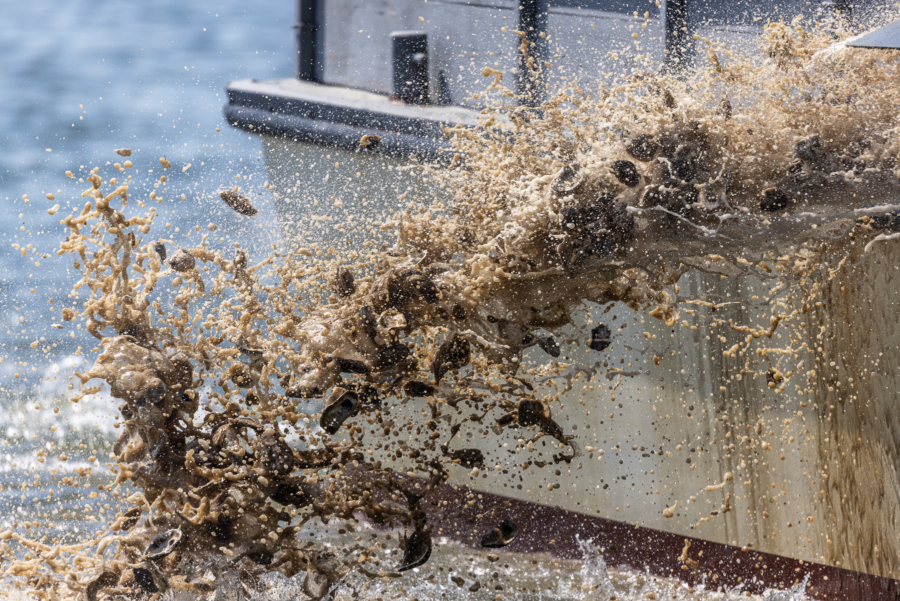
Since 2010, organizations in Maryland and Virginia have worked together to restore oyster reef habitat in 10 Chesapeake Bay tributaries. Reefs provide habitat for oysters, who in turn clean the Bay through filter feeding. Reefs also offer habitat for smaller fish, leading to some of the best fishing spots in the Bay.
As of August 2025, restoration is officially complete in nine tributaries with the final site expected to be completed later this year. Partners restored a total of 2,294 acres of habitat by the end of 2024, making this the world’s largest oyster reef restoration project!
Underwatergrass fell by 1%, despite historic gains in some regions
When the Watershed Agreement was last signed in 2014, partners were hoping to bring underwater grasses back to 130,000 acres by 2025. Underwater grass, also known as submerged aquatic vegetation (SAV), plays a huge role in the Bay’s ecosystem—providing habitat for fish and shellfish while adding oxygen to the water.
However, in 2024 the Bay had an estimated 82,778 acres of underwater grass, which is 64% of the 2025 target and 1% lower than the year before. Underwater grass abundance dropped significantly in the largest salinity zone of the Bay due to a mix of heavy rainfall, warmer temperatures and pollution.
But we also saw historic gains in the saltiest zone near the mouth of the Bay. And overall, underwater grass acreage has increased 112% since 1984 when only 38,958 acres were mapped.
Target for new access sites for fishing, boating and swimming achieved
For decades, the Chesapeake Bay Program has been adding new docks, piers, boat ramps and other “public access sites” to the watershed for people to get on the water. Increasing access to the water helps people enjoy the Bay, while supporting an outdoor tourism and recreation industry that is worth about $14.3 billion annually, according to the U.S. Census Bureau.
This summer, partners announced that they reached their goal of adding 300 new public access sites to the watershed by 2025, surpassing the goal by 12 sites. In total there are 1,451 public access sites throughout the watershed.
Blue crab population decreases, though population remains sustainable
The population of blue crabs in the Chesapeake Bay changes year-to-year based on a variety of factors, like the abundance of underwater grasses, which it uses as habitat, and the amount of pollution in the water. The Chesapeake Bay Program’s goal is to keep the number of adult female blue crabs above the “threshold” of 72.5 million, which is the lowest population r for the species to be considered a healthy
Between 2024 and 2025, the number of female blue crabs in the Chesapeake Bay decreased 19% from 133 million to 108 million. Meanwhile, the overall number of blue crabs fell to 238 million, which is the second-lowest population since the Blue Crab Winter Dredge Survey began in 1990.
The good news is that the overall population remains sustainable, as the number of adult females remains above the threshold.
The work continues
Many of the outcomes in the Chesapeake Bay Watershed Agreement have a target date of the end of 2025. With that deadline approaching, the partnership is taking the opportunity to revise the Watershed Agreement so that it aligns with community needs and the latest science.
The Oysters, SAV, Blue Crab Abundance and Public Access Outcomes are all in the draft revised Chesapeake Bay Watershed Agreement and include updated targets. To learn more about the draft revisions, visit our ChesapeakeBay.net/Beyond2025 webpage, and watch our Beyond 2025 Youtube series.
Comments
There are no comments.
Thank you!
Your comment has been received. Before it can be published, the comment will be reviewed by our team to ensure it adheres with our rules of engagement.
Back to recent stories