
College students take on crucial Chesapeake Bay research projects
C-StREAM gives research opportunities to populations who have been historically excluded from the environmental field
Science is a key part of protecting and restoring the Chesapeake Bay, and each summer, we are fortunate to have students from around the world studying crucial issues through the Chesapeake Research Consortium’s Chesapeake Student Recruitment, Early Advisement and Mentoring (C-StREAM) program.
The C-StREAM program recruits, advises and mentors college students from populations who have been historically excluded from the environmental field. This summer, students studied everything from the benefits of restored shorelines to invasive fish.
Here are three projects from this summer!
Studying the benefits of a restored shoreline
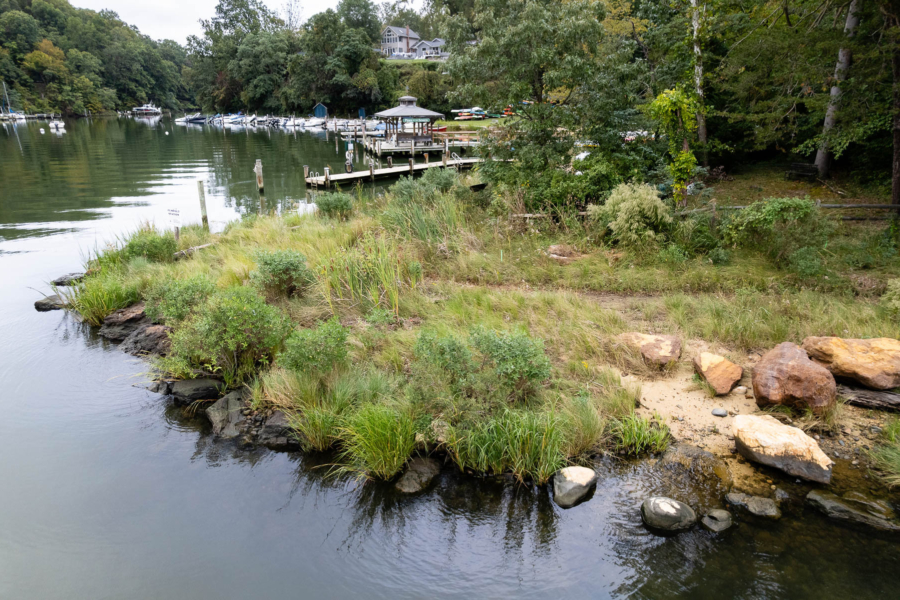
Waterfront communities across the Chesapeake Bay have been restoring their wetlands and shoreline habitat—but what exactly are the natural benefits of these projects? University of Maryland student Vivian Maneval sought to answer this question by comparing restored “living shorelines” with unrestored wetlands at three sites along the Severn River. The study found that while unrestored sites had denser vegetation cover (largely due to the number of invasive plant species), restored sites supported 2–6 times more plant species and much higher percentages of native vegetation. Wetlands with a wider variety of plant species typically provide food and habitat to a greater number of wildlife and are more resilient to extreme weather.
Surveying salamanders at Jug Bay Wetland Sanctuary
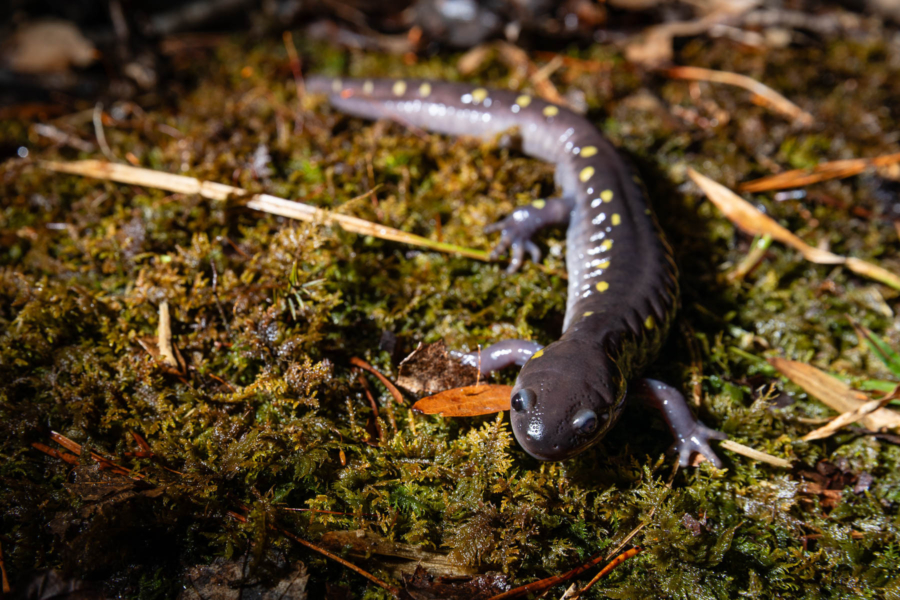
The Chesapeake Bay’s rivers and streams provide important habitat for salamanders, which are declining globally. To better understand the habitat these critters rely on, West Virginia University student Mady Rhoades took water samples across five streams in Jug Bay Wetland Sanctuary while searching for salamanders in each location. Surprisingly, Rhoades didn’t see a significant difference in the number of salamanders in streams with good water quality versus those with lower water quality. However, none of the streams she sampled contained more sensitive species of salamander like red salamanders or adult northern dusky salamanders, indicating that efforts to reduce pollution and improve habitat would be beneficial.
Investigating harmful algae blooms in the Potomac River
When high amounts of nutrients enter the Chesapeake Bay, it can result in the growth of excess algae blooms that worsen water quality for fish and shellfish. Working with the Potomac Environmental Research and Education Center, Janiece Jefferson studied a specific kind of algae bloom (microseira wollei) in the Potomac River. The research involved comprehensive field sampling using nets and water quality instruments to collect algae, followed by detailed laboratory analyses. Laboratory tests revealed significant concentrations of chlorophyll a in the samples, along with measurements that shed light on how the algae grows and expands.
Next year, the C-StREAM program will be known as the Chesapeake Bay Internship Program. To learn more and see the full list of summer 2025 projects, visit CRC’s webpage.
Comments
There are no comments.
Thank you!
Your comment has been received. Before it can be published, the comment will be reviewed by our team to ensure it adheres with our rules of engagement.
Back to recent stories