
From shipwreck to shelter, Mallows Bay is an ecological treasure
The marine sanctuary is protected for its historic significance
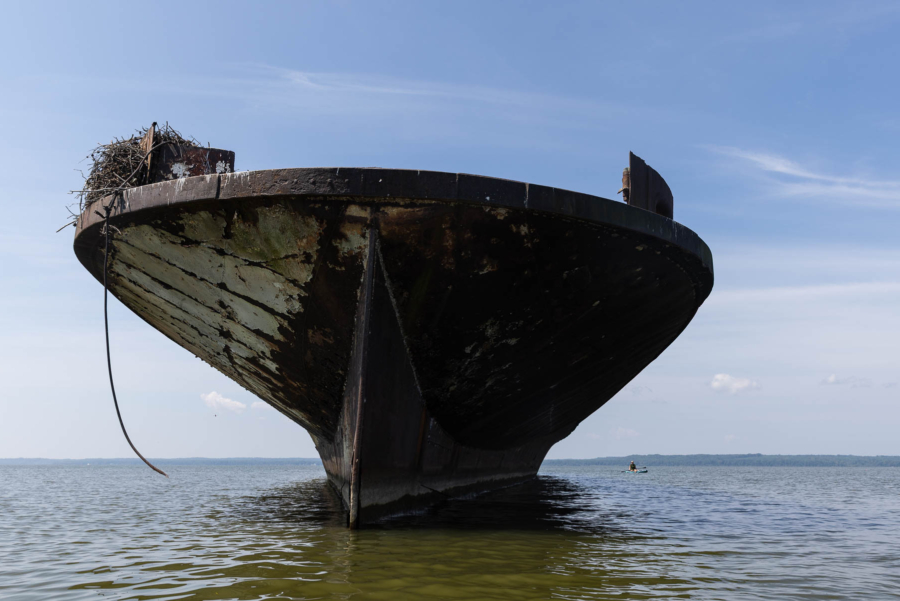
Many might not know that just 40 miles south of Washington D.C. sits the last remains of a once crucial, but later abandoned, World War I effort to rapidly produce warships for the cause.
Now known as the Ghost Fleet of Mallows Bay, these sunken ships were built over a century ago, between 1917 and 1918 to fight back against German U-boats. However, this pursuit fell short; only about 100 ships were finished by the end of the war, and all of them had some sort of issue due to the hurried construction process.
Because of this, none of them ever made it into the Atlantic. Instead, they were salvaged for parts at a price that was less than 1% of what it had cost to build them. Eventually, the ships that weren’t destroyed were sent to Mallows Bay on the banks of the Potomac River, where they sat largely untouched for decades.
During World War II, another attempt to give the ships some life was made, and whatever metal that could be transported was shipped to Baltimore for ongoing war preparations. After that, the picked-over skeletons of the Ghost Fleet were practically forgotten, left to the whims of the marine environment around them.
Fast forward to over 100 years later, and the area around the fleet sits under a unique protected status as a national marine sanctuary.
Abandoned vessels become a nationally-protected landmark
Established in 2019, Mallows Bay-Potomac River National Marine Sanctuary is the first and only national marine sanctuary in the Chesapeake Bay watershed.
National marine sanctuaries are federally protected marine areas designated by the National Oceanic and Atmospheric Administration (NOAA) for their ecological, historical or cultural significance. One of only 18 in the country, Mallows Bay received the designation for its unique collection of historic shipwrecks including the Ghost Fleet and other cultural artifacts that date back more than 12,000 years.
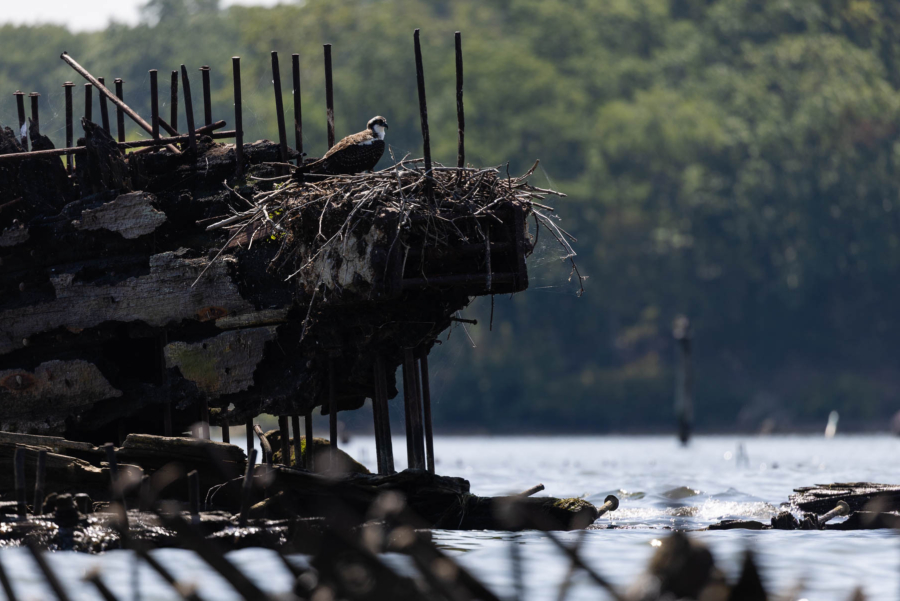
The protection of these remnants not only preserves their history, but also their current status as new habitat for marine life in the area. Before the official protection status, the local community began to notice how wildlife were using the ships as an extension of their habitat. Ospreys and other birds were using the ships’ masts to build nests, while fish and blue crabs used the vessels’ crevices to seek food and hide from predators.
Plants had also adapted to the sunken vessels. According to Megan McCabe, research and outreach coordinator with the National Marine Sanctuary Foundation, vegetation surveys conducted by sanctuary staff and Chesapeake Bay SAV Watchers have identified several native wetland plants and underwater grass beds growing around the wrecks that have enabled a wetland landscape to form in the area that would “otherwise be a muddy stretch of the Potomac River.” McCabe hopes to continue researching the relationship between the shipwreck preservation and growth of underwater grass.
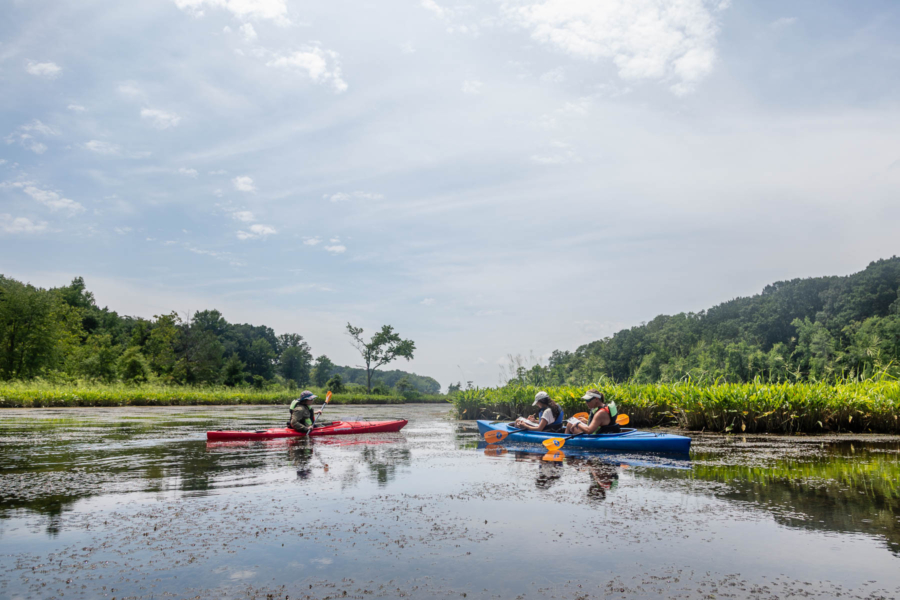
Mallows Bay has also become a unique recreation area that provides a boost to the local economy. With beach access, visitors can easily launch a kayak into the bay and paddle out to the Ghost Fleet or sign up for a guided kayak tour. The area is also an excellent place to fish, birdwatch or learn more about the culture and history of the Ghost Fleet.
Mallows Bay puts a spotlight on the Chesapeake
As a national marine sanctuary, Mallows Bay joins a coveted class of marine areas across the country. The designation has brought together a mix of federal, state and local agencies who aid in the area’s protection, including NOAA, EPA, Maryland DNR, Charles County local government and various community stakeholder organizations.
Marine protected areas—be it a national marine sanctuary or some other national or international designation—are an invaluable tool in environmental conservation. These designations help safeguard not only the designated areas but also surrounding lands and waters.
The designation comes at a critical time with the Chesapeake Bay Program working toward the updated goals of the Chesapeake Bay Watershed Agreement. Can you think of a marine area in the Chesapeake region that deserves a Hope Spot designation? Let us know in the comments!
Comments
There are no comments.
Thank you!
Your comment has been received. Before it can be published, the comment will be reviewed by our team to ensure it adheres with our rules of engagement.
Back to recent stories