
Green frogs play an important role in the Chesapeake’s food web
Although small, green frogs are skilled predators that control insect populations
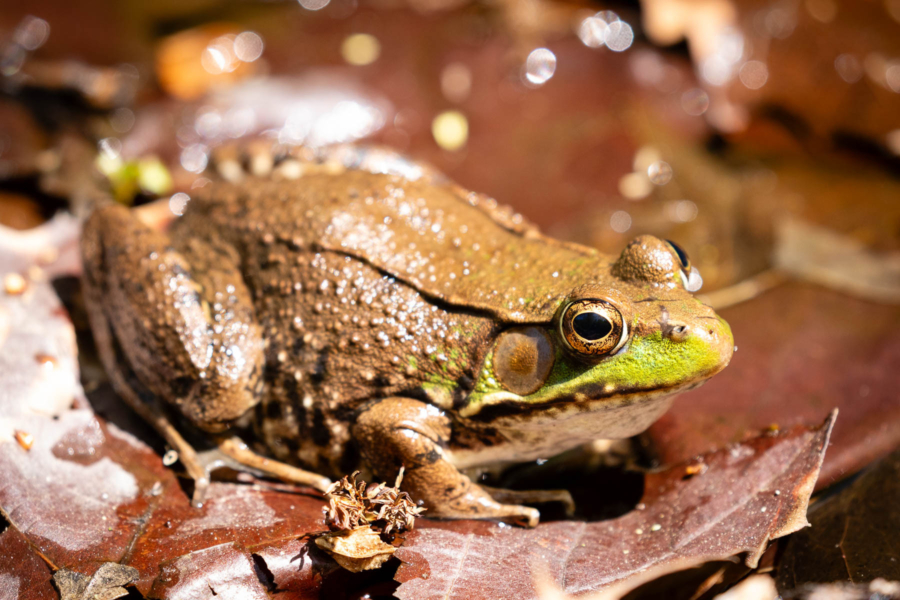
Contrary to its name, the green frog is often a bronze or brown color with some bright green spots surrounding its face. While much less common, some green frogs lack pigmentation resulting in a blue color. Green frogs are distinguishable from other similar species through the long folds that go from their eyes to halfway down their bodies.
Found in shallow bodies of water all across the Chesapeake region, green frogs are an abundant native amphibian species similar to the American bullfrog in looks and habitat. Green frogs practice “sit and wait” hunting, meaning they will essentially eat whatever comes within their reach as opposed to going out of their way to find prey. Their diet typically consists of insects, spiders, small fish and snakes, shrimp, tadpoles and snails. While green frogs are prey to larger animals such as ducks and crows, they exhibit batesian mimicry by closely resembling the mink frog which emits a foul odor and deters many predators.
When it comes to their behavior, green frogs tend to be very aggressive and territorial. Male frogs can hold up to 5 territories at once, defending them and demonstrating dominance with vocalizations and combative behaviors such as chases and jump attacks. Males display dominance in order to attract potential mates, as females tend to choose mates based on strong traits that they hope to pass down to their offspring. Once mates have been chosen, females will lay 1 or 2 clutches consisting anywhere from 1,000 to 7,000 eggs into the male’s territory. Tadpoles will hatch typically 3 to 6 days after fertilization, and remain in this stage for about 3 months before metamorphosis occurs.
About a year after metamorphosis, green frogs will reach sexual maturity and live for about 6 years in the wild, repeating breeding cycles each year. Despite often being overlooked as an important creature to the health of the Chesapeake, green frogs play a critical role in regulating populations within their environment at all stages of life.
To learn more about green frogs as well as a variety of other amphibians living in the Bay region, visit our field guide.
Comments
There are no comments.
Thank you!
Your comment has been received. Before it can be published, the comment will be reviewed by our team to ensure it adheres with our rules of engagement.
Back to recent stories