
Milkweed's fluffy seed pods are a sign of a changing season
This native plant is a host plant for monarch butterflies
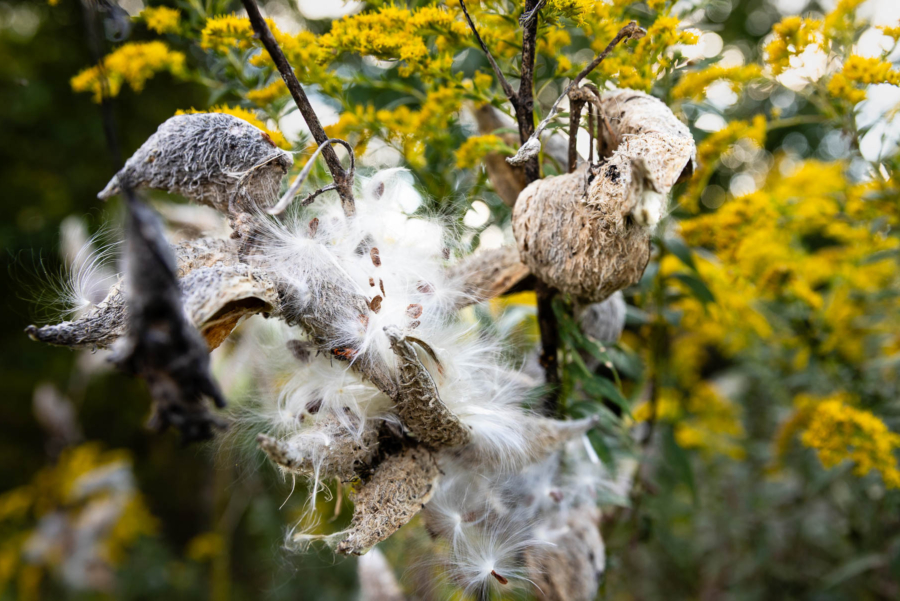
As summer winds down, milkweed undergoes a dramatic transformation. The cluster of tiny pink flowers that sustained monarch butterflies, native bees and other pollinators all season starts to fade away, giving rise to large, teardrop-shaped seed pods. These pods dry out and crack open, revealing hundreds of dark seeds attached to brilliant, silky white filaments known as coma.
While insects pollinate milkweed blossoms earlier in the season, the seed pods are spread around by wind. The filaments act as parachutes that catch the breeze and send the seeds drifting for miles, ensuring a broad distribution across meadows and fields.
Seeing these white, feathery seedpods waving in the wind is one of the iconic signs that summer is coming to an end. By fall, milkweed seeds have already been dispersed, waiting to sprout the next season.
As native plants, milkweed requires less watering and maintenance than most non-native plants. They’re also host plants to the caterpillars of monarchs. These caterpillars have a mutation that allows them to tolerate a toxin in milkweed, making them unpalatable to most predators. Monarch butterflies therefore greatly prefer to lay their eggs near milkweed and will travel many miles in search of the plant.
By planting milkweed, you are directly supporting this native butterfly species and various other pollinators that visit the flower.
If you want to provide habitat for the next generation of monarchs—and treat yourself to beautiful seasonal blooms—then milkweed is the plant for you!
Comments
There are no comments.
Thank you!
Your comment has been received. Before it can be published, the comment will be reviewed by our team to ensure it adheres with our rules of engagement.
Back to recent stories