
My Clean Water Story: Kaylyn Gootman
A deep interest in earth science brought a North Carolina transplant to the Bay
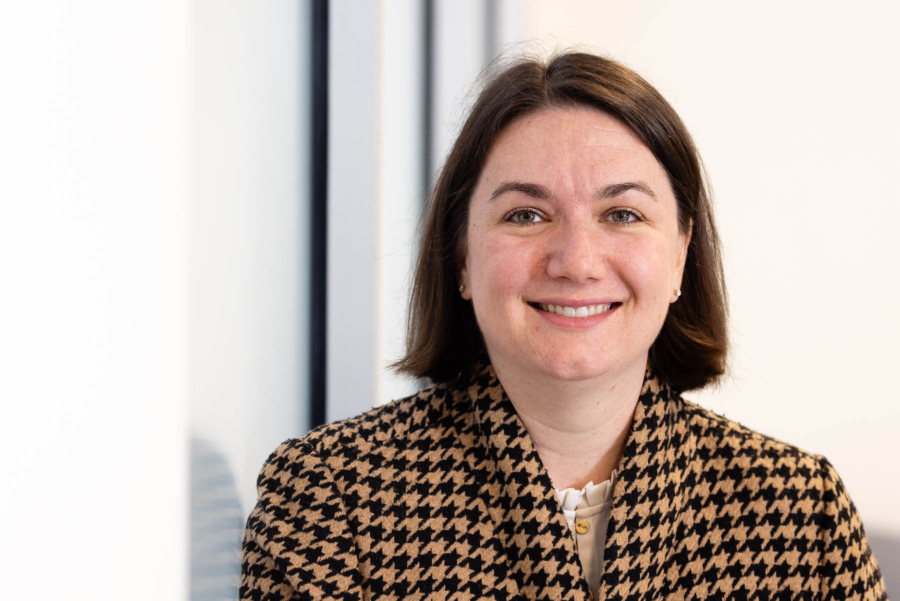
Water is something that has always fascinated me. Growing up in places that were far from the coast, I revered and sometimes feared the power of the ocean and its endless waves. The might of a summer thunderstorm, in both brilliance and terror, along with the rainfall that came with it kept my rapt attention as I grew up.
However, the interconnectedness of water did not click for me until the water cycle was re-introduced in my middle school science classes. As a future scientist, I was so excited to learn that the amount of water on earth was about the same as it was when the dinosaurs roamed the planet! I was fascinated at how water moved in and through our planet and atmosphere, while representing means of travel, recreational opportunities like fishing and habitat for such species as beavers. After all, people, plants and animals have always had a vested interest in swings between water scarcity and abundance.
From then on, when it came time to choose science projects, something related to water was always at the top of my list, as well as water-themed karaoke songs (shout out to Dolly Parton and Kenny Rogers for my go-to “Islands in the Stream”).
My growing interest in the connectedness and power of water gave me the push I needed in college to start taking more environmental science classes, and eventually I switched my major to environmental studies, with a focus on hydrology. Thankfully, I had a professor who recognized my passion and encouraged me to enroll in a Geographic Information Systems (GIS) course to bring my love of water to the 21st century. A few semesters later, a timely email advertisement for a part-time intern position with GIS skills and an interest in water came across my inbox.
Naturally, I applied for the job and was happy to be selected to help Dr. Scott Ensign, who was a PhD candidate at the time, with his research on tidal freshwater rivers. This computer-based work with water opened so many doors for me, as it brought me to coastal North Carolina to work in the river systems I was mapping. Thank you to my mentor, Scott, for being brave enough to teach a kid from the suburbs of Raleigh, North Carolina how to drive a boat on the Newport River.
From there I learned more about water than I thought was possible. Various water monitoring projects across coastal North Carolina provided me with a foundation for curiosity, lifelong learning and a passion to leave our water resources in better shape than I found them. An opportunity to work as an intern for the Environmental Protection Agency in North Carolina taught me more about the connections between human health and the environment.
This work helped me chart a course to go back to school for my PhD in Ecology, with again, a focus in hydrology. Working toward my doctorate only furthered my understanding of how water can connect us all and broadened my appreciation for the opportunities to work with others in solving old and new challenges. My education and mentors showed me that I could connect with and inspire others through water inside and outside of the classroom. This passion for teaching brought me to a post-doc position in West Virginia, where I became connected to the Chesapeake Bay watershed, and eventually found my way to the Chesapeake Bay Program. Working as an Integrated Analysis Coordinator within the partnership, I get to collaborate with people across various disciplines as we work together to restore and conserve the Chesapeake Bay and its watershed.
I am forever grateful to my science teachers and mentors who gave me the support and space to grow, learn and bring my passion for water to this amazing community!
Comments
There are no comments.
Thank you!
Your comment has been received. Before it can be published, the comment will be reviewed by our team to ensure it adheres with our rules of engagement.
Back to recent stories