
Restoration project revives a beachfront at Franklin Point State Park
Maryland DNR partnered with the Arundel Rivers Federation to install a living shoreline
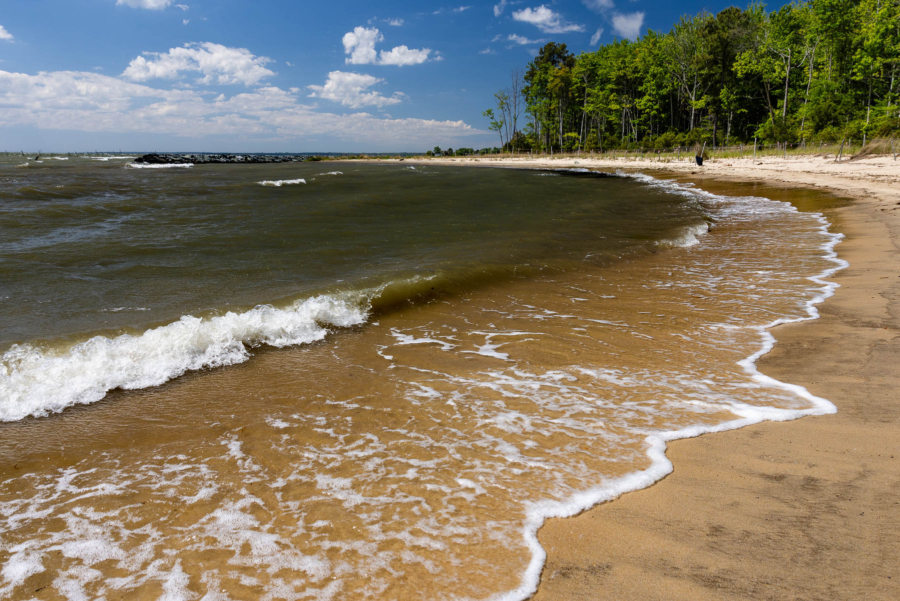
Facing one of the Chesapeake Bay’s widest stretches, Franklin Point State Park has long been vulnerable to erosion.
Along the park’s exposed western edge, nearly 10 miles of open water—known as “fetch”—delivers high-energy waves that pound the peninsula’s shoreline. In past years, these waves have eroded as much as seven to eight feet of land per year. And in 2003, Hurricane Isabel accelerated the damage, wiping out 20 to 30 feet at once.
“It was getting more difficult for community members to safely access the shoreline,” said Nicole Carlozo, director of the Center for Resilient Communities and Landscapes at the Maryland Department of Natural Resources (DNR). “But also, a lot of sediment was eroding away into the Bay.”
In 2018, DNR selected Franklin Point State Park as a restoration site for the state’s Resilience through Restoration Initiative. The agency partnered with Arundel Rivers Federation to design and implement a “living shoreline”—a restoration approach that uses marsh plants, sand and other natural materials to both expand the shoreline and protect it from future erosion.
“A living shoreline really is living,” said Jennifer Carr, director of grants & restoration with Arundel Rivers Federation. “It's not a simple, hardened structure that's just built into the land for that immediate protection.”
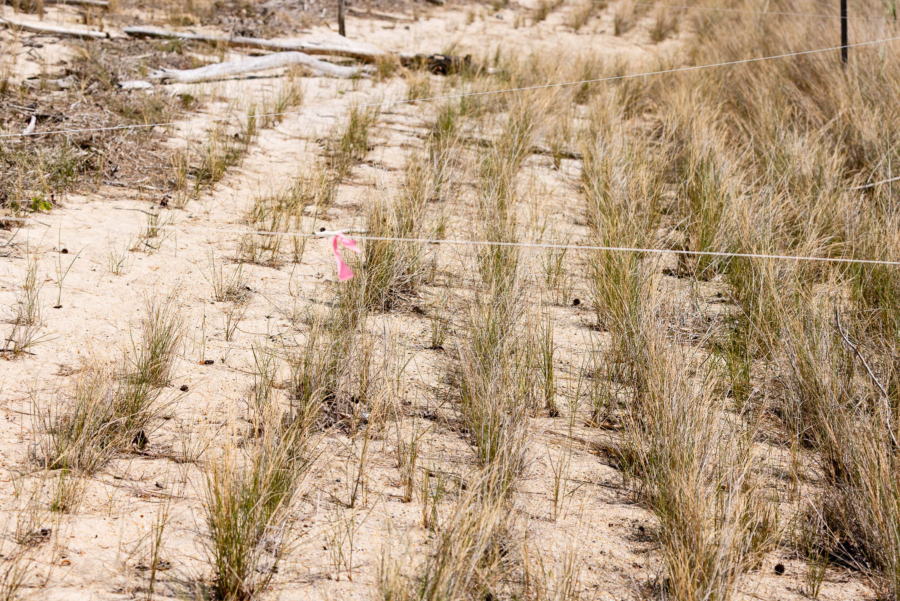
In 2022, the nonprofit expanded and reshaped the beach, planting thousands of native marsh plants over the course of a couple seasons. These grasses, which continue to fill in, are capable of absorbing the high-energy waves and holding the shoreline in place just as well as a hardened wall can.
“Those marsh grasses are the glue that literally holds the project together,” Carr said.
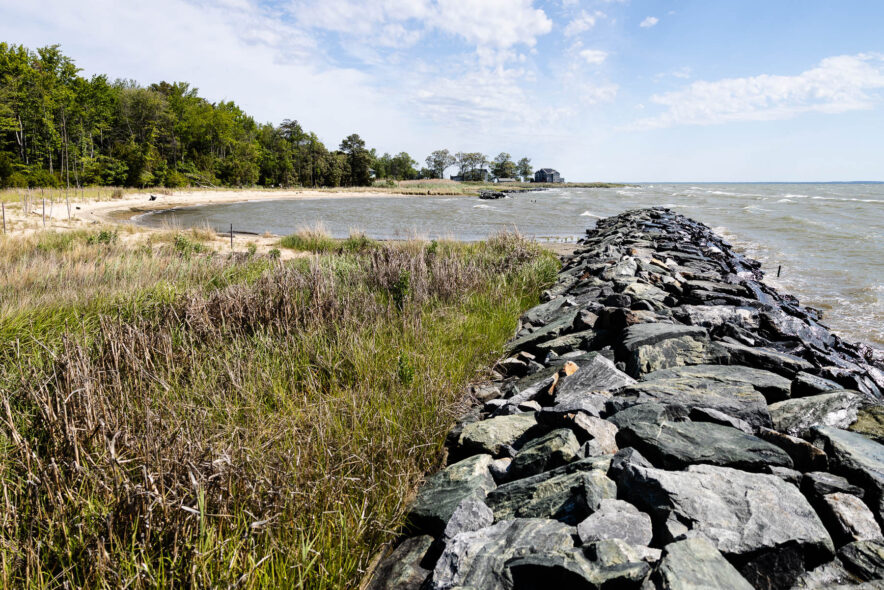
For further protection, Arundel Rivers installed three rocky breakwaters a few yards from shore. These structures, which are engineered based on the fetch and wind that’s expected for Franklin Point, break up and dissipate waves before they get to the shore.
“The rocky structures are sized and even angled to basically buffer that shoreline against the strongest storm surges and wave action,” Carr said.
In addition to reducing erosion, living shorelines also provide numerous environmental benefits, like sequestering carbon, soaking up nutrient runoff and providing habitat to wildlife. Natural spaces between land and water, like a beach or wetland, are extremely important to fish, birds and reptiles, who use the habitat to find food, hide from predators and raise their young.
“Living shorelines by nature they’re not closed systems. You can have that free exchange between land and water that would typically be more or less cut off with a more hardened stabilization approach,” Carr said.
A critical feature of Franklin Point State Park is the extensive forests within the peninsula, which had also been impacted by erosion. Before the living shoreline was constructed, many trees had fallen into the water, and the eroded shoreline left more of the woods exposed. Now, with the living shoreline in place, the forested portion of the park is much better protected against future storms.
“By implementing the living shoreline, we're protecting that forest habitat that's so critical for bird species,” said Carlozo.
According to DNR, the living shoreline has greatly reduced the erosion that was happening before, and the beach is also far more accessible to the public. Dog walkers and kayakers ready to explore the Bay are a common sight.
Going forward, DNR and Arundel Rivers Federation will continue to manage the project, making adjustments as needed based on how the shoreline responds. Already, a stretch of the project area that was originally planted with high marsh species like saltmeadow cordgrass has done better after being replanted with dune grass. Today, with plants in the ground and protective barriers installed, the site just needs time to establish.
“There are areas that we're still working on, but there's also parts of it where the marsh has grown in and it's incredible,” Carr said. “Nature has really reclaimed it.”
Comments
There are no comments.
Thank you!
Your comment has been received. Before it can be published, the comment will be reviewed by our team to ensure it adheres with our rules of engagement.
Back to recent stories