
The most non-tern-like tern you’ll ever meet
Gull-billed terns have a unique style of hunting
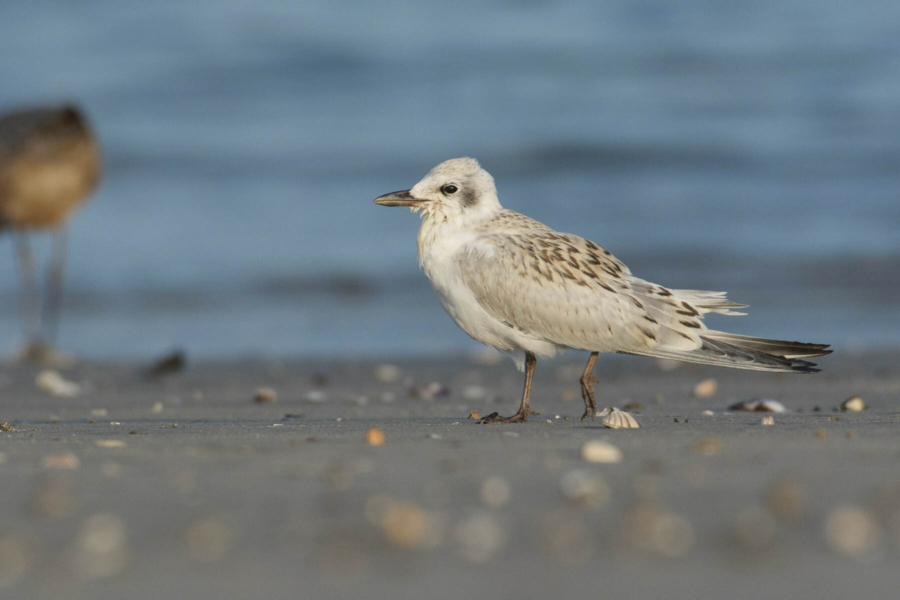
As fish-eating seabirds, terns all tend to hunt the same way. Out on the open water, you can find least terns, sandwich terns, royal terns and common terns stretching their white wings as they hover in the air and then swoop down into water to catch a fish, crustacean or large insect. It’s how they feed themselves when most of their habitat is bordered by water.
Gull-billed terns, however, take a different approach.
At some point during its evolutionary journey, the gull-billed tern developed a habit of hunting for food on the ground as much as it does over the water. While most terns can be clumsy on land, gull-billed terns are sure-footed enough to take down crabs and lizards. They snatch insects out of the air and even steal chicks from other birds.
When hunting over the water, gull-billed terns will quickly pluck fish out of the water but rarely plunge down under the surface like the other terns.
These unique hunting methods are mostly due to the bird's unusually thick bill that is more similar to that of a gull. This powerful bill allows them to hunt for a wider range of prey and not just the fish that the other terns rely on.
Still, gull-billed terns count on the same habitat and climate conditions as other terns. As sea birds, they migrate up and down the coast, from the Mid-Atlantic and down to the Gulf Coast, looking for isolated dunes, barrier islands and coastal marshes to breed in and raise their young. They are known to return to the same breeding sites each year.
Gull-billed terns are a threatened species in much of their region and are a pretty rare find for those living near the Chesapeake Bay. The bird is more likely to stick to the Atlantic coast like the beaches near Ocean City and Virginia Beach, but will sometimes venture near the mouth of the Bay like on the made-made seabird colony at Fort Wool.
Like all water birds, it benefits from undisturbed and undeveloped beaches and marshes where it can safely hunt and raise its young.
If you’ve happened to see a gull-billed tern, let us know in the comments!
Comments
There are no comments.
Thank you!
Your comment has been received. Before it can be published, the comment will be reviewed by our team to ensure it adheres with our rules of engagement.
Back to recent stories