
Gull-Billed Tern
(Gelochelidon nilotica)
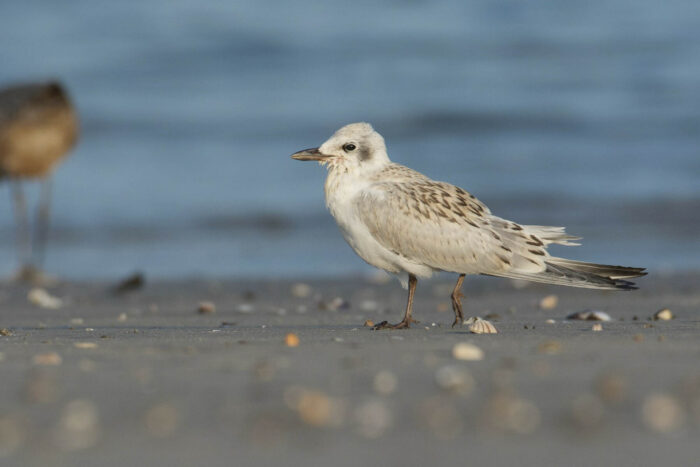
The gull-billed tern is a talented hunter with a bill that is broader and most powerful than other tern species.
This section shows one large critter image at a time. Use the thumbnails that follow to select a specific image to display here.
This gallery contains a grid of small thumbnails. Selecting a thumbnail will change the main image in the preceding section.
Appearance
The Gull-billed tern has a white or grey body with a black “cap” on the top of its head, wide angular wings and an unusually thick beak like most gulls do.
Feeding
Gull-billed terns have much broader feeding habits than other terms. The bird will fly low over the water and scoop out fish, snatch insects out of the air, pounce on crabs and lizards, steal food from other birds and even prey on chicks of other species.
Predators
Gull-billed terns are eaten by larger birds of prey and reptiles.
Flight
Gull-billed terns are considered graceful fliers that spread out their broad wings when in flight.
Reproduction and life cycle
The gull-billed tern’s breeding cycle typically begins in late spring. Males attract females through elaborate posturing and bill-pointing. Once paired, couples breed in dunes, on barrier islands or in coastal marshes. Females lay 2–3 eggs in shallow scrapes on the ground. Both parents take turns incubating the eggs for about 22–25 days, and after hatching, chicks are cared for by both adults until they fledge roughly four weeks later. Gull-billed terns often return to the same breeding sites each year.
Did you know?
- Gull-billed terns hunt very differently from most terns, going after insects, reptiles, and other chicks instead of just fish.
- Gull-billed terns get their name from their gull-like bill that is bulkier than that of most terns.
Sources and additional information
- Gull-billed Tern – American Bird Conservancy
- Gull-billed Tern – Cornell Lab All About Birds
- Gull-billed Tern – Audubon
- Gulls and Terns – Chesapeake Bay News