
Once critical to Baltimore industry, Gwynns Falls winds through wooded parks and urban expanse
Gwynns Falls was named after its rough and rocky bottom
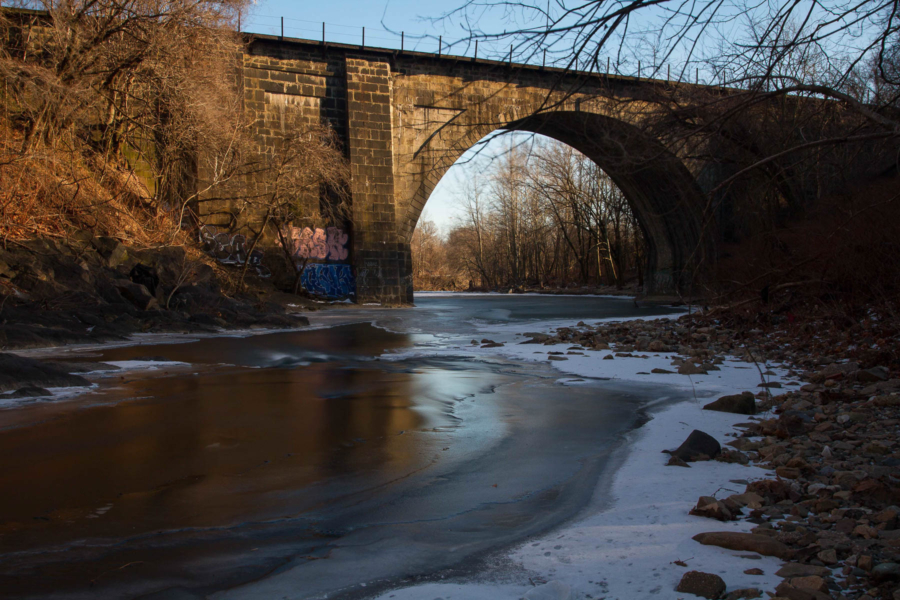
One of Baltimore’s four major waterways, Gwynns Falls starts as an unassuming stream tucked between a church and private homes in the Glyndon/Reisterstown area before widening and weaving its way to the Middle Branch of the Patapsco River.
The 25-mile stream was named after an early Maryland settler, Richard Gwinn, who established a trading post along the stream in the 1600s. Some historians suggest that the “falls” part of the name came from the writings of Captain John Smith, who used the term “felles”, meaning rocky rapids, to describe the stream.
The region’s original inhabitants, including the Piscataway, Nanticoke and Susquehannock people, among others, likely knew the stream well and relied on it for sustenance.
During Baltimore’s industrial era, the stream’s fast-flowing waters powered 26 mills used to make flour, grain, textiles and other products. Perhaps the most successful of these mill operators was the Ellicott family, which built a series of millraces and a dam that diverted more water towards their mills. Several historic mill sites are located along the Gwynns Falls Trail, one of the largest urban wilderness parks on the East Coast.
While much of the Gwynns Falls watershed is either suburban or urban, the stream runs through a handful of wooded parks, including Gwynns Falls/Leakin Park. This 1,000-acre greenspace is one of the largest preserves in a major urban area in the United States, and is considered “the lungs of Baltimore” due to the oxygen produced by the dense stands of trees.
Just a few miles from the Inner Harbor, Leakin Park offers quiet and solitude amid the city. Look for a waterwheel that once pumped water to the Crimea mansion, and walk among tulip poplar, sycamore and sweetgum trees.
As the stream flows through the densely packed buildings, roads and parking lots of Baltimore City, Gwynns Falls picks up oils, salts, pesticides, various chemicals and litter. The Baltimore Waterfront Partnership installed one of its world-famous Trash Wheels, Gwynda the Good Witch, where Gwynns Falls meets the Middle Branch of the Patapsco River. The family of four Trash Wheels collect 500 tons of trash a year on average.
Have you ever seen this stream winding through Baltimore? Let us know in the comments!
Comments
Great blog post. I used to ride the NCRR rail trail and tube the Gunpowder River every summer when I was a kid, and I always wondered why there weren't any waterfalls along the way.
Thank you!
Your comment has been received. Before it can be published, the comment will be reviewed by our team to ensure it adheres with our rules of engagement.
Back to recent stories