
Understanding the Chesapeake’s catfish problem
New research is helping the Bay Program tackle these invasive species
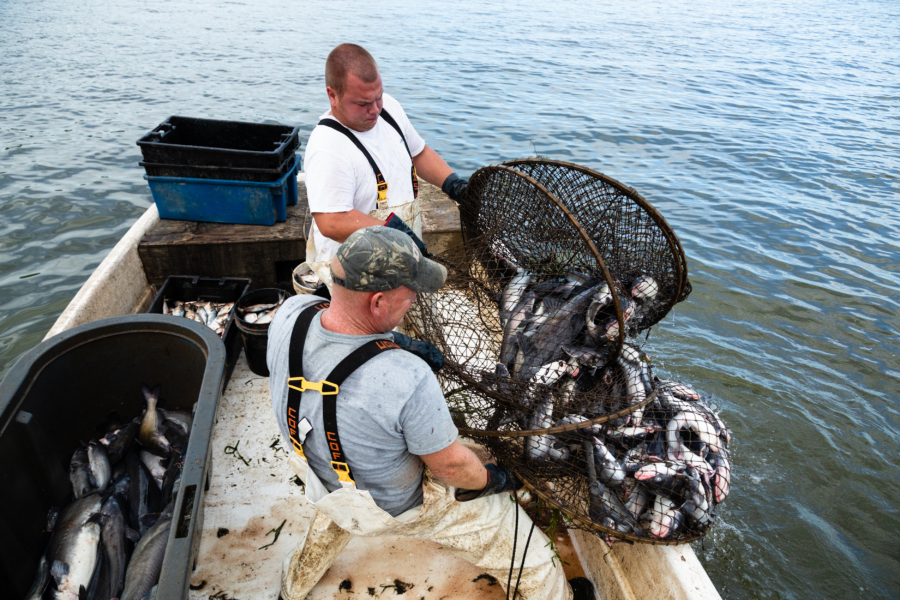
Blue and flathead catfish pose major challenges to the Chesapeake Bay ecosystem. They are voracious predators that outcompete other fish and consume ecologically and economically important species.
These fish aren’t from around here. Originally from the Mississippi, Missouri and Ohio river basins, they were introduced to Virginia rivers in the 1970s in hopes of establishing a recreational fishery. Blue and flathead catfish prefer fresher water, so it was thought they wouldn’t migrate into the Bay’s more brackish waters. However, they adapted and are now found throughout the Chesapeake. They are considered invasive species.
For more than a decade, the Chesapeake Bay Program’s Invasive Catfish Workgroup has worked to address the challenges posed by blue and flathead catfish in the Bay. Over the years, extensive research has been conducted on invasive catfish in the Chesapeake. The Invasive Catfish Workgroup recently reviewed these projects and publications and identified key findings that can help decision-makers manage invasive catfish.
Scientific Findings Are Key to Management
Scientists from the Maryland Department of Natural Resources investigated the movement and habitat use of blue catfish in the tidal portions of the Patuxent River in Maryland. This study found two blue catfish “hot spots” in low-salinity upstream waters with an average depth of three meters (10ft). Researchers also found that blue catfish tended to move more throughout the river system in early summer. Understanding where blue catfish spend time can help make efforts to fish for or remove them more effective.
Researchers at Virginia Tech developed a model to estimate the current abundance of blue catfish and predict their future abundance in the James River. This is the only stock assessment—an estimate of the population—of blue catfish in a river system to date. Knowing roughly how many fish there are is important for managing blue catfish in the James River, as it helps managers understand the scale of the problem and establish a baseline. It can also serve as an example for other locations throughout the Chesapeake Bay.
Scientists at Salisbury University investigated the diet of blue catfish in Maryland’s Eastern Shore waters. Their work showed that larger blue catfish—those larger than a foot— prey on seasonally available species such as river herring, blue crabs, white perch and menhaden. Scientists also found striped bass in some blue catfish stomachs. All of these species are economically and ecologically important to the Chesapeake Bay. This information helps decision-makers understand how invasive blue catfish are affecting native species in the Chesapeake Bay.
Lastly, researchers at the Virginia Institute of Marine Science (VIMS) conducted a study in the James River that estimated blue catfish predation on one of the most iconic species in the Chesapeake Bay—the blue crab. Their work showed that blue catfish eat blue crabs year-round and that medium-sized blue catfish consume more crabs than those that are smaller or larger. Researchers also found that blue catfish appear to target younger blue crabs, which is a concern because these juveniles help support future blue crab populations—and, in turn, the blue crab fishery.
While much attention has focused on blue catfish, flathead catfish are waiting just upstream! The rapid expansion of flathead catfish throughout the region, along with their fish-focused diet, is raising concerns about their potential impacts on native species such as menhaden and blue crabs across the Chesapeake Bay. Members of the Invasive Catfish Workgroup are beginning to see a need to dedicate more attention and resources towards better understanding flathead catfish, referring to the species as a “sleeping giant.”
Luckily, partners from the North Carolina Wildlife Resources Commission (NCWRC) have been sharing their research and lessons learned on the effects of invasive flathead catfish within their own waters, insights which can help us here in the Chesapeake Bay region. For example, one study from the NCWRC explored legacy datasets to understand how the distribution of native and non-native catfish has changed over time in the Cape Fear River Basin. This study helps clarify the effects that blue and flathead catfish have had within this system since the 1960s, which is important information as decision makers work to manage these invasive species.
Collaboration Means Effectiveness
Branson Williams, the invasive fishes program manager at Maryland DNR and co-chair of the Invasive Catfish Workgroup’s Science and Management Small Group, said the group’s collective research efforts are making an impact.
“The Invasive Catfish Workgroup demonstrates how collaboration and strong partnerships can tackle complex issues—bringing together multiple partners to lead research, share knowledge and implement coordinated strategies to protect the Chesapeake Bay from invasive catfishes,” he said.
The results of these studies can help inform decisions as states manage these invasive species. The Invasive Catfish Workgroup will continue to collect and analyze past, current and future projects to identify what is known—and what questions remain unanswered—as efforts to minimize the impact of these invasive species continue. Scientists are eager to better understand the socioeconomic impacts of invasive catfish, as well as decision support tools and control strategies.
While the Invasive Catfish Workgroup focuses on science behind invasive catfish, you can help with the challenge, too! Blue catfish are invasive, but they are also tasty. They are available in many grocery stores and restaurants as a healthy seafood option. Join the effort to tackle these fish by putting them on your menu.
Comments
Excellent job Christina!!! Thank you for your wonderful story
Thank you!
Your comment has been received. Before it can be published, the comment will be reviewed by our team to ensure it adheres with our rules of engagement.
Back to recent stories