
Warmer winters makes the Bay a more suitable place for the white pelican
This large bird has been spotted more frequently in the watershed
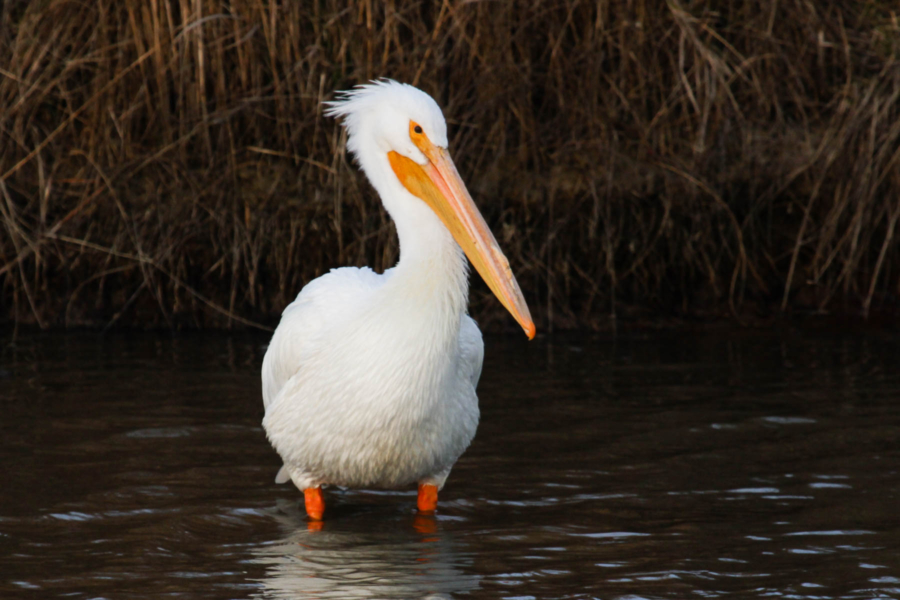
When it comes to pelicans in the Chesapeake Bay, the image that often comes to mind is the brown pelican skimming low over the water. In recent years, another pelican has made its way into the watershed in part due to warmer temperatures. The white pelican has been spotted with increasing frequency in the Chesapeake region during fall and winter, choosing to overwinter here instead of traveling farther south.
As one of the largest waterbirds with a length of about five feet and a wingspan of over eight feet, the white pelican is hard to miss when it does make an appearance. Despite its large size, the species flies effortlessly, often soaring long distances to migrate between northern breeding grounds to warmer, southern destinations. White pelicans often travel in large flocks, and tend to nest and breed in close proximity once they settle.
These pelicans typically breed far inland on islands in large lakes and wetlands. After nesting, they migrate inland and along major river corridors before reaching coastal and estuarine waters in the fall and winter months.
Unlike many other water birds, the white pelican does not dive from the air into the water to hunt its prey. Instead, they will swim and use their long beaks with a scooped bottom to dip into the water's surface and catch their prey. As opportunistic feeders, the white pelican has a very diverse diet of fish and other aquatic organisms, and its size allows it to consume about two pounds of food each day.
When breeding season approaches, females will lay two eggs that are incubated by both parents for about a month, although they are typically only able to support one chick. Although only hatching a couple days apart, the younger juvenile will often die of starvation as the older will take all of the food foraged by its parents. Juvenile white pelicans will leave the nest after 2-3 weeks, although their parents will continue to forage for them until they reach maturity after a couple of years.
While not nearly as common in the Bay region as brown pelicans and other migratory water birds, the increasing frequency of visits by the white pelican make for a satisfying view and experience for birders and nature lovers alike!
To learn more about the white pelican and other waterbirds, check out our field guide.
Comments
There are no comments.
Thank you!
Your comment has been received. Before it can be published, the comment will be reviewed by our team to ensure it adheres with our rules of engagement.
Back to recent stories