
What black ducks can tell us about the state of the Chesapeake’s wetlands
Updated data reveals progress, persistent challenges and new goals for the future
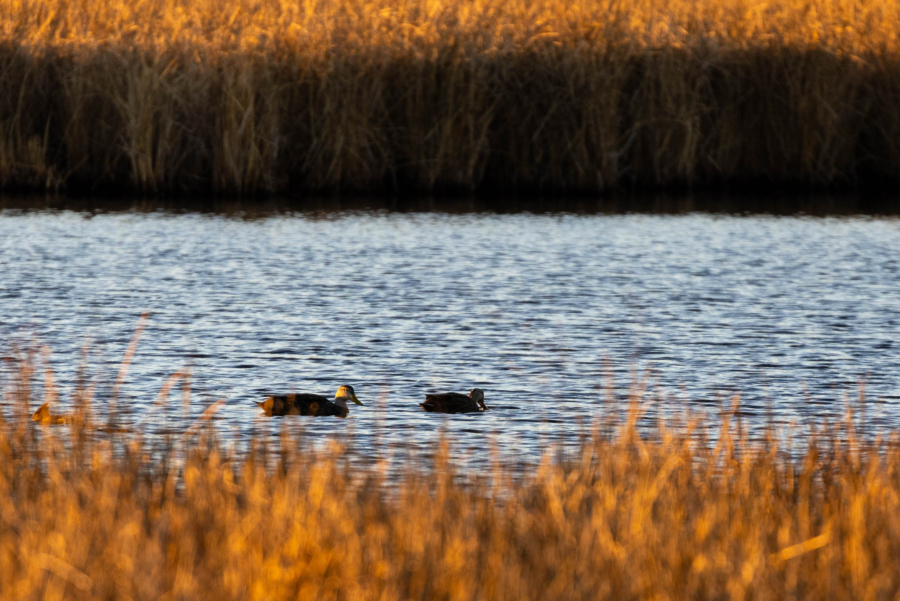
Wetlands have played a critical role in Chesapeake Bay restoration since the formation of the Chesapeake Bay Program in 1983. They support the watershed by soaking up stormwater, stabilizing shorelines, trapping polluted runoff and providing habitat for a multitude of different species of birds, fish, mammals and invertebrates, among other benefits.
When the 2014 Chesapeake Bay Watershed Agreement was developed, federal, state and non-profit partners created the Wetlands Outcome based on the National Wetlands Inventory. At that time, the inventory estimated that one million acres of tidal and non-tidal wetlands were available for restoration or enhancement throughout the watershed.
Given that, Bay Program partners agreed in 2014 to continually increase the capacity of wetlands to provide water quality and habitat benefits throughout the watershed; create or re-establish 85,000 acres of tidal and non-tidal wetlands; and enhance the function of an additional 150,000 acres of degraded wetlands by 2025.
It was agreed that the restoration of wetlands would be tracked separately from the enhancement of wetlands. When a wetland is restored, acres are gained but when a wetland is enhanced, the wetland provides additional benefits through its ecological functions.
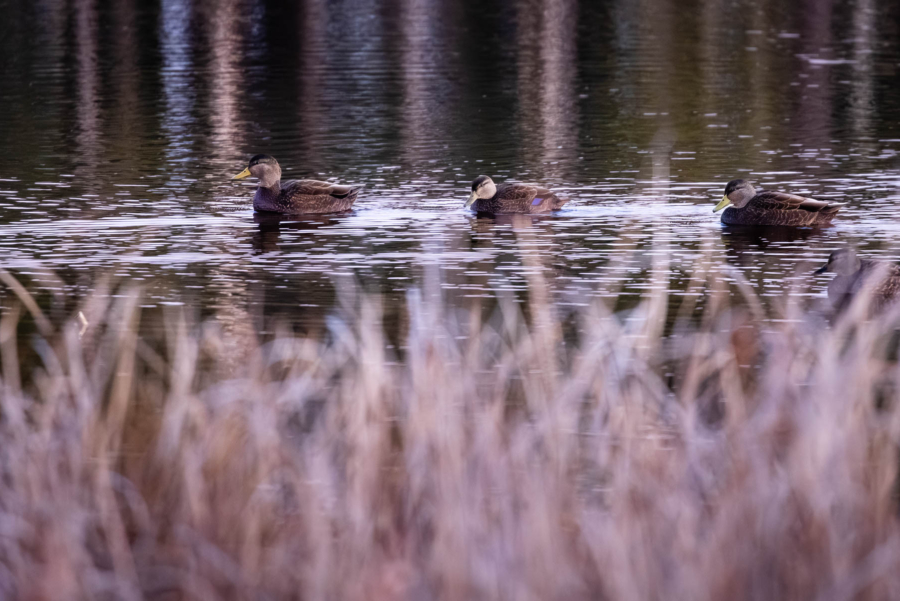
One of the many species that call wetlands home—specifically tidal wetlands during the winter—is the American black duck. At one time, the black duck was the only waterfowl species to nest in the Chesapeake Bay watershed and was the most abundant dabbling duck in eastern North America. However, its population began to decline between the 1950s–1980s, mainly due to habitat and food loss. Additionally, changing environmental conditions have led the species to more northern breeding grounds in recent years.
Any increase in the black duck population correlates with a healthy tidal wetlands ecosystem, since they are dependent on the habitat for their survival. Due to that, partners also agreed to include black ducks as an outcome in the 2014 Chesapeake Bay Watershed Agreement with a goal to restore, enhance and preserve wetland habitats that support a wintering population of 100,000 black ducks by 2025. The target of 100,000 came from the U.S. Fish and Wildlife Service’s (USFWS) North American Waterfowl Management Plan.
Unfortunately, the USFWS stopped collecting data on black ducks in 2016, so Bay Program partners pivoted to assessing progress toward this outcome by the number of acres of viable tidal wetlands that have been created or enhanced. In 2017, the Atlantic Coast Joint Venture developed the Black Duck Decision Support Tool to help assess the acreage of high-quality tidal wetlands needed to support a healthy black duck population.
Information on the number of wetlands that have been restored or enhanced are submitted voluntarily by watershed jurisdictions—Delaware, the District of Columbia, Maryland, New York, Pennsylvania, Virginia and West Virginia— into Habitat Tracker, a partnership tool.
As wetlands face increasing threats from development, rising sea levels and the introduction of invasive plants and animals, any signs of progress are cause for celebration!
Wetlands data collected from 2014 through 2024 was recently analyzed, showing that 4,862 acres of wetlands were gained across the watershed, representing a 5.72% achievement of the 85,000-acre goal. In addition, data from the same time period found that 61,161 acres of wetlands were enhanced, representing a 40.77% achievement of the goal to enhance 150,000-acres.
In regard to black ducks, since 2017, data shows that suitable tidal wetland habitat for black ducks has increased—470 acres have been created, 2,995 acres have been restored and 27,457 acres have been enhanced. Despite those gains, the Black Duck Decision Support Tool estimates that an additional 151, 272 acres of high-quality tidal wetlands are needed to support a wintering population of 100,000 black ducks.
In December 2025, the Chesapeake Executive Council approved the revised Chesapeake Bay Watershed Agreement, which includes an updated Wetlands Outcome with more specific and measurable progress targets. In particular, it seeks to restore, create, enhance and protect wetlands to support people and living resources, including waterbirds and fish, and provide water quality, flood and erosion protection, recreation and other valuable benefits to people.
Bay Program partners plan to do this by restoring or creating at least 3,000 acres and enhancing 15,000 acres of both tidal and non-tidal wetlands by 2040, focusing on habitats that support populations of waterbirds and represent healthy streams across the watershed.
Given the dependency of black ducks on healthy wetlands, partners decided to include oversight of the species within the Wetlands Outcome and broaden it to include all waterbird species. The Chesapeake Bay region supports a substantial waterbird population, with the 2025 Midwinter Waterfowl Survey noting an estimated 705,300 waterfowl in Maryland’s portion of the Bay, including such species as mallard ducks, Canada geese and black ducks.
Over the next 18 months, Chesapeake Bay Program partners will be developing Management Strategies for the refreshed Wetlands Outcome, which will include an emphasis on waterbirds. Interested in staying up-to-date on what’s happening with wetlands and waterbirds? Send a note to comments@chesapeakebay.net and we’ll make sure to keep you updated!
Comments
There are no comments.
Thank you!
Your comment has been received. Before it can be published, the comment will be reviewed by our team to ensure it adheres with our rules of engagement.
Back to recent stories