Skip to content
Chesapeake Bay Program logo, Science. Restoration. Partnership
    • The Watershed
    • Field Guide
    • Bay Facts
    • Bay 101 Videos
    • FAQ
    • Glossary

    Ecosystem

    • Chemical Makeup
    • Dissolved Oxygen
    • Food Web
    • Physical Characteristics
    • Estuaries
    • Water Clarity
    • All Issues

    Threats to the Bay

    • Agricultural Runoff
    • Air Pollution
    • Chemical Contaminants
    • Climate Change
    • Conowingo Dam
    • Invasive Species
    • Nutrient Runoff
    • Population Growth
    • Sediment Runoff
    • Stormwater Runoff
    • Wastewater

    What's at Risk?

    • Blue Crabs
    • Forest Health
    • Groundwater
    • Oysters
    • Rivers and Streams
    • Stream Buffers
    • Underwater Grasses
    • Wetlands
    • Help Protect the Bay
    • Find a Bay Organization
    • Celebrate Chesapeake Bay Awareness Week
    • Press Center
    • Recent Stories
    • Videos

    Browse Our Stories

    • Chesapeake Stewardship
    • Partnership News
    • Restoration Spotlight
    • Travel, Recreation and Culture
    • Watershed Science
    • Wildlife
    • Office Staff
    • Our Partners
    • Partnership Directory
    • How We’re Organized
    • Organizational Chart
    • Our History
    • Our Funding
    • Contact Us

    Work With Us

    • Internships
    • Career Development
    • Career Opportunities
    • Meetings Calendar
    • Our Accomplishments
    • Grants & RFPs
    • Publications
    • Monitoring and Modeling Data

    What Guides Us

    • Chesapeake Bay Watershed Agreement

    Programs & Projects

    • Bay TMDL
    • Monitoring
    • Modeling
    • BMP Verification
    • Quality Assurance
    • Data Governance
  1. Recent Stories

Tagged Stories: "wetlands"

Browse Our Stories

Chesapeake Stewardship Partnership News Restoration Spotlight Travel, Recreation and Culture Watershed Science Wildlife

Chesapeake plants have deep roots in Indigenous knowledge

November 25, 2025

Rappahannock tribal chief shares her wisdom on native plants

Read story‍
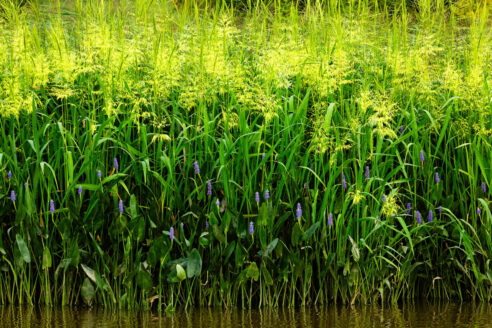
Wild rice plants grow densely, with tall yellow blooms above dark water.

Raising a stream to save the Severn River

August 13, 2025

Less than a year after restoration, wildlife is already returning to a resilient Jabez Branch

Read story‍
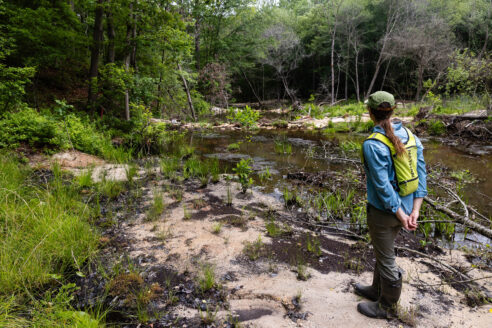
A restoration professional looks out at a wide, slow-moving forest stream restored amid dense woods.

How one town is determined not to drown

June 10, 2024

Collaboration and local engagement aim to restore an Eastern Shore community

Read story‍
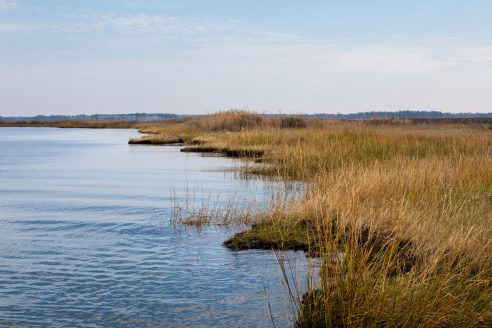
Salt marsh wetlands eroding into the Bay.

Wetlands see a small but mighty increase across the Chesapeake watershed

January 22, 2024

New Chesapeake Bay Program tracking tool expands data collection

Read story‍
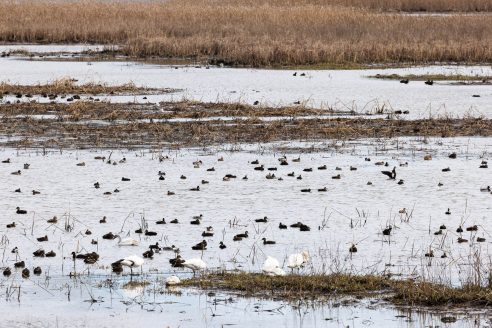
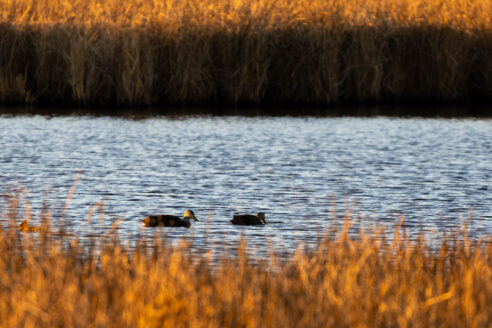
Waterfowl floating on a wetland.

Twenty-five acre farm in Delaware begins its transition to a multi-habitat wetland

December 14, 2023

U.S. Fish and Wildlife Service and Delaware Wild Lands restore a critical landscape

Read story‍
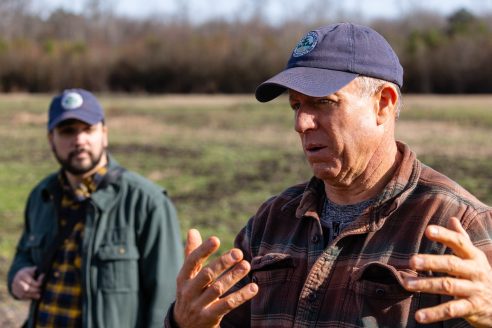
Two men, wearing the same blue baseball hat, standing outside in a farm field. The older man speaks, gesturing with his hands. To his left, the younger man listens.

Harnessing people power to restore Lafayette River wetlands

May 18, 2022

The Lafayette Wetland Partnership is a small but mighty community group

Read story‍
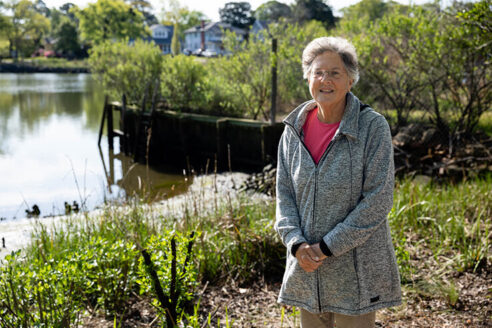
Tracking the elusive tiger salamander on Maryland’s Eastern Shore

March 30, 2022

Vernal pool monitoring programs track the breeding activity of endangered tiger salamanders.

Read story‍

Maximizing a short supply of black duck habitat

December 17, 2021

Chesapeake Bay Program launches a habitat vulnerability tool

Read story‍

Sea level rise forces wetlands inland. But is there room for them?

May 25, 2021

New data sources help prioritize where wetland restoration and conservation should take place.

Read story‍

Magnolia bogs are a trove of rare wetlands species

May 20, 2021

Suitland Bog escaped development to offer a relic community of carnivorous plants

Read story‍

Connect with us. Stay informed on our work.

Follow us on these social networks.

Sign up for one of our newsletters.

Subscribe
Chesapeake Bay Program logo, Science. Restoration. Partnership

The Chesapeake Bay Program is a unique regional partnership that has led and directed the restoration of the Chesapeake Bay since 1983. The content on this website does not necessarily reflect the views or positions of the federal government.
 

Tel: (800) YOUR-BAY (968-7229)
Fax: (410) 267-5777

© 2025 Chesapeake Bay Program All Rights Reserved

  • Contact Us
  • Terms of Use
  • Privacy Policy