
With conservation, a 12th-generation Maryland family holds on to its historic property
The Tilghman family uses living shorelines to combat erosion
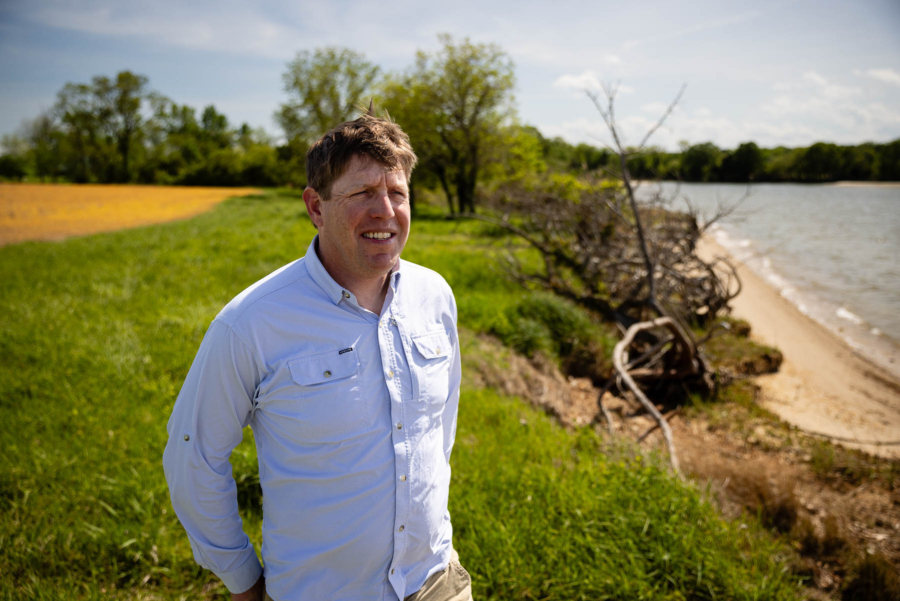
Since before America was a country, there’s been a descendent of Edward Lloyd living at the Wye House farm on Maryland’s Eastern Shore.
Purchased in the 1650s, the waterfront property was once one of the largest farms on the Eastern Shore, having a front-seat to American history and the culture of the region. Today, members of Tilghman family, who married into the family in the 1700s, reside on the estate, tending to the preservation of its historic buildings, farms, forests and miles of shoreline.
“It’s stewardship, not ownership,” said Will Gordon, a distant relative of Lloyd who lives on the property with his children.
In mid-spring, Gordon gave us a tour of the Wye House farm, driving around in a mud-stained four-wheeler to see the mix of conservation and restoration activities coordinated by the family.
In the early 1990s, the Tilghman family set up two conservation easements that permanently protect 312 acres of mostly farmland from development, nearly a quarter of the total property. The easements, which are managed by the Maryland Environmental Trust and Eastern Shore Land Conservancy (ESLC), were spearheaded by Richard Tilghman, Gordon’s uncle who lives in the historic Wye House, and Gordon’s mother Mary Tilghman, a conservation-minded matriarch who passed away in 2012.
“It’s just always been protect, protect, protect,” said Gordon, referring to his family’s passion for preserving the historic property.
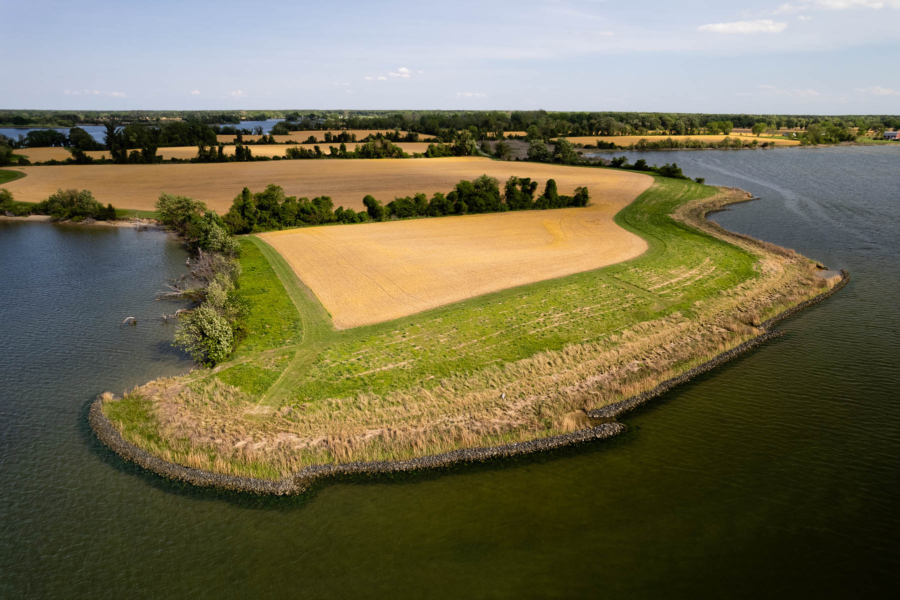
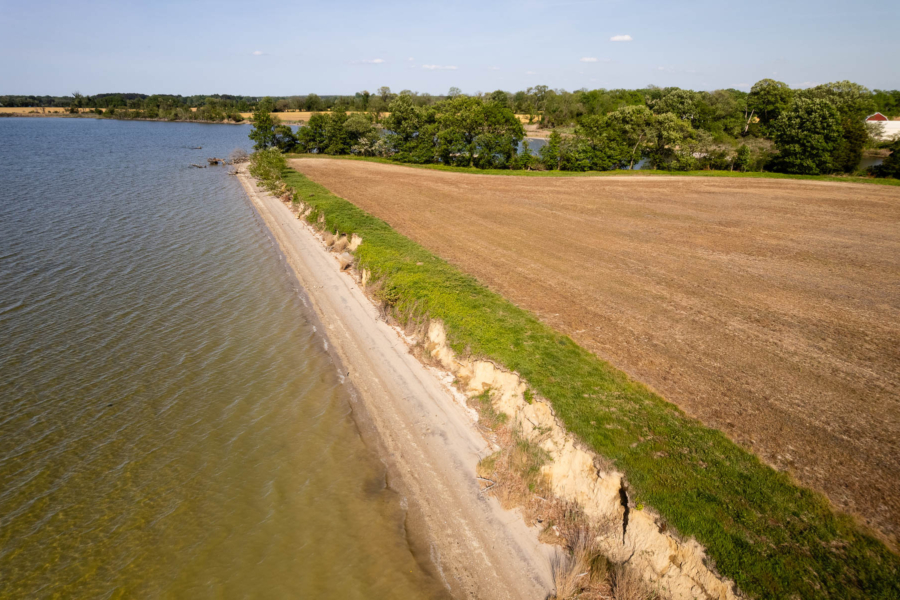
These days, one of Wye House’s most pressing issues is not the temptation to develop parts of the property, but the loss of shoreline due to erosion. Over time, waves pressing in from Shaw Bay, which drains to the Wye River and then the Chesapeake Bay, have caused the shoreline to gradually erode, leaking sediment into the water that can suffocate underwater grass habitat that’s critical to fish and shellfish. The erosion issue has only gotten worse in the past several years due to rising water levels in the Chesapeake Bay and more severe storms.
“We're not losing feet a year,” said Gordon, “we're losing acres a year.”
Part of the solution to the erosion has been to fortify the shoreline by adding new layers of sand and sediment and planting a diversity of marsh grass, more or less returning the shore to what it looked like when Edward Lloyd first purchased the land. This approach, known as a living shoreline, differs from other forms of shoreline stabilization like bulkheads, which are stone walls separating the land from the water, and riprap, which are large boulders situated along the property line.
One of the major differences between the approaches is that bulkheads and riprap eliminate critical wetland habitat that naturally exists between water and the land, while living shorelines enhance it. Marsh and wetland habitat is used by all sorts of insects, crustaceans and small fish, which are food for bigger fish and fish-eating birds like osprey and bald eagles. Wetlands also soak up stormwater runoff that comes off of the land, particularly the fertilizer used on the farm, which keeps the water cleaner and decreases the likelihood of low-oxygen dead zones from forming.
“You're basically rebuilding a marsh and that marsh will filter water before it gets to the Bay,” said Gordon.
The Tilghman’s constructed their first living shoreline in 2007, which was about 900 feet. Two years later, they put in another 1,000-foot living shoreline in a different location. Gordon says the installations have slowed down erosion and provided the wildlife benefits they were hoping for.
“We love the look and everything that comes with it,” said Gordon.
Now, the family is working on a third and much larger living shoreline of about 4,510 feet to protect a farm field that has been slipping into the Bay. “The farmers who’ve been here their entire lives remember about two acres of woods out here on the point,” said Gordon, standing in the farm field with nothing between the field and the shoreline. “As you can see there is no two-acre woods anymore.”
ESLC, who not only manages easements but helps landowners improve the health of their property, is supporting the engineering, designing and permitting for the family’s third living shoreline. Their work is funded in part by the Chesapeake Bay Small Watershed Grant program, which is managed by the National Fish and Wildlife Foundation and funded by the Environmental Protection Agency’s Chesapeake Bay Program Office.
The project will be done in two chunks along the farm, one of about 1,850 feet and another of about 2,660 feet. ESLC is also pursuing funding for an additional 1,800 feet of living shoreline to further protect the farmland from erosion.
“Anything we can do to keep farmland as farmland, including combating erosion that takes farmland acres, is in the name of the game,” said Larisa Prezioso, ESLC’s enhanced stewardship manager.
In the fight against erosion, the Tilghman’s also look at the property as a whole, making sure they protect pockets of woods or inland wetlands that keep stormwater pressure off the shoreline.
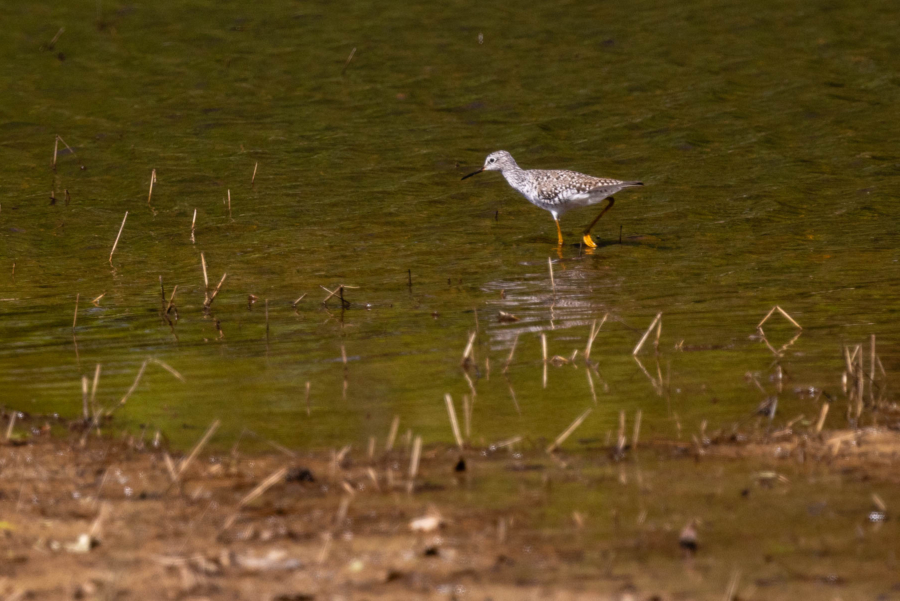
About a half mile from the shoreline, the nonprofit ShoreRivers is helping the family construct a two-acre wetland that will hold stormwater instead of letting it rush toward Shaw Bay. This has the added benefit of providing habitat for waterfowl like geese, wood ducks and canvasbacks that the Eastern Shore is famous for.
“Wintering ground for waterfowl on this property is incredible,” said Gordon.
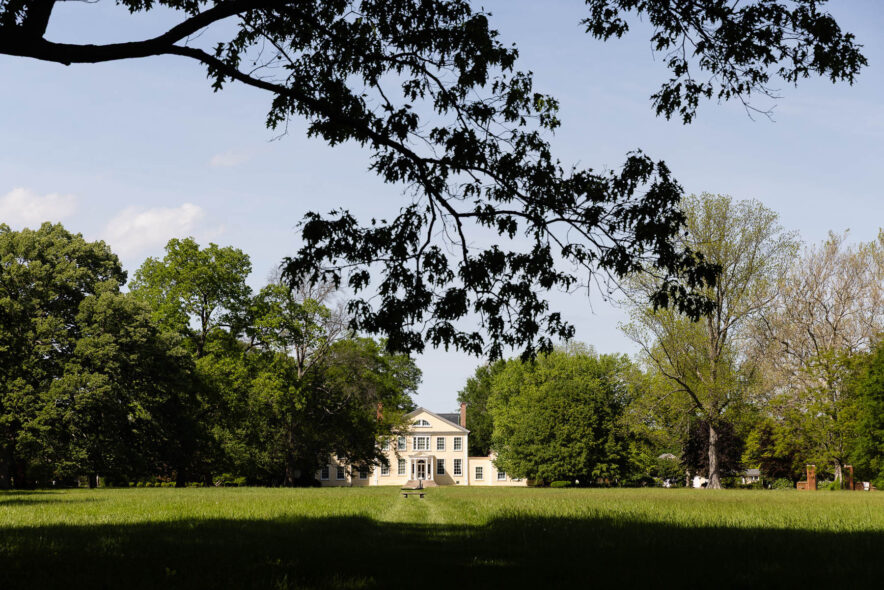
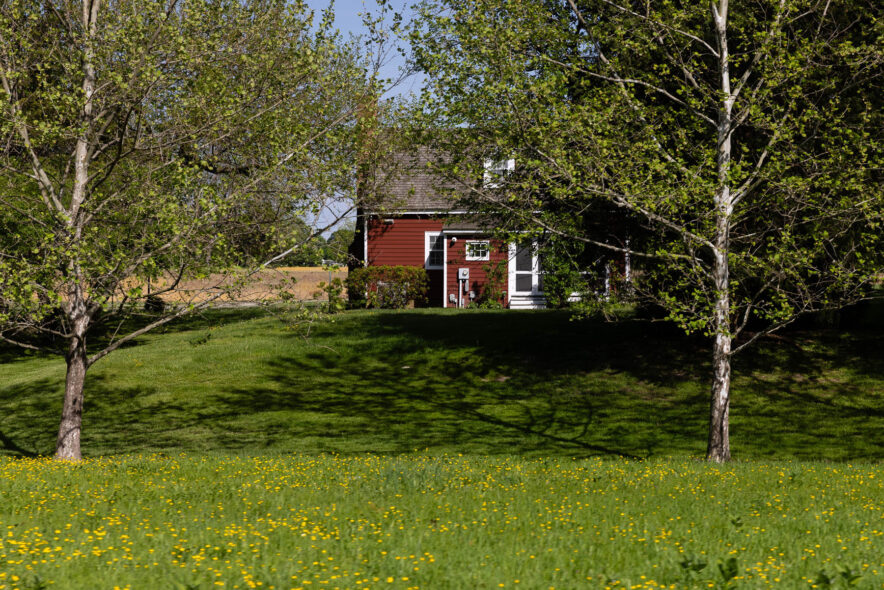
Included in our tour of the property was a trip to the fabled Wye House and some of its surrounding buildings, like a greenhouse and the oldest orangerie (a building growing oranges) in the United States.
During this part of the tour, Gordon shed light on the plantation’s past, including the fact that the famous abolitionist Frederick Douglass once lived on the property with his mother between the ages of six to nine. In fact, in his memoir, Narrative of the Life of Frederick Douglass, Douglass recalls the Wye House property in impressive details. Since 2006, the Wye House property has been the site of archaeological digs led by the Department of Anthropology at the University of Maryland.
As the tour came to a close, a team member and I took some time to gather additional footage of the property and soak up the expansive view of Shaw Bay from outside Gordon’s cottage. Though it was the erosion issue and conservation easements that drew us to Wye House, we found ourselves in the middle of a uniquely American story—one that is interwoven with family heritage, a country’s history and centuries of stewardship.
On the horizon, the Wye River sailed toward the Chesapeake Bay, as it has for time immemorial.
Comments
My grandmother’s great grandmother was Margaret Tilghman, daughter of Col. Frisby Tilghman of Rockland Plantation in Hagerstown. Thank you for keeping up with the Tilghman-Lloyds of the Eastern Shore.
Thank you!
Your comment has been received. Before it can be published, the comment will be reviewed by our team to ensure it adheres with our rules of engagement.
Back to recent stories