
Quality Assurance
Our Quality Assurance program ensures the validity, accuracy and comparability of environmental datasets from agencies and academic institutions across the Chesapeake Bay watershed.
Environmental protection and restoration efforts are based on environmental data: measurements of pollutants, water quality, living resources and more. Scientists and policy makers must be able to trust the accuracy of the data used for evaluating and managing these natural resources. The Chesapeake Bay Program’s Quality Assurance Program ensures the scientific validity, accuracy and comparability of data from more than 40 agencies and research institutions working across the watershed.
Quality Assurance Requirements
According to the U.S. Environmental Protection Agency’s Environmental Information Quality Policy (PDF), organizations funded by the EPA to implement programs or research projects that acquire, generate, compile or use environmental data must establish and implement a quality system. Within the Chesapeake Bay Program, these projects include:
- The collection of groundwater, surface water, sediment, atmospheric, living resource and remotely sensed data;
- Data related to the implementation, tracking and reporting of best management practices;
- Data used for model development, calibration, verification and application;
- Data related to the design, construction and operation of environmental technology; and
- Data collected from existing sources of information, such as computer databases, models and literature searches.
Grantees and cooperators describe their quality systems in two formal documents: a Quality Management Plan (PDF), or QMP, and a Quality Assurance Project Plan (PDF), or QAPP. These quality documents must be reviewed and approved by the regional QA Manager and/or Delegated Approving Official before data collection and/or compilation activities commence. More information can be found in U.S. EPA CBPO 2025 Grant and Cooperative Agreement Guidance (PDF).
What’s required for a QMP?
The Quality Management Plan (QMP) describes the structure of an organization’s Quality Program. Elements addressed in a QMP include: roles, responsibilities and authorities within the organization; technical activities to be performed under the Quality Program; and how the program will integrate quality assurance (QA), quality control (QC) and Quality Assurance Project Plans (QAPP) into its environmental information operations. QMPs are sometimes viewed as umbrella documents under which individual projects are conducted.
QMP requirements are defined in Quality Management Plan Standard (PDF). Submit your QMP for review and approval to the appropriate Project Officer or to the Chesapeake Bay Program’s QA Coordinator at least 45 days before the initiation of data collection.
What’s required for a QAPP?
Quality Assurance Project Plans (QAPPs) document the technical and quality aspects of a project. QAPPs specify monitoring objectives, sampling design, data collection, data analysis, data management, quality control and validation. A graded approach is used to develop a QAPP, and is based on the complexity of work, intended use and degree of confidence needed in the quality of the results and the available resources.
QAPP requirements are defined in Quality Assurance Project Plan Standard (PDF). Submit your QAPP with your draft grant application, or list the QAPP as a deliverable to be received at least 45 days before the initiation of each data collection activity.
Consensus Methods
Scientists follow proven methods and quality control procedures to collect and report environmental data. Generally speaking, methods and quality control procedures are documented in a Quality Assurance Project Plans (QAPP), which is reviewed by a QA Coordinator and approved by a Delegated Approving Official before data collection and/or compilation begins.
At the Chesapeake Bay Program, methods for sampling and analyzing water quality data (PDF) are coordinated through the Data Integrity Workgroup. Procedures for implementing, tracking and verifying best management practices are developed through the BMP Verification Committee.
Quality Assessments and Performance Evaluations
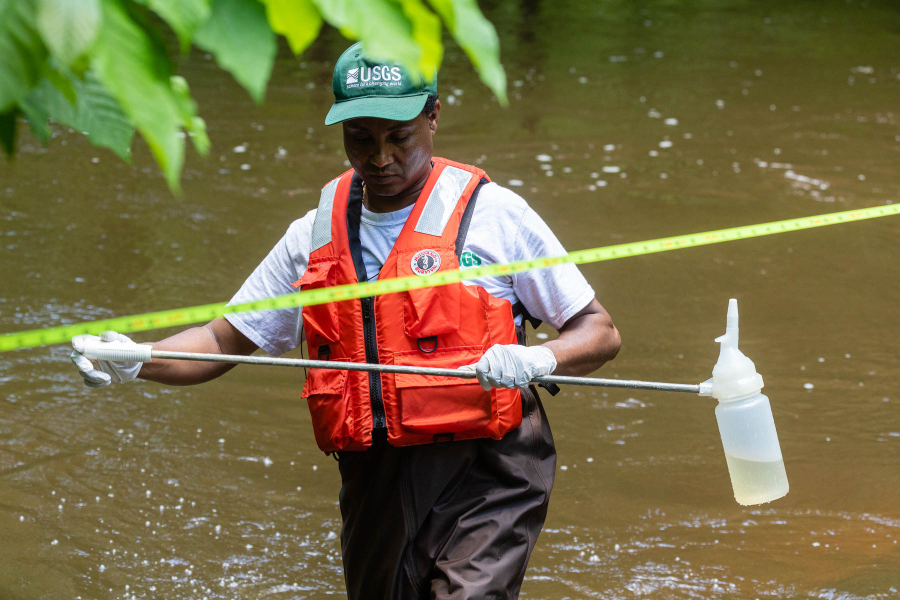
Water quality data are systematically checked at each stage of production through the use of quality control samples, such as standards, blanks, duplicates and spikes. The Chesapeake Bay Program also requires the analysis of split samples, blind audit samples and reference samples to evaluate laboratory proficiency.
Coordinated Split Sample Program
The Coordinated Split Sample Program (CSSP) is an interlaboratory testing program that distributes identical surface water samples to participating laboratories. The samples are processed according to standard protocols, and the results are evaluated quarterly to ensure the laboratories are producing comparable data. Comparable data ensures data from a variety of sources and time periods can be combined.
The results of each split sample study are reviewed and discussed by the Data Integrity Workgroup. The workgroup investigates potential causes of inconsistent results and recommends corrective actions. More information can be found in Chesapeake Bay Coordinated Split Sample Program Implementation Guidelines Rev. 4 (PDF).
Standard Reference Sample Program
The U.S. Geological Survey (USGS) Standard Reference Sample (SRS) Program evaluates the performance of laboratories that analyze chemical constituents of environmental samples. Participating laboratories submit Standard Reference Samples (SRSs) biannually for inter-laboratory comparison. Results are entered into a database and are reviewed and discussed by the Data Integrity Workgroup.
Blind Auditing Program
The Blind Audit Program provides laboratory proficiency testing samples for dissolved and particulate nutrients and chlorophyll at both high and low concentrations. Prepared concentrates of dissolved and particulate substances found in estuarine systems, whose concentrations are unknown to the analysts, are distributed twice a year to approximately 14 regional laboratories. The results provide a measure of laboratory accuracy as the samples are fully prepared prior to distribution and the errors associated with field filtering and subsampling are minimized. The Nutrient Analytical Services Laboratory at the Chesapeake Biological Laboratory is the sole provider of the Blind Audit samples, and produces annual reports of the blind audit results.
Quality Assurance Organization and Contacts
Our Quality Assurance Program involves staff within the Chesapeake Bay Program Office, the EPA Regional Office and interagency workgroups within the Chesapeake Bay Program partnership. QA responsibilities are divided among the following individuals:
- U.S. EPA Project Officers ensure recipients of federal funds satisfy quality requirements, and are ultimately responsible for resolving deficiencies identified in technical reviews, audits and data analyses.
- Lee McDonnell, QA Officer, manages quality assurance activities within the Chesapeake Bay Program Office.
- Durga Ghosh, QA Coordinator, coordinates efforts related to environmental data quality, reviews and quality assurance project plans; audits field and laboratory operations; and assesses laboratory performance.
- The Data Center Manager (position vacant) is responsible for ensuring all of the environmental data generated through EPA-funded monitoring programs have been subjected to a data quality audit prior to being released.
- Kia Long, U.S. EPA Region 3 QA Manager, reviews and approves quality management plans submitted to the Chesapeake Bay Program Office.
More information can be found in the Quality Manual for the Chesapeake Bay Program Office (PDF).
Additional Quality Assurance Resources
- EPA Quality Program: Provides oversight and requirements for quality management activities at the agency.
- U.S. EPA Region 3 Quality Management Plan: Describes the Region’s quality assurance policies, procedures, responsibilities and management systems that govern the quality control activities of environmental information collection and/or use. These are designed to ensure the Region's environmental data operations, and those of its grantees, contractors and other partners in government, the regulated community and the public will produce and use environmental data that satisfies its intended use.
- Implementation of Quality Assurance Requirements for Organizations Receiving EPA Financial Assistance