
Shadbush
(Amelanchier canadensis)
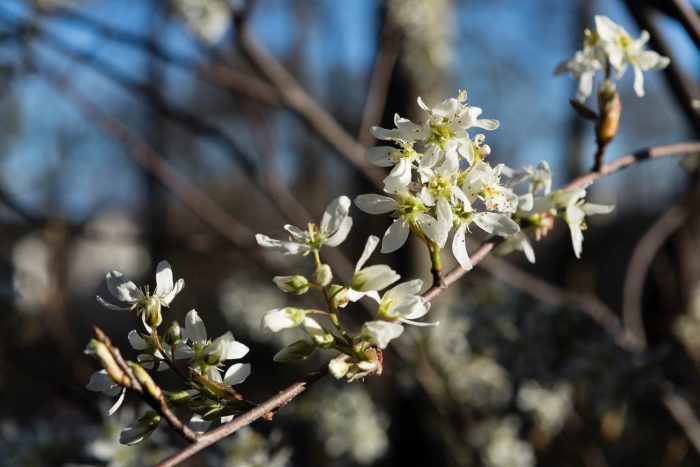
The shadbush is a small tree with white flower clusters that bloom in early spring. It grows in wet areas such as swamps and forested wetlands throughout the Chesapeake Bay watershed, mostly in the coastal plain.
This section shows one large critter image at a time. Use the thumbnails that follow to select a specific image to display here.
This gallery contains a grid of small thumbnails. Selecting a thumbnail will change the main image in the preceding section.
Appearance
The shadbush has rounded, elongated leaves with fine teeth along the edges. Leaves are alternately arranged on the branches and turn brilliant red, orange and yellow in autumn.
Clusters of white, five-petaled flowers bloom in March through May before leaves grow. Fruits are round and reddish-purple. Several stems grow from the tree’s base. Shadbush grows to 25 feet tall.
Reproduction and life cycle
Fruits appear after flowers bloom in spring, then turn blackish as they mature in June-July. Fruits contain seeds; birds and other wildlife eat the ripe fruits and spread the seeds.
Did you know?
- The shadbush is also known as the serviceberry, shadblow and juneberry. It got its name because it blooms around the same time shad return to their spawning grounds in the Bay’s freshwater rivers and streams.
- It is a member of the rose family, which includes apple, cherry and hawthorn trees. Its fruits are flavorful and edible, but birds and other wildlife usually get to them before people can pick them.
- Native Americans relied on shadbush fruits as food and medicine
- Shadbush can be confused with two other common serviceberry species: A. arborea and A. laevis. Shadbush is the only serviceberry species that can grow in wet, swampy soil.
Sources and additional information
- Native Plants for Wildlife Habitat and Conservation Landscaping: Chesapeake Bay Watershed – U.S. Fish and Wildlife Service
- Life in the Chesapeake Bay by Alice Jane Lippson and Robert L. Lippson
- PLANTS Database: Amelanchier canadensis – USDA Natural Resources Conservation Service
- Amelanchier canadensis – Floridata