
Foxglove beardtongue
(Penstemon digitalis)
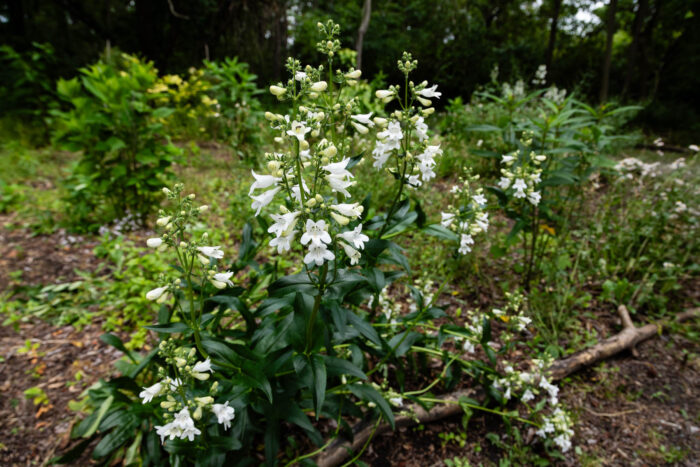
Foxglove beardtongue is a robust native perennial wildflower known for its tall, branching spikes of tubular white flowers that resemble foxglove blooms.
This section shows one large critter image at a time. Use the thumbnails that follow to select a specific image to display here.
This gallery contains a grid of small thumbnails. Selecting a thumbnail will change the main image in the preceding section.
Appearance
Foxglove beardtongue grows in upright clumps from a basal rosette with smooth, lance-shaped, dark green leaves arranged opposite one another along sturdy stems. In late spring, flower stalks rise above the foliage, producing branching clusters of pure white (or occasionally pale pink-tinged) tubular flowers marked with fine violet lines inside that serve as nectar guides. Inside each flower is a fuzzy, sterile stamen resembling a tiny bearded tongue—giving the genus its common name. After flowering, woody, tear-shaped seed capsules develop and persist into fall and winter.
Reproduction and life cycle
Foxglove beardtongue blooms from May through June. Flowers are pollinated primarily by native bees, especially bumblebees, which squeeze inside the narrow tubular blooms to access nectar. Following pollination, each flower develops into a dry capsule containing dozens of small seeds that mature by late summer. Seeds disperse when the capsules split open and typically require a period of cold winter temperatures (cold stratification) to germinate the following spring. Individual plants also gradually expand into larger clumps over time.
Did you know?
- The specific epithet digitalis was given because its tubular white flowers closely resemble those of the European foxglove (Digitalis genus), though they belong to different plant genera.
- The fuzzy "beard" inside each flower forces visiting bees deeper into the tube, helping align them so pollen rubs off onto their bodies.
- Foxglove beardtongue is one of the most drought-tolerant and easy-to-grow native Penstemon species in the eastern United States, often used in rain gardens, meadow restorations and sunny garden borders.
Sources and additional information
- Foxglove Beardtongue, Penstemon digitalis 'Husker Red' - University of Wisconsin
- Beardtongue - Missouri Botanical Garden
- Eastern Beardtongue - North Carolina Extension
- Beardtongue - University of Texas