
Bloodroot
(Sanguinaria canadensis)
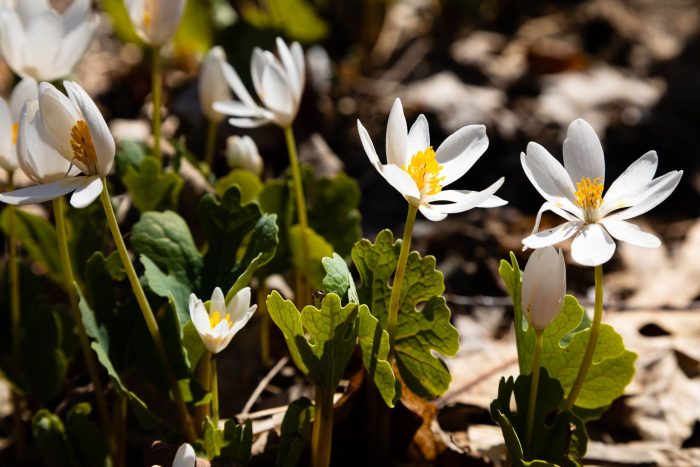
Bloodroot is a native wildflower with white petals and a bright orange-red sap that blooms in early spring.
This section shows one large critter image at a time. Use the thumbnails that follow to select a specific image to display here.
This gallery contains a grid of small thumbnails. Selecting a thumbnail will change the main image in the preceding section.
Appearance
Bloodroot flowers are often bright white (although sometimes very light pink) with yellow stamens and a light green pistil. The plant flowers in March and April from a smooth stalk with a leafy base that possesses an orange-red sap at the root.
Reproduction and life cycle
After pollination, the flowers are followed by a two-part capsule under the protection of its leaves with seed pods, each with a row of 10-15 seeds. When they are ripe, the pods split open and scatter seeds which contain a packet of food called elaiosomes which are attractive to ants. The seeds are dispersed and planted after the ants eat the elaiosome.
Did you know?
Bloodroot produces pollen, but not nectar as many of the insects that prefer nectar are not yet active at the time bloodroot is blooming.
Each bloodroot flower is only open for about three days, closing at night and on rainy days to protect the pollen inside.
Bloodroot sap is often used as a natural red or yellow-orange dye.
Sources and additional information
Bloodroot, Sanguinaria canadensis - Wisconsin Horticulture
Sanguinaria canadensis - Lady Bird Johnson Wildflower Center
Bloodroot - The Natural Web
Bloodroot (Sanguinaria canadensis) - Georgia Native Plant Society