
Spatterdock
(Nuphar advena)
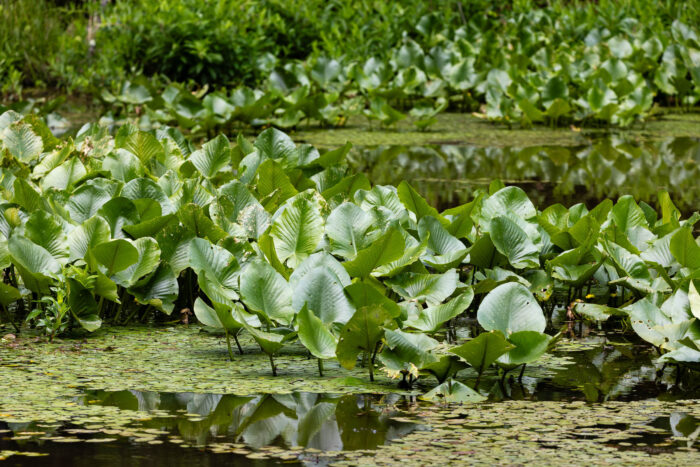
Spatterdock, also known as pond lily, is an aquatic perennial plant with large leaves and oval, yellow flowers that grow above the water.
This section shows one large critter image at a time. Use the thumbnails that follow to select a specific image to display here.
This gallery contains a grid of small thumbnails. Selecting a thumbnail will change the main image in the preceding section.
Appearance
Spatterdock has large, thick, heart-shaped or oval leaves with a prominent V-shaped notch where the stem meets the blade. The leaves can grow up to 16 inches long and may float directly on the water's surface or stand upright several inches above it on thick, spongy stems. Its striking flowers are ball-shaped and 1 to 2 inches wide, featuring bright yellow, petal-like sepals that tightly encircle a central disk. Unlike typical water lilies, spatterdock flowers rarely open completely flat, maintaining a distinctive cup or globe shape. Beneath the water, thick, fleshy rhizomes anchor the plant securely into the muddy bottom.
Reproduction and life cycle
Spatterdock reproduces both sexually through seed production and vegetatively through underground rhizomes. Yellow flowers bloom from late spring into early autumn, attracting pollinators such as flies and beetles to the nectar-rich flower cups. Once fertilized, the flowers produce berry-like green fruits containing numerous seeds that drop into the water or float to new areas to germinate. Vegetatively, the creeping rhizomes continuously branch underground, forming large, dense colonies that survive winter in the mud even after surface foliage dies back in the cold months.
Did you know?
- The common name "spatterdock" is believed to derive from an Old English word spatter, meaning to splash, referring to the way the large floating leaves move with splashing water.
- Spatterdock is often confused with the American white water lily (Nymphaea odorata), but spatterdock can be distinguished by its leaf notch (V-shaped rather than a narrow slit) and its spherical yellow flowers rather than starburst white petals.
- Spatterdock beds provide essential nursery habitat for juvenile bluegills, bass and other freshwater fish in the upper tidal tributaries of the Chesapeake Bay.
- The spongy leaf stems contain internal air channels (aerenchyma) that transport oxygen from the surface down to the submerged roots anchored in oxygen-depleted mud.
Sources and additional information
- Spatterdock - U.S. Fish and Wildlife Service
- Spatterdock - Virginia Department of Wildlife Resources
- Spatterdock (Yellow Pond Lily) - Missouri Department of Conservation